Asian Lotteries Go Digital: QR Codes and Mobile Gaming See Massive Growth
 AI-GENERATED
Asian lottery operators are rapidly adopting digital tickets and mobile payments. In markets like Thailand, participation rates have reached 70 percent among users.
The lottery industry in Asia is experiencing a profound shift. While visiting a physical kiosk to buy a ticket was the norm for decades, digital ticketing systems, mobile payments, and automated verification are now taking over. This trend is primarily driven by a population that accesses the internet almost exclusively via smartphones. For operators, this creates entirely new opportunities to build customer loyalty and modernize the gaming process without changing the core product.
The high acceptance of these services in the region is particularly striking. Data from the iGaming intelligence platform Blask shows that lotteries are deeply embedded in daily life in many Asian countries. The infrastructural basis is impressive, with approximately 2.9 billion people in the Asia-Pacific region using the internet. According to GSMA data, around 98 percent of the population lives within mobile network coverage, making mobile access to lottery apps a logical consequence.
Numbers and facts
Participation rates in lottery products vary but remain high overall. In Thailand and Singapore, around 70 percent of users engage with lotteries. In Nepal, this figure is 50 percent, followed by India and Malaysia at 40 percent each. Vietnam has a rate of 30 percent, while the Philippines is at 25 percent and Sri Lanka at 20 percent. These numbers demonstrate a massive market potential for digital solutions.
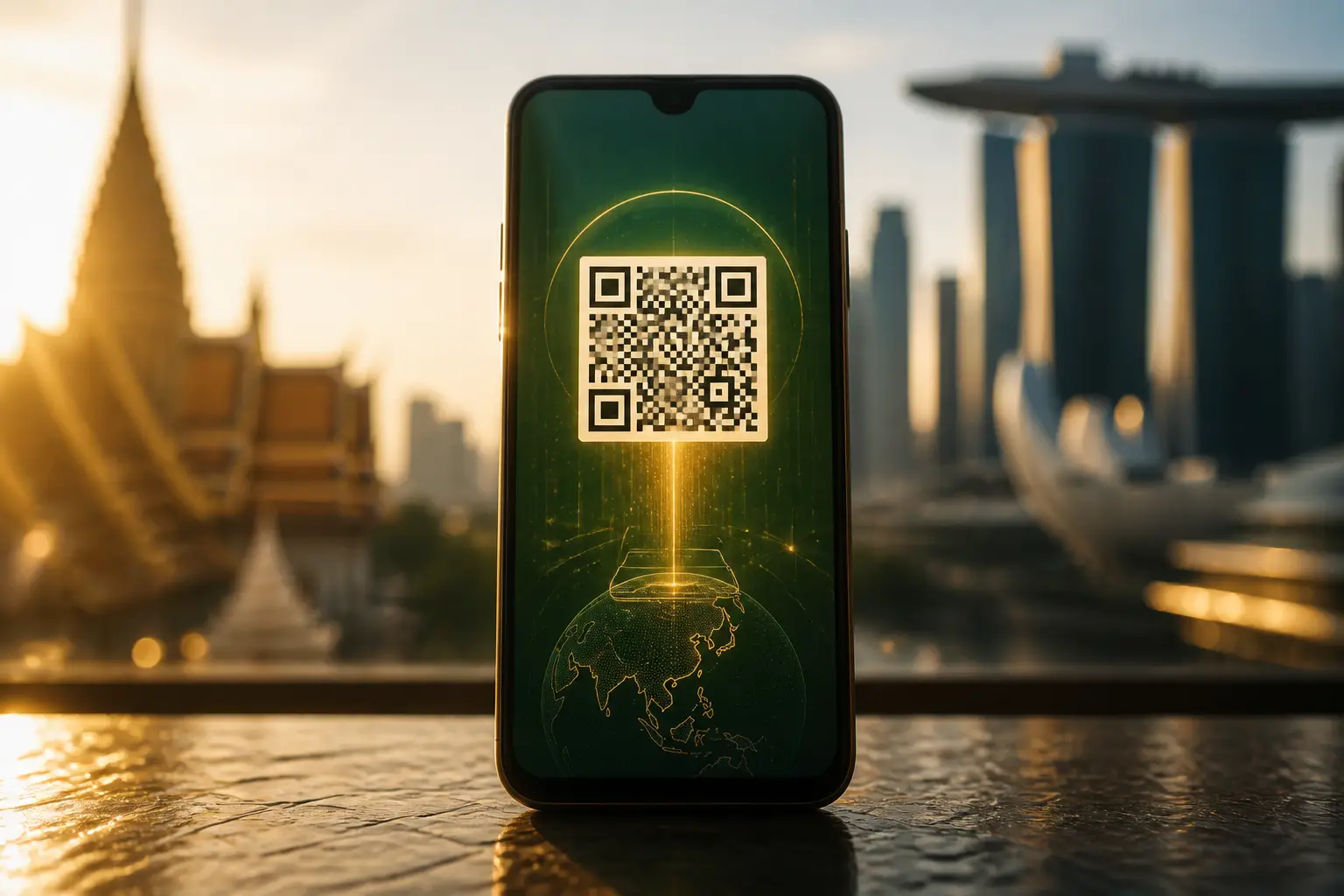
South Korea is a pioneer in practical implementation. There, a 24-year restriction on mobile lottery sales was lifted. Customers can now purchase Lotto 6/45 tickets via the Donghaeng Lottery mobile website. However, strict rules apply, such as real-name registration and a limit of 5,000 KRW (about $4) per person per draw. Technology is also solving the issue of unclaimed prizes by allowing physical tickets to be registered via QR code, followed by automatic notifications in the event of a win.
Background
For governments, digitalization is not just about user-friendliness but also about state control and tax revenue. Digital transactions leave a trail, helping authorities monitor cash flows and dry up the black market. In Nepal, for example, more than 200 betting apps and websites were recently blocked to tackle unauthorized online gambling. Nepal Finance Minister Prakash Sharan Wagle emphasized the importance of transparency when launching a tax-incentive lottery in August.
"We have to move towards a billing culture. Taking bills, giving bills, and all transactions should be traceable in the digital world." - Prakash Sharan Wagle, Finance Minister of Nepal
Experts also see technology as the key to the industry's future. Adam Fonsica, Co-Founder and COO of Random State, explained at SiGMA South Asia 2025 that digitalization significantly increases customer retention. According to his analysis, digital lottery players show a retention rate three to five times higher than traditional retail players.
"Lotteries have always been built on feeling, but the way people experience it has changed dramatically during the last few years. We don’t need to change the core of lotteries. The heart of luck is timeless. What we need to change is the experience around it." - Adam Fonsica, COO of Random State
Why it matters for German players
German players are already familiar with the principle of digitalization through state offerings like Lotto.de or licensed private intermediaries. However, the Asian market shows what even closer integration of QR codes on physical tickets and mobile apps could look like. In Germany, the market is strictly regulated by the State Treaty on Gambling 2021 (GlüStV 2021). While regulations in Asia are often still being developed, providers in Germany must hold a license from the Joint Gambling Authority of the States (GGL).
For local users, this means a high level of security through the LUGAS system, which monitors a cross-provider deposit limit of 1,000 Euros per month. While Asian countries like South Korea test specific limits of $4 per draw, Germany focuses on player protection through central blocking systems like OASIS. Technological developments in Asia could eventually provide inspiration for German apps, such as faster win notifications for physically purchased tickets.
What it means for GGL-licensed casinos
German online casinos with a GGL license must adhere to strict requirements that are only beginning to be discussed in Asia. This includes the 1-Euro stake limit per spin on slots and the five-second pause between rounds. However, the development in Asia shows that mobile gaming is the standard. Over 90 percent of Asian internet users are primarily mobile. This underscores the need for German licensees to optimize their platforms for smartphones to remain competitive. Legal operation without a GGL whitelist entry is impossible in Germany and is pursued through IP blocking or payment blocking, similar to the measures practiced in Nepal.
Frequently asked questions
Which Asian countries have the highest lottery participation?
Thailand and Singapore lead the list with a participation rate of around 70 percent. In Nepal, participation is about 50 percent, while India and Malaysia stand at 40 percent.
How does South Korea regulate online lottery sales?
Following the lift of a 24-year ban, online purchases of Lotto 6/45 tickets are now possible via the Donghaeng Lottery website. It requires real-name registration and a limit of 5,000 KRW (approx. $4) per draw.
What role does mobile connectivity play in Asia?
The infrastructure is excellently developed, with about 98 percent of the population in the Asia-Pacific region having access to mobile networks. Over 90 percent of internet users primarily use mobile devices for online services.
Can German players participate in Asian lotteries?
Participating in foreign lotteries without a German license is illegal under the GlüStV 2021. German players should exclusively use GGL-licensed providers to ensure legal security and player protection, such as the 1,000-Euro limit.
Share
About the author

Lisa Lustich
Editor-in-chief & casino tester
Lisa Lustich has been testing German-language online casinos since 1997 and runs the Lustich.de newsroom. More than 400 published reviews, certified player-protection advisor (BZgA training, 2019).
All articles by Lisa Lustich →Sources & further reading
Whitelist of permitted online operators
Editorial guidelines Lustich.de
BZgA problem-gambling helpline: 0800 1 372 700
Gambling can be addictive. Please play responsibly. Help and counselling at 0800 1 372 700 (BZgA, free & anonymous).
Read this article in 46 languages
- German
- English
- Portuguese
- French
- Italian
- Spanish
- Japanese
- Polish
- Arabic
- Dutch
- Russian
- Turkish
- Swedish
- Danish
- Norwegian
- Finnish
- Korean
- Hindi
- Indonesian
- Thai
- Vietnamese
- Chinese
- Czech
- Hungarian
- Romanian
- Greek
- Ukrainian
- Croatian
- Bulgarian
- Filipino
- Slovak
- Serbian
- Hebrew
- Persian
- Malay
- Urdu
- Albanian
- Afrikaans
- Lithuanian
- Latvian
- Estonian
- Slovenian
- Uzbek
- Swahili
- Azerbaijani
- Hausa
Related topics
Further Reading
 AI-GENERATED
Efficiency vs. Sentiment: The Struggle of Vegas Poker Rooms in Corporate Casinos
Las Vegas poker rooms are facing intense pressure as casino operators prioritize high-revenue slot machines. While Caesars Palace brought poker back in 2025, others are cutting it.
 AI-GENERATED
Gambling Stocks Shift: Entain Exits FTSE 100 Despite Share Price Gains
Entain drops out of the FTSE 100 while Lottomatica seals a merger with CIRSA. Learn why share prices rose by 2.84% despite the index exit.
 AI-GENERATED
PokerStars Sunday Million Anniversary Attracts Over 55,000 Entries
The 20th anniversary of the Sunday Million recorded 55,444 entries, providing a strong start for the WCOOP with a surpassed $5 million guarantee.