Brightstar Lottery Returns to Profit Despite Revenue Dip After Italy License Deal
 AI-GENERATED
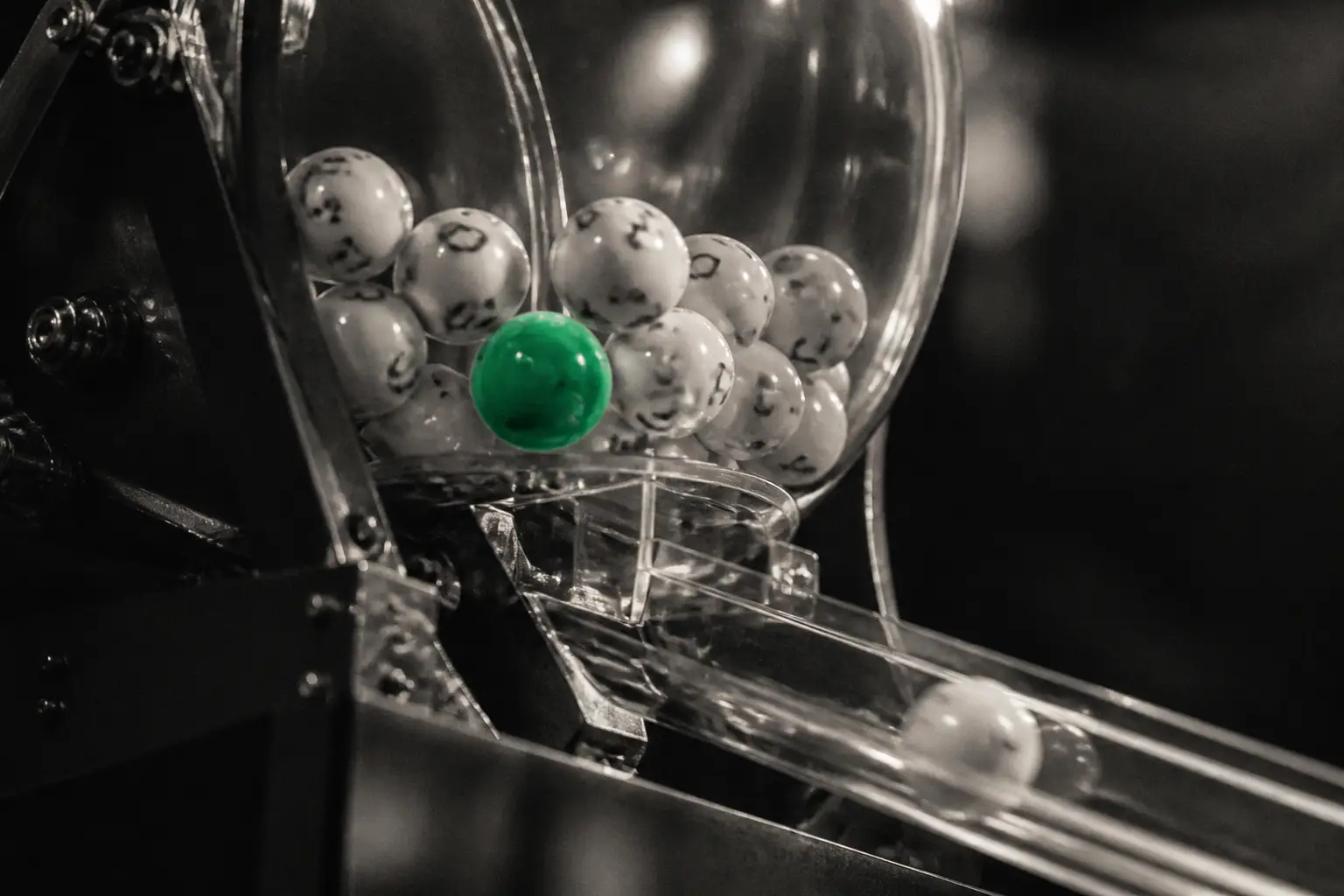
Brightstar Lottery reported Q2 2026 revenue of $584 million, a 7% year-on-year decline, but successfully returned to profitability with a $56 million gain.
The world of lotteries and gambling is often defined by massive sums that can surprise even seasoned financial experts. Brightstar Lottery, a global industry heavyweight, has released its financial figures for the second quarter of 2026. At first glance, the data seems contradictory: while revenue fell by 7 percent year-on-year to $584 million, the company successfully returned to the black. A solid profit of $56 million is now on the books, compared to a loss in the same period last year. This trend clearly demonstrates that revenue is not always synonymous with economic success, especially when expensive licenses distort the picture.
Brightstar's core business is proving to be remarkably robust. While many industries struggle with consumer spending restraint, lottery players remain loyal to their habits. Revenue from instant tickets and draw-based games remained steady at $517 million. The large multi-state jackpots in the US performed particularly well, growing by 14 percent in constant currency to reach $17 million. It is this foundation of millions of small stakes that gives Brightstar the necessary security to operate profitably even in turbulent times. Who would have thought that a few dollars for a lottery ticket in Kentucky or Rome could so massively support the balance sheet of a global corporation?
Numbers and facts
A closer look at the balance sheet reveals where the $47 million in missing revenue compared to the previous year went. The main reason is not that fewer people are playing the lottery, but rather the so-called amortization of license fees. This item rose from $53 million to $100 million. This primarily concerns the new license for Italy Lotto and adjustments to service contracts in the UK. These are purely accounting transactions where amounts already paid are distributed over the term of the contracts. In fact, no real cash flowed out during the quarter for these items, which preserves operating cash flow.
The payment due in April 2026 was particularly impressive. Brightstar transferred the final installment for the Italy Lotto license amounting to 1.43 billion euros, which equals approximately $1.67 billion. This massive sum temporarily pushed cash flow below zero. Nevertheless, the company stands on a solid foundation. At the end of the quarter in June, Brightstar had $1.7 billion in liquidity at its disposal. Of this, $0.6 billion is unrestricted cash, while another $1.2 billion remains available through credit lines. Shareholders can also look forward to a dividend of 23 cents per share, which will be paid on September 1, 2026.
Background
The current situation is also the result of a strategic realignment. Following the split from the IGT Group and the sale of the Gaming & Digital division to Apollo for $6.3 billion, Brightstar is now focusing entirely on the global lottery business. The goal is to "right-size" the company. CEO Vince Sadusky emphasized that profitability was above expectations. He attributes this to growth in like-for-like sales and strict cost discipline. The "OPtiMa" savings program is intended to help further increase efficiency, while around $50 million flows into new growth projects at the same time.
"With a singular focus on lottery and unmatched industry expertise, we are well positioned to create value for all stakeholders with our mission to elevate lotteries and inspire players around the world." - Vince Sadusky, CEO at Brightstar Lottery
Why it matters for German players
For German customers, Brightstar may be a less familiar name than the domestic state lotteries, but the financial health of such global players has a direct impact on the security of the market. In Germany, the State Treaty on Gambling 2021 (GlüStV 2021) regulates the market extremely strictly. Anyone wishing to play legally in this country should only use providers that are on the whitelist of the Joint Gambling Authority of the Federal States (GGL). These licenses guarantee that player protection measures such as the monthly deposit limit of 1,000 euros via the LUGAS system and the stake limit of 1 euro per spin for slots are consistently implemented.
The stability of companies like Brightstar shows that serious gambling is a sustainable business model, provided it takes place within a regulated framework. German players benefit from the fact that only financially potent and audited companies receive a GGL license. This protects against black sheep from Curacao or Malta, where the payout of winnings is often uncertain. The strict German rules serve to protect against gambling addiction and ensure that taxes are correctly paid.
What it means for GGL-licensed casinos
For operators of online casinos with a GGL license, the news of Brightstar's profitability is a positive signal. It proves that despite high license costs and regulatory requirements, profits are possible. The Italian example with a billion-dollar payment for a single license shows how high the entry barriers to regulated markets can be. In Germany, the hurdles are different but also require high investments in compliance and technology. In the long term, however, providers that, like Brightstar, rely on transparency and state concessions will prevail. Those on the whitelist enjoy the trust of both banks and players.
Frequently asked questions
Why did Brightstar Lottery's revenue decline?
Revenue fell primarily due to accounting write-offs for the Italian Lotto license and service contracts in the United Kingdom. These amortizations rose from $53 million to $100 million, which reduced the reported revenue on paper without negatively affecting actual gaming activity.
How much did Brightstar pay for the Italian license?
In April 2026, the company made a final payment of 1.43 billion euros, which equals approximately $1.67 billion. This investment secures Brightstar's market position in Italy until 2034.
Is the company solvent despite the high expenditures?
Yes, Brightstar had a total of $1.7 billion in liquidity at the end of June 2026. This consists of $0.6 billion in cash reserves and $1.2 billion in unused credit lines, representing a solid financial basis.
What does the growth in US jackpots mean?
Revenue from multi-state jackpots in the US rose by 14 percent in constant currency to $17 million. This shows a strong recovery after a weaker prior-year quarter and highlights the attractiveness of large prize pools for players.
What should German players look for when choosing a provider?
Players in Germany should only play with providers holding a GGL license to benefit from legal protection mechanisms like the 1,000-euro limit and LUGAS connectivity. Only companies on the official whitelist guarantee legal certainty and player protection according to the State Treaty on Gambling 2021.
Share
About the author

Lisa Lustich
Editor-in-chief & casino tester
Lisa Lustich has been testing German-language online casinos since 1997 and runs the Lustich.de newsroom. More than 400 published reviews, certified player-protection advisor (BZgA training, 2019).
All articles by Lisa Lustich →Sources & further reading
Whitelist of permitted online operators
Editorial guidelines Lustich.de
BZgA problem-gambling helpline: 0800 1 372 700
 United States
 Italy
ItalyGambling can be addictive. Please play responsibly. Help and counselling at 0800 1 372 700 (BZgA, free & anonymous).
Read this article in 56 languages
- German
- English
- Portuguese
- French
- Italian
- Spanish
- Japanese
- Polish
- Arabic
- Dutch
- Russian
- Turkish
- Swedish
- Danish
- Norwegian
- Finnish
- Korean
- Hindi
- Indonesian
- Thai
- Vietnamese
- Chinese
- Czech
- Hungarian
- Romanian
- Ukrainian
- Croatian
- Bulgarian
- Filipino
- Slovak
- Serbian
- Hebrew
- Persian
- Malay
- Bangla
- Tamil
- Telugu
- Urdu
- Georgian
- Khmer
- Albanian
- Kazakh
- Afrikaans
- Lithuanian
- Latvian
- Estonian
- Slovenian
- Uzbek
- Swahili
- Azerbaijani
- Amharic
- Tajik
- Kyrgyz
- Sinhala
- Hausa
- Nepali
Related topics
Further Reading
 AI-GENERATED
Kangwon Land: South Korea's Only Local-Access Casino Targets Foreign High Rollers
Kangwon Land Casino launches a massive $2.3 billion expansion. Aiming for 13 million annual visitors by 2035, the resort seeks to pivot from local dominance to global appeal.
 AI-GENERATED
Michigan Lottery and IWG Extend Technology Partnership Until 2032
The Michigan Lottery has signed a six-year contract extension with Instant Win Gaming (IWG) to bolster its digital eInstant game offerings through July 2032.
 AI-GENERATED
Lazio Signs Kaiyun Sports Sleeve Deal Following Collapse of Polymarket Partnership
SS Lazio has confirmed a new two-year sleeve sponsorship with kaiyunsports.news after its 22 million Euro deal with Polymarket was canceled due to regulatory issues.