Florida Gambling Interests Pour Millions Into 2026 Election Cycle
 AI-GENERATED
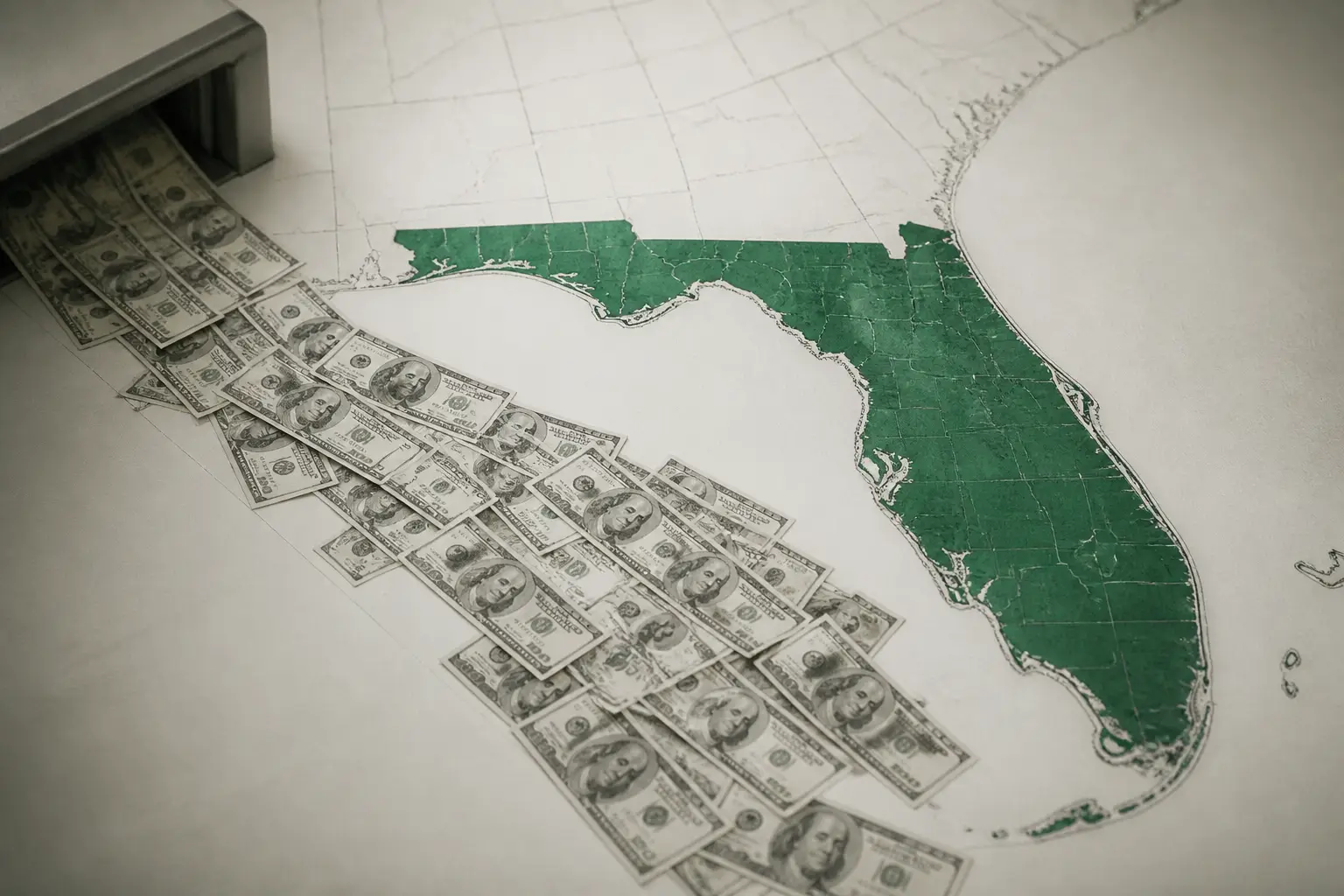
Gambling companies have already funneled over $12.2 million into Florida's 2026 elections, with the Seminole Tribe contributing the vast majority of funds.
Florida's political landscape is currently being reshaped by a significant influx of capital from the gambling industry. Long before the 2026 elections, massive sums are already flowing into the accounts of candidates and political committees. This is about much more than mere political support; the industry is fighting for dominance in one of the most lucrative betting markets in the United States. A fascinating shift is occurring: while local giants previously held all the cards, modern platforms for prediction markets and digital sports betting are now aggressively entering the political arena.
The Seminole Tribe of Florida, which operates the world-renowned Hard Rock brand, is at the heart of this financial offensive. Through an exclusive compact with Governor Ron DeSantis, the tribe already controls much of the market and guarantees the state at least $500 million in annual payments. However, competition is not sleeping. New players like Kalshi, Robinhood, and established names like FanDuel are attempting to influence future regulation through political contributions. This power struggle is being played out through campaign financing, causing concern among observers and local politicians alike.
Numbers and facts
The raw figures from official finance filings through July 31 are impressive. At least $12.2 million (€11.1 million) has been donated by gaming interests. Of this, the Seminole Tribe alone accounts for about $9.1 million (€8.3 million), representing roughly three-quarters of the total. A large portion of these funds, specifically $6 million (€5.5 million), went to Byron Donalds, a U.S. Representative and frontrunner for the governorship. Party organizations were also supported: the Republican Party of Florida received $750,000, while the Democrats received a more modest $200,000.
Beyond the established tribes, other companies are making their presence felt. FanDuel contributed approximately $581,000, while DraftKings owner DK Crown Holdings added about $525,000. Even newer platforms like PrizePicks with $400,000 and the trading platform Robinhood with $200,000 are joining the political poker game. This broad range of donors indicates that the Florida market is facing a transition, with many companies hoping for a relaxation of current monopolies.
Background
The conflict in Florida primarily revolves around the control of digital wagering. The existing compact between the state and the Seminole Tribe ensures the tribe's dominant position, particularly in mobile sports betting. Experts view the current wave of donations as an attempt to set the course for the years following 2026. This involves not just classic betting but increasingly so-called prediction markets, where users can bet on the outcome of political or economic events.
"The next battleground is prediction markets and online gaming. It’s hardly shocking that politicians accept money from both sides of the debate." - Daniel Wallach, gaming and sports betting attorney from Broward County
Money is also causing unrest at the local level. In St. Petersburg, former Governor Charlie Crist received a $50,000 donation from the Seminole Tribe for his mayoral campaign. This has sparked fears that the tribe is looking at new locations, such as the Derby Lane site, to build entertainment hubs. St. Petersburg Mayor Ken Welch expressed concern over the sheer size of single contributions, which often exceed the total budget raised by other candidates.
Why it matters for German players
For German players, the election campaign in Florida might seem distant, but the mechanisms of lobbying and market regulation are globally comparable. In Germany, the market has been strictly regulated since the State Treaty on Gambling 2021 (GlüStV 2021). While private companies in Florida fight against tribal monopolies, the focus in Germany is primarily on compliance with the rules of the Joint Gambling Authority of the States (GGL). German players do not have to worry about such political spending sprees, as the system here is designed for strict player protection.
Limits such as the €1,000 monthly deposit limit and the €1 per spin stake limit for virtual slots are firmly established in Germany. These rules are centrally monitored via the LUGAS system. While the expansion of digital betting is being debated in Florida, the GGL whitelist in Germany provides clarity on which providers are legal and safe. German customers should ensure they play exclusively with these licensed operators to be legally protected.
What it means for GGL-licensed casinos
German casinos with a GGL license operate in a completely different environment than operators in Florida. While political sponsorship is part of everyday life in the U.S., the focus for German providers is on the strict implementation of advertising restrictions and social concepts. The GGL closely monitors whether providers adhere to play breaks and whether the panic button system works. Such a massive influence of gambling money on politics, as seen in Florida, is hardly conceivable in the German regulatory landscape and is prevented by the strict transparency rules of GlüStV 2021.
Frequently asked questions
How much money is the gambling industry investing in the Florida elections?
So far, at least $12.2 million has been donated to candidates and political committees for the 2026 election cycle. The Seminole Tribe alone is responsible for approximately $9.1 million of this sum.
Which Florida politician receives the most donations from the gambling sector?
Republican Representative Byron Donalds has received around $6 million so far. This accounts for about half of all industry donations in this election cycle.
Why are companies like FanDuel and DraftKings donating such large sums?
The companies are attempting to influence future legislation for digital betting and prediction markets. They are pushing for more competition against the current dominant position of the Seminole Tribe.
What are prediction markets in the context of gambling?
Prediction markets allow users to bet on the outcome of future events, such as elections or economic data. Experts like Daniel Wallach see this as the next major legal battleground for the industry.
Are such political donations also common for online casinos in Germany?
No, in Germany, the State Treaty on Gambling 2021 prevents such political influence through strict transparency and advertising rules. Players are protected here by GGL oversight and fixed limits like the €1,000 deposit cap.
Share
About the author

Lisa Lustich
Editor-in-chief & casino tester
Lisa Lustich has been testing German-language online casinos since 1997 and runs the Lustich.de newsroom. More than 400 published reviews, certified player-protection advisor (BZgA training, 2019).
All articles by Lisa Lustich →Sources & further reading
Whitelist of permitted online operators
Editorial guidelines Lustich.de
BZgA problem-gambling helpline: 0800 1 372 700
Gambling can be addictive. Please play responsibly. Help and counselling at 0800 1 372 700 (BZgA, free & anonymous).
Related topics
Further Reading
 AI-GENERATED
Lex Veldhuis Plans WSOP Assault After Ending PokerStars Partnership
After 17 years with PokerStars, Lex Veldhuis is starting a new chapter. He moved to Costa Rica and aims to dominate the World Series of Poker (WSOP) in 2026.
 AI-GENERATED
Antonio Galiana Secures Third WSOP Bracelet as Benjamin Rolle Leads Millionaire Maker
Spanish pro Antonio Galiana claims his third World Series of Poker title while Benjamin Rolle dominates the Millionaire Maker final table lineup.
 AI-GENERATED
Hard Rock Dominates US Rankings: Seven Casinos Among Top 25 Venues 2026
Hard Rock International secures seven spots in the Pollstar 2026 rankings. The Hollywood, Florida location leads the list with $53.2 million in revenue.