Virtual Sports in North America: Navigating Complex State-by-State Regulations
 AI-GENERATED
Robert Miller of Kiron North America warns that fragmented regulations hinder virtual sports. Meanwhile, Brazil saw licensed operators grow to 78 by August 2025.
The world of virtual sports betting is facing a significant test. In North America, one of the fastest-growing markets globally, technological innovation is clashing with fragmented legislation. Robert Miller, President of Kiron North America, explains in a recent analysis that a single North American market does not truly exist. Instead, suppliers must deal with a patchwork of state-level frameworks in the US and provincial systems in Canada. Each jurisdiction requires its own certifications, making the launch of new products significantly slower and more expensive.
Miller is particularly critical of the risk that excessive regulation could make the licensed environment less attractive to customers. If barriers in the legal market become too high, gambling activity does not simply vanish; it moves to areas where regulators cannot see it. This is a real risk already observed in mature markets like the United Kingdom. There, additional restrictions have often led to players migrating to the black market. The industry must therefore find a way to allow innovation without restarting the entire regulatory process for every technical update.
Numbers and facts
A look at recent developments shows the market's dynamics. In Canada, Alberta recently opened its regulated sports betting market. The goal is to bring substantial revenues that previously occurred outside the provincial framework into a system with proper oversight. This follows the model of Ontario, which served as the first major experiment in Canada. Internationally, a similar trend toward regulation is visible: in Brazil, the number of licensed operators rose from an initial 14 at the launch on January 1, 2025, to 78 companies by August 2025. There, a five-year federal license costs a substantial 30 million BRL (Brazilian Real) and allows for the operation of up to three brands.
"If regulation makes the licensed environment progressively harder to operate in or less attractive to customers, the activity does not necessarily disappear. Some of it simply moves somewhere the regulator cannot see it." - Robert Miller, President at Kiron North America
Background
Virtual sports hold a unique position, combining mathematical outcomes with graphical presentations. Miller emphasizes that mathematics, wagering functionality, and outcomes must be stable, testable, and auditable. However, while the core remains certified, presentation and technology are constantly evolving. The industry is calling for more flexibility here. A key indicator of market success is channelization, which measures how much of the total gambling volume stays within supervised boundaries. In Brazil, for instance, the use of the .bet.br domain was mandated, while credit cards and cryptocurrencies were banned to maintain control.
Why it matters for German players
For German players, the situation in North America provides an interesting parallel to the local environment. Since the Interstate Treaty on Gambling 2021 (GlüStV 2021), Germany has had central supervision through the GGL (Joint Gambling Authority of the States). The channelization discussed in North America is also the main objective here. German players benefit from the GGL whitelist, which ensures that providers adhere to strict player protection rules. These include the 1,000 Euro monthly deposit limit via the LUGAS system and the 1 Euro per spin limit for virtual slots. Similar to Miller, the German industry often warns that overly strict rules could drive players to illegal MGA or Curacao providers that ignore these protections.
What it means for GGL-licensed casinos
Casinos with a German GGL license face the challenge of remaining competitive despite strict requirements. The discussions from North America show that transparency and proportionality are key. German providers must prove that their certified offering is secure while trying to keep the user experience attractive. The integration of virtual sports in Germany is subject to strict testing, as the legal distinction between sports betting and casino games is precisely defined. For GGL-licensed companies, this means high administrative effort, which is compensated for by the legal certainty within the German market.
Frequently asked questions
What is the main problem for suppliers in North America?
There is no uniform market, as every US state and Canadian province has its own rules, taxes, and certification requirements. This leads to massive costs and delays in launching new products.
How many licensed operators are there in Brazil?
After the market launch on January 1, 2025, the number of licensed operators grew rapidly. By August 2025, 78 companies were officially registered.
What does channelization mean in gambling?
Channelization refers to the goal of directing as much gambling activity as possible into the regulated and supervised market. This is intended to prevent customers from migrating to illegal offshore providers.
Why is the situation in the UK a warning?
According to Robert Miller, too many restrictions in the regulated UK market have led to players moving to unregulated areas. This shows that regulation must remain proportional to keep the legal market attractive.
What should players in Germany consider regarding licenses?
Players should only play with providers listed on the official GGL whitelist. Only these meet the strict German player protection requirements, such as the 1,000 Euro deposit limit and connection to the OASIS lockout system.
Share
About the author

Lisa Lustich
Editor-in-chief & casino tester
Lisa Lustich has been testing German-language online casinos since 1997 and runs the Lustich.de newsroom. More than 400 published reviews, certified player-protection advisor (BZgA training, 2019).
All articles by Lisa Lustich →Sources & further reading
Whitelist of permitted online operators
Editorial guidelines Lustich.de
BZgA problem-gambling helpline: 0800 1 372 700
 United States
 Canada
 Brazil
Gambling can be addictive. Please play responsibly. Help and counselling at 0800 1 372 700 (BZgA, free & anonymous).
Related topics
Further Reading
 AI-GENERATED
Prediction Markets Under Fire: New York Debates Taxes and Regulation
Experts in the USA are debating the taxation of platforms like Kalshi, while New York pursues a record 36 billion dollar lawsuit.
 AI-GENERATED
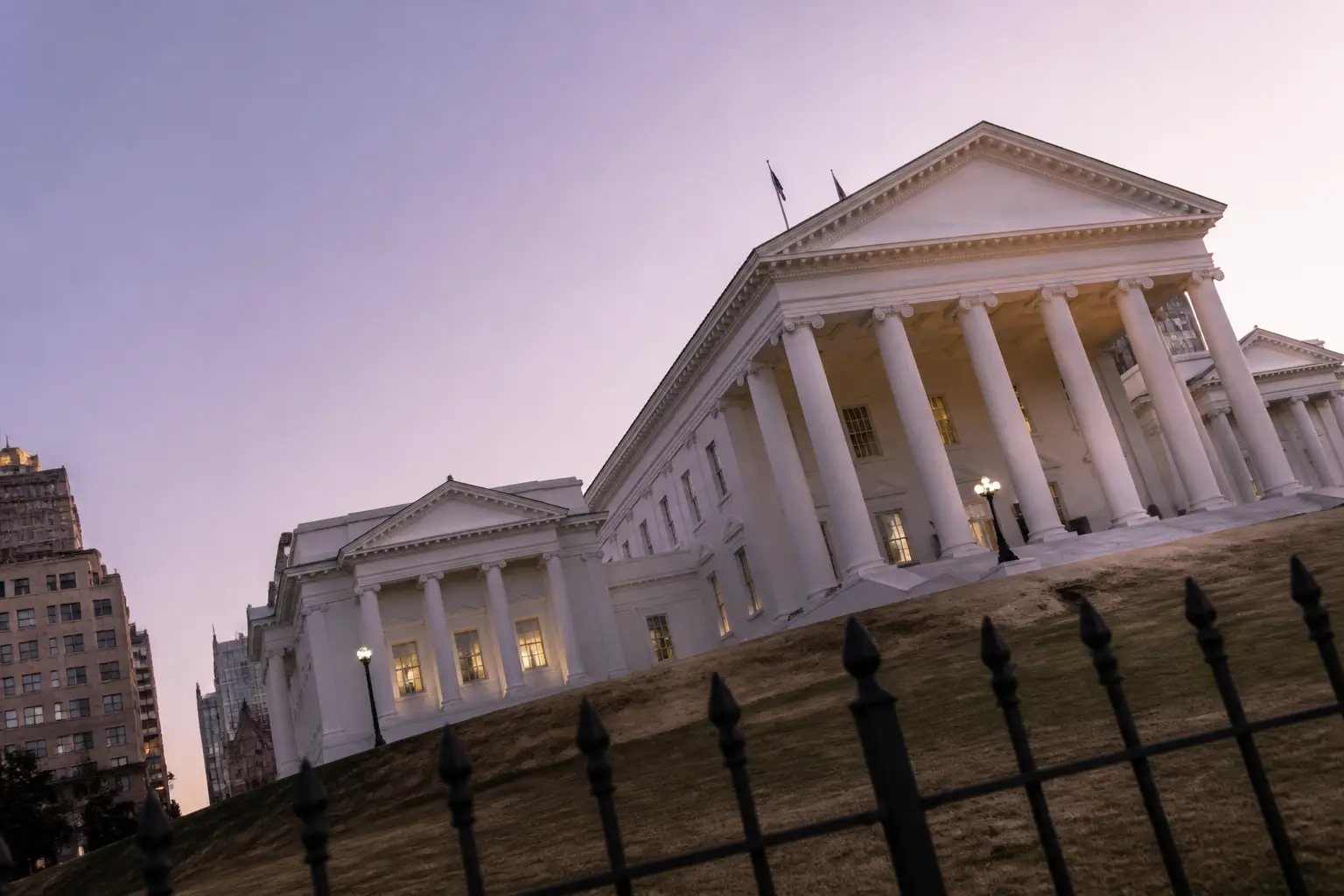
Huge Campaign Donations for Virginia Lawmakers Following Failed iGaming Bill
After online casino legislation stalled in Virginia, five Republican senators received $100,000 checks each from the Sports Betting Alliance.
 AI-GENERATED
Massachusetts Online Lottery Faces Backlash Over Child-Like Game Themes
Less than a month after its launch, the Massachusetts online lottery platform is under fire for using cartoonish graphics that critics say target minors.