
India's Real Money Gaming Ban Triggers Regulatory Shift Across Asia
 AI-GENERATED
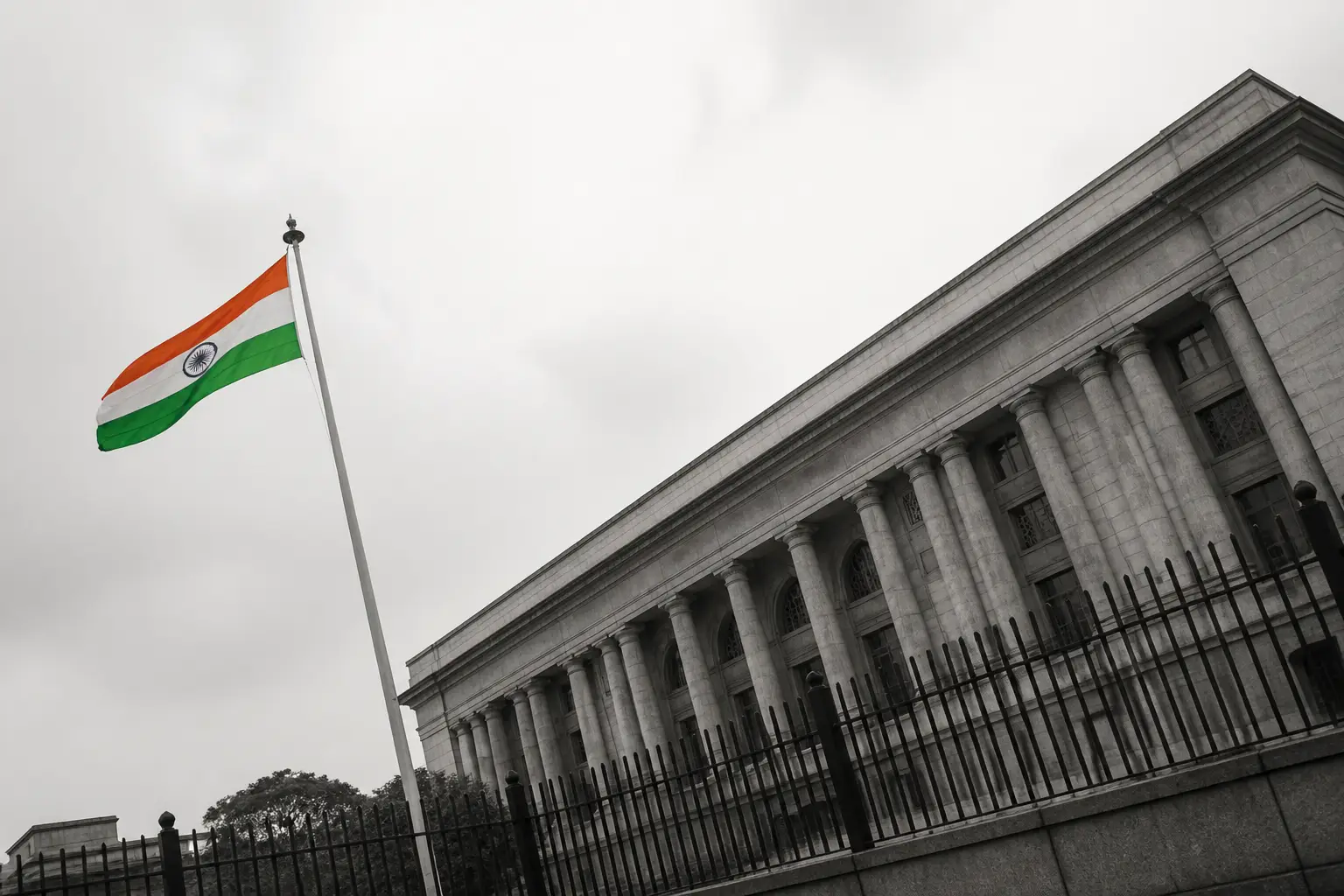
With the Regulation of Online Gambling Rules 2026, India has banned real money gaming, distancing it from esports and influencing regional markets.
The regulatory landscape in Asia is currently undergoing a massive transformation, led by radical decisions from the Indian government. India has drawn a clear line that is attracting attention far beyond its borders. The world's most populous country now distinguishes meticulously between esports, social games, and so-called real money gaming. The latter, meaning classic online gambling for real money, has been effectively prohibited. This decision was not a snap judgment but the result of a long legislative process that began last summer and has now culminated in a new reality.
India’s Ministry of Electronics and Information Technology finalized the rules for the sector, which came into force on May 1. By doing so, the state is responding to exploding demand that, in the view of the authorities, carried too many social risks. However, critics and consultants warn of the consequences of these total bans. When legal avenues remain blocked, the market often takes undesirable paths. People do not stop playing; they simply seek out other platforms that often offer no protective mechanisms at all.
"India has become much more precise in defining the difference between gaming and gambling. However, he emphasized that this does not mean that igaming in India will go away. Instead, the high demand will simply move to the shadows of the industry because of tight control and regulation on the surface of the market." - John Calderon, iGaming Consultant at Consulcy Advisory
Numbers and facts
The legal basis is formed by the Promotion and Regulation of Online Gaming Act 2025 and the Regulation of Online Gambling Rules 2026, which became effective on May 1. A central role is played by the newly created Online Gaming Authority of India. This authority acts as a powerful watchdog over the digital market. It decides on a case-by-case basis whether a game falls into the money category or is classified as a permitted social game or esports. Furthermore, it oversees registration, compliance monitoring, and grievance redressal.
Another focal point for the industry lies in Europe but has a direct impact on Asia. The UK government is currently considering a crackdown on illegal betting operators acting as sponsors in the Premier League. Clubs such as Fulham and AFC Bournemouth have faced criticism this season as their partners specifically target the Asian market. A prominent example is TGP Europe, which held a white-label deal for brands like SBOTOP and bj88 and surrendered its license following investigations by the Gambling Commission in May last year. The visibility of these brands in English football often serves as a global marketing engine for markets in China, Thailand, Malaysia, and Indonesia.
Background
Experts like John Calderon observe a growing gap between regulation and education. While laws are becoming increasingly restrictive, education about responsible gaming often falls by the wayside. This creates an imbalance where users consume gambling-style entertainment without finding a safe, legal framework for their stakes. The Asian region remains a complicated patchwork of various rules. While some countries like India rely on strict prohibitions, others are cautiously experimenting with new licensing models.
Technology service providers are also under scrutiny. Sportradar came under pressure due to reports from short sellers, which was strongly denied by CEO Carsten Koerl. Koerl emphasized that Sportradar has one of the most rigorous compliance processes in a highly regulated industry. This shows that the entire value chain, from data providers to platform operators, is increasingly under the microscope of regulatory authorities and the market.
Why it matters for German players
For German players, the development in India and Asia is a confirmation of the path Germany took with the State Treaty on Gambling 2021 (GlüStV 2021). In contrast to total bans like those practiced in India, Germany focuses on channeling through regulation. German users should play exclusively with providers that appear on the official whitelist of the Gemeinsame Glücksspielbehörde der Länder (GGL). These companies are subject to strict requirements that are often missing in Asia.
The LUGAS system in Germany ensures that the monthly deposit limit of 1,000 euros is maintained across all providers. Additionally, a stake limit of one euro per game round applies to virtual slot machines. The situation in India clearly demonstrates how important a legal framework is: without state-licensed offers, players are pushed into unprotected gray markets where neither stake limits nor self-exclusion mechanisms exist. Those who play with a GGL-licensed provider in Germany benefit from a level of protection that is only just being laboriously defined as a target in the current debates in Asia.
What it means for GGL-licensed casinos
For companies with a German license, global instability means that their legal certainty is their greatest asset. While international corporations lose billion-dollar markets due to the ban in India or have to venture into legal gray areas, the German market offers reliable, albeit strict, guardrails. The regulatory efforts in Asia, particularly the demand for uniform standards for responsible gaming, could lead to international standards eventually aligning with the strict German requirements. Those who already prioritize maximum compliance are better prepared for future global market adjustments. The crisis of sponsorship models in the Premier League also shows that the era of backdoor marketing via white-label constructions without substance is finally coming to an end.
Frequently asked questions
What does India prohibit with the Online Gaming Act 2025?
With the Online Gaming Act 2025 and the Regulation of Online Gambling Rules 2026, India effectively prohibits online real money gaming. A clear distinction is made between e-sports, social games, and real money gaming.
Why has India banned real money gaming?
The ban is a response to the exploding demand for online gaming, which, from the perspective of Indian authorities, carries too many social risks. The goal is to better protect users.
What are the potential consequences of the Indian ban?
Experts warn that illegal platforms offering no protective mechanisms will gain traction. According to iGaming consultant John Calderon, demand will shift into the shadows of the industry.
What role does the Online Gaming Authority of India play?
This newly established authority is responsible for classifying games, determining whether they are considered gambling or permitted social games/e-sports. It also oversees registration and compliance.
How does German gambling regulation differ from India's?
Germany, with its State Treaty on Gambling 2021, focuses on channeling through regulation and licensing rather than total bans. Players in Germany are better protected by requirements and safeguards such as deposit and betting limits.
Share
About the author

Lisa Lustich
Editor-in-chief & casino tester
Lisa Lustich has been testing German-language online casinos since 1997 and runs the Lustich.de newsroom. More than 400 published reviews, certified player-protection advisor (BZgA training, 2019).
All articles by Lisa Lustich →Sources & further reading
Whitelist of permitted online operators
Editorial guidelines Lustich.de
BZgA problem-gambling helpline: 0800 1 372 700
Gambling can be addictive. Please play responsibly. Help and counselling at 0800 1 372 700 (BZgA, free & anonymous).
Read this article in 57 languages
- German
- English
- Portuguese
- French
- Italian
- Spanish
- Japanese
- Polish
- Arabic
- Dutch
- Russian
- Turkish
- Swedish
- Danish
- Norwegian
- Finnish
- Korean
- Hindi
- Indonesian
- Thai
- Vietnamese
- Chinese
- Czech
- Hungarian
- Romanian
- Greek
- Ukrainian
- Croatian
- Bulgarian
- Filipino
- Slovak
- Serbian
- Hebrew
- Persian
- Malay
- Bangla
- Tamil
- Telugu
- Urdu
- Georgian
- Khmer
- Albanian
- Kazakh
- Afrikaans
- Lithuanian
- Latvian
- Estonian
- Slovenian
- Uzbek
- Swahili
- Azerbaijani
- Amharic
- Tajik
- Kyrgyz
- Sinhala
- Hausa
- Nepali
Related topics
Further Reading
 AI-GENERATED
Prison-Based Gambling Empire: Assaf Buskila Faces Major Charges
An Israeli inmate allegedly ran a massive illegal gambling and extortion ring from behind bars. Authorities seized assets worth 13 million shekels.
 AI-GENERATED
Memphis Raid: Illegal Gambling Investigation Leads to Mass Immigration Arrests
A strike against illegal gambling machines at a Memphis cantina escalated into a major immigration sweep resulting in 121 arrests.
 AI-GENERATED
Streamer N3on Wins Celebrity Poker Tournament Despite Zero Experience
YouTube star N3on won the Celebrity Poker Tour Invitational XIII in Las Vegas, securing $15,000 and a seat at the WSOP Paradise event.