Tribal Gaming Breaks Records: NIGC Reports $46.2 Billion GGR for Fiscal Year 2025
 AI-GENERATED
The National Indian Gaming Commission reveals a historic peak for the industry. Tribal GGR rose by 5.3% to $46.2 billion in 2025, driven by 545 venues.
The global gambling landscape is currently focused on the United States, where tribal gaming has reached an unprecedented financial milestone. According to the latest report from the National Indian Gaming Commission (NIGC), the industry is performing better than ever before. These results are not merely about profit margins but represent a significant economic engine for indigenous communities across 29 states. The growth highlights a resilient sector that continues to expand despite various economic challenges.
The 2025 fiscal year report outlines a clear upward trajectory. Tribal gaming has evolved far beyond small-scale local operations, now competing with the world's most prominent gaming destinations. This success is underpinned by a robust regulatory framework that ensures financial transparency and community benefit. The NIGC's data provides a detailed look at how different regions contributed to this historic high, confirming that the vast majority of tribal operations are seeing increased engagement and revenue.
Numbers and facts
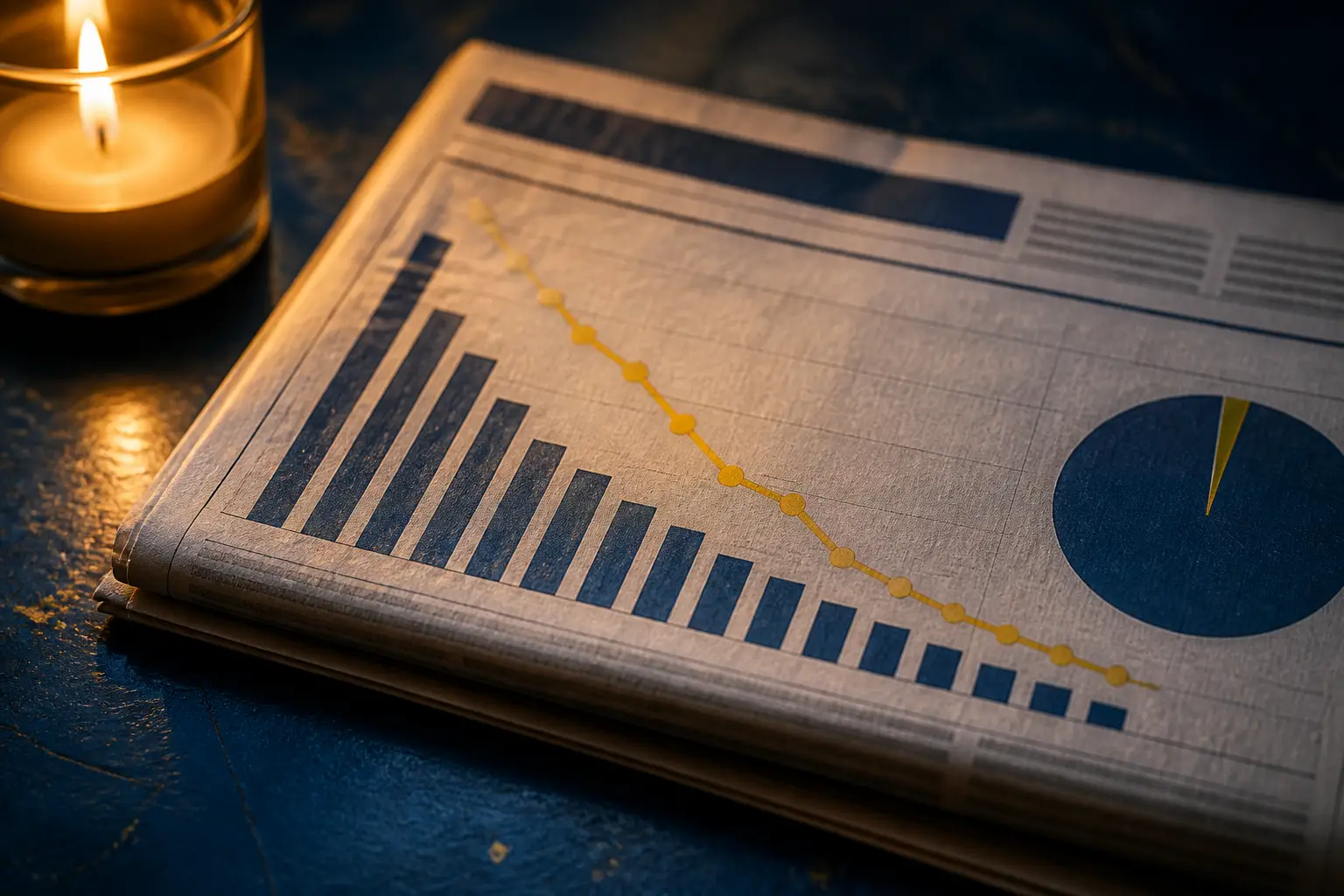
The Gross Gaming Revenue (GGR) for the tribal gaming industry hit a record-breaking $46.2 billion in fiscal year 2025. This marks an absolute increase of $2.3 billion compared to the previous year, which translates to a growth rate of 5.3 percent. These figures are based on independently audited financial statements from 545 tribal gaming venues. These properties are managed by 246 different tribes, showcasing the scale of the industry within the American gaming market.
Regional performance was overwhelmingly positive, with seven out of eight NIGC regions reporting growth. The DC region saw the most significant percentage increase, rising 9.8 percent to reach $10.2 billion. Sacramento remains the powerhouse of tribal gaming, generating $12.1 billion, a 4.1 percent increase. Other regions also showed strength: Portland reported $4.7 billion (up 5.3 percent), Phoenix reached $4 billion (up 5.3 percent), and St. Paul hit $5.2 billion (up 2.9 percent). Oklahoma City recorded $3.6 billion (up 3.3 percent), while Tulsa saw $3.4 billion (up 2.5 percent). The only region to experience a decline was Rapid City, where revenues dipped by a slight 0.9 percent to $0.4 billion.
Background
The social impact of these revenues is the primary focus for tribal leaders and regulators. Unlike commercial casinos, tribal gaming funds are often dedicated to essential services like healthcare, education, and infrastructure for tribal members. The NIGC plays a vital role in supervising these activities and ensuring the integrity of the games provided. William Kirkland, vice chair of the NIGC, highlighted the importance of these results for tribal sovereignty.
"The success of Indian gaming is of crucial importance to the self-sufficiency of tribal governments. The agency (NIGC) is proud to work alongside tribal leaders to uphold a regulatory framework that protects these achievements and ensures the benefits endure for future generations." - William Kirkland, vice chair, NIGC
Sharon Avery, associate commissioner at the NIGC, echoed these sentiments, noting that the growth reflects a commitment to responsible management. She praised the regulators and operators for their dedication to community benefits. However, the industry is not without its disputes. A recent disagreement between the NIGC and the Grand Traverse Band of Ottawa over the closure of the Crystal Shores Casino in Michigan serves as a reminder that local economic decisions and regulatory oversight can lead to friction, even in a thriving market.
Why it matters for German players
While the American tribal market operates under different legal structures, its success influences global trends in game development and technology. For players in Germany, the regulatory environment is governed by the Interstate Treaty on Gambling 2021 (GlüStV 2021). While the US celebrates massive revenue growth, the German market focuses on strict player protection. The German GGL ensures that players are limited to a 1,000 Euro monthly deposit across all licensed platforms, monitored by the LUGAS system. Slot machines are also restricted to a 1 Euro per spin limit.
German players should view these international records as a sign of a healthy global industry, but always remain within the safety of the GGL whitelist. The transparency seen in the NIGC's audited reports is exactly what the German regulator aims for with mandatory reporting and oversight systems like OASIS. Staying with licensed German operators ensures that your funds are safe and that the gaming environment is fair, preventing the risks associated with offshore sites from Curacao or the MGA that do not follow German law.
What it means for GGL-licensed casinos
For operators holding a German license, the NIGC report serves as a benchmark for how transparency leads to long-term sustainability. The growth in the US shows that when a market is properly regulated, it can achieve record results without sacrificing integrity. GGL-licensed casinos in Germany must navigate more restrictive advertising and operational rules, but these measures build a more loyal and safer player base over time. The tribal gaming model of reinvesting in the community shares some similarities with the German approach, where gambling taxes contribute to the public good.
By following the strict guidelines of the GGL, German casinos provide a level of security that unregulated black-market competitors cannot match. The success of scrutinized and audited markets like the US tribal sector proves that the best way forward for the industry is through clear rules and rigorous oversight. German operators can take confidence in the fact that a well-regulated market is a growing market, even if the primary focus in Germany remains on social responsibility and the prevention of gambling addiction.
Frequently asked questions
What was the Gross Gaming Revenue (GGR) of US tribal casinos in the 2025 fiscal year?
The Gross Gaming Revenue of US tribal casinos in the 2025 fiscal year reached 46.2 billion dollars. This is the highest value ever recorded and represents a 5.3 percent increase compared to the previous year.
Which region recorded the highest percentage growth in revenue?
The DC region led in percentage growth with an increase of 9.8 percent, generating 10.2 billion dollars. However, Sacramento remained the highest-grossing region with 12.1 billion dollars.
How many gaming facilities and tribes were involved in the 2025 GGR record?
The record sum of 46.2 billion dollars is derived from the financial reports of a total of 545 gaming facilities. These are operated by 246 different tribes across 29 US states.
What significance does the success of tribal gaming hold for the tribal communities?
The success of gaming is a crucial foundation for the economic independence and self-sufficiency of tribal communities. The revenues are directly reinvested into infrastructure, education, and healthcare.
What does the German Interstate Treaty on Gambling 2021 mean for German players regarding US tribal casinos?
For German players, the legal situation remains clearly defined by the rules of the Gemeinsame Glücksspielbehörde der Länder (GGL) under the Interstate Treaty on Gambling 2021. Deposit limits of 1,000 euros per month and a maximum bet of one euro per spin on slots are the most important protective measures.
Share
About the author

Lisa Lustich
Editor-in-chief & casino tester
Lisa Lustich has been testing German-language online casinos since 1997 and runs the Lustich.de newsroom. More than 400 published reviews, certified player-protection advisor (BZgA training, 2019).
All articles by Lisa Lustich →Sources & further reading
Whitelist of permitted online operators
Editorial guidelines Lustich.de
BZgA problem-gambling helpline: 0800 1 372 700
 United States
Gambling can be addictive. Please play responsibly. Help and counselling at 0800 1 372 700 (BZgA, free & anonymous).
Read this article in 57 languages
- German
- English
- Portuguese
- French
- Italian
- Spanish
- Japanese
- Polish
- Arabic
- Dutch
- Russian
- Turkish
- Swedish
- Danish
- Norwegian
- Finnish
- Korean
- Hindi
- Indonesian
- Thai
- Vietnamese
- Chinese
- Czech
- Hungarian
- Romanian
- Greek
- Ukrainian
- Croatian
- Bulgarian
- Filipino
- Slovak
- Serbian
- Hebrew
- Persian
- Malay
- Bangla
- Tamil
- Telugu
- Urdu
- Georgian
- Khmer
- Albanian
- Kazakh
- Afrikaans
- Lithuanian
- Latvian
- Estonian
- Slovenian
- Uzbek
- Swahili
- Azerbaijani
- Amharic
- Tajik
- Kyrgyz
- Sinhala
- Hausa
- Nepali
Related topics
Further Reading
 AI-GENERATED
Chumba Casino Launches $100 Free Play Welcome Offer for US Market
Social casino giant Chumba introduces a $100 free play bonus for new US registrants. The move highlights the growing competition in the sweepstakes gaming sector.
 AI-GENERATED
ToonieBet Named Exclusive Sportsbook Partner for Ottawa Redblacks
ToonieBet secures an exclusive partnership with the CFL's Ottawa Redblacks. Alberta expects CA$76 million in tax revenue from its new iGaming market.
 AI-GENERATED
Löwen Play Honors Life's Work of Paul Gauselmann Following His Passing
The German gambling industry loses a legendary figure with the death of Paul Gauselmann. Competitor Löwen Play recalls decades of cooperation and his vast influence.