South Africa Launches Major Raid: New Task Force Dismantles Illegal Gambling Rings
 AI-GENERATED
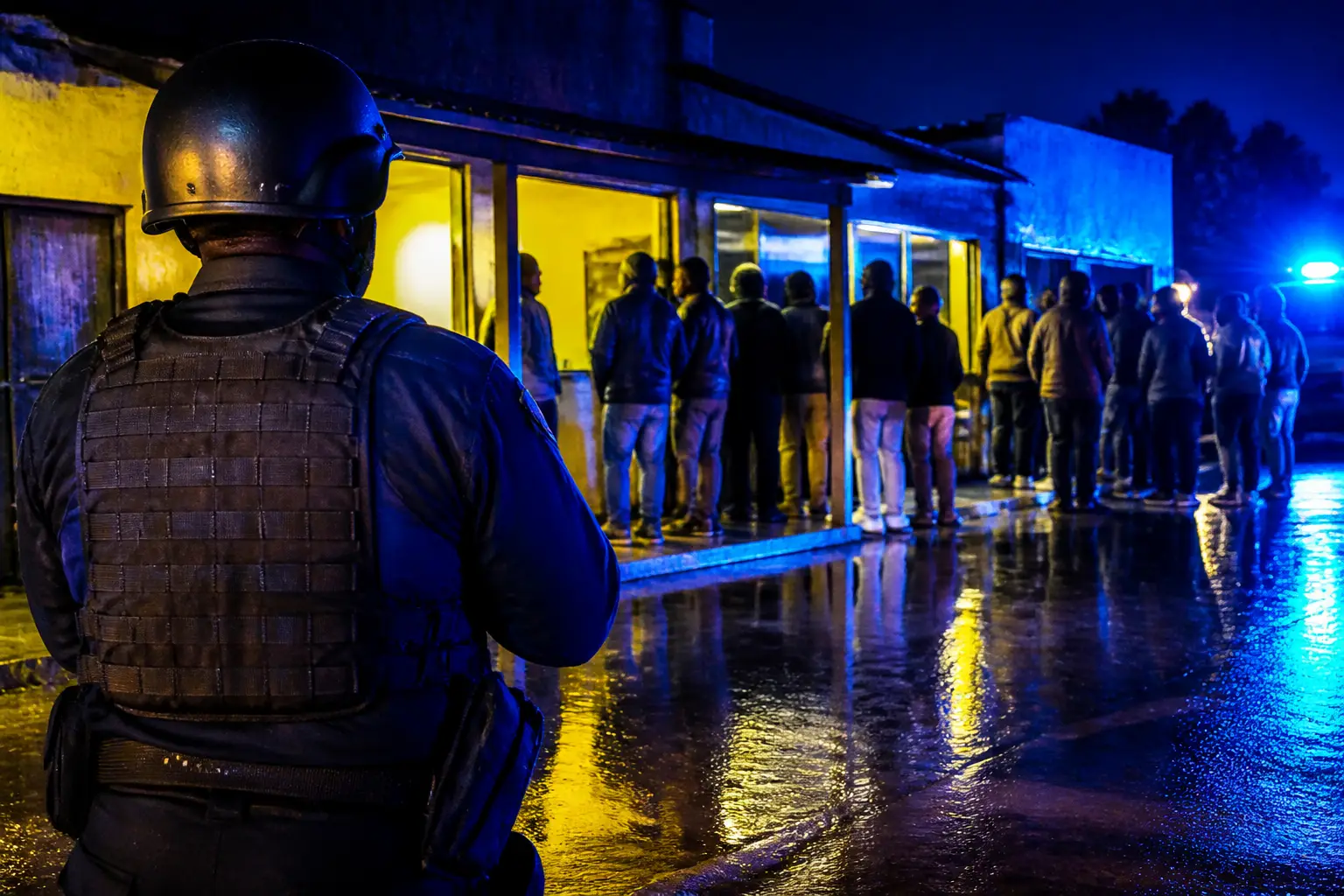
South African police and gambling authorities arrested 13 people and closed five illegal casinos disguised as internet cafes during raids in Limpopo.
South Africa is intensifying its battle against the illegal gambling market. In the province of Limpopo, a new specialized unit, the Illegal Gambling Task Team (IGTT), has successfully completed its first major operation. During the raids, which took place in Modimolle on August 4 and Lephalale two days later, a total of 13 people were arrested. Investigators uncovered a sophisticated scheme: five businesses presenting themselves as ordinary internet cafes were, in reality, fronts for unlicensed gambling. This tactic allows operators to function in public spaces while bypassing the regulated market.
Those arrested include two cashiers, six site managers, and five customers. Along with the arrests, officers seized cash totaling 10,853.10 Rand. While the amount may seem modest at first glance, the true success of the operation lies in dismantling the infrastructure and demonstrating state authority. The National Gambling Board (NGB) worked closely with the South African Police Service (SAPS) and various provincial authorities, such as the Limpopo Gambling Board and the Mpumalanga Economic Regulator.
Numbers and Facts
The scale of the illegal market in South Africa is immense. A report by Yield Sec, commissioned by the South African Bookmakers’ Association, estimates that illegal operators control approximately 62 percent of all online gambling activity in the country. This results in potential Gross Gaming Revenue (GGR) of more than 50 billion Rand per year flowing offshore. These funds not only evade state taxes but also undermine the integrity of the licensed sector.
To counter this trend, the NGB launched a portal for verified gambling operators in April. Here, players can check if a company holds a valid license. In June and July, the procurement process for a technology provider capable of identifying, monitoring, and blocking illegal websites was advanced. This shows that authorities are tackling the problem on two fronts: physically on the ground and digitally online.
"These operations demonstrate our collective commitment to protecting South Africans from illegal gambling. The establishment of this IGTT strengthens cooperation between regulators and law enforcement agencies and allows us to take a coordinated approach to disrupting illegal gambling activities." - Lungile Dukwana, Acting CEO of the National Gambling Board
Background
The IGTT was established under the Law Enforcement Forum (LEF) to improve coordination between national and provincial authorities. Limpopo serves as the testing ground. The insights gained by investigators during the searches there will serve as a blueprint for expanding operations to all nine South African provinces. The focus is particularly on identifying front businesses that hide gambling behind everyday facades.
Similar developments are occurring in neighboring Eswatini. Finance Minister Neal Rijkenberg recently emphasized that convictions in illegal gambling cases are vital for the fight against money laundering. This highlights that the entire region is currently increasing pressure on unregulated providers to meet international standards set by the Financial Action Task Force (FATF).
Why it matters for German players
The South African case mirrors the situation in Germany, although enforcement is organized differently. German players should be aware that playing with providers without a license from the Gemeinsame Glücksspielbehörde der Länder (GGL) carries significant risks. In South Africa, billions flow to unregulated firms, much like the situation in Germany before the 2021 Interstate Treaty on Gambling (GlüStV 2021).
In Germany, the GGL whitelist protects consumers from these shadow markets. Those playing with licensed providers are subject to strict rules under LUGAS and OASIS. These include a cross-operator deposit limit of 1,000 Euros per month and a 1 Euro per spin limit on virtual slots. These measures are designed for player protection and addiction prevention. In contrast, those who turn to South African or other international sites without a German license lose all legal protection and support structures often linked to money laundering.
What it means for GGL-licensed casinos
For operators with a German license, the news from South Africa is a signal that global regulation is tightening. The fight against the black market is a global challenge. GGL-licensed casinos benefit long-term from a clean market, as illegal competitors who do not adhere to taxes or player protection rules are displaced by technical blocks and police action. Investing in compliance and adhering to German standards, such as the strict separation of sports betting and casino games, remains the only path for a legally secure business model.
Frequently asked questions
Who was arrested during the raids in South Africa?
A total of 13 people were arrested in Limpopo province. This included two cashiers, six site managers, and five customers found in illegal casinos disguised as internet cafes.
What is the role of the National Gambling Board (NGB)?
The NGB coordinates the new task force (IGTT) alongside the South African police. The goal is to suppress illegal gambling activities nationwide and protect the licensed market from unfair competition.
How large is the illegal gambling market in South Africa?
Estimates suggest that about 62 percent of online gambling activity is conducted through unlicensed providers. This represents a potential Gross Gaming Revenue of over 50 billion Rand annually bypassing the regulated system.
Why are these measures important for player protection?
Illegal providers do not adhere to standards for addiction prevention or fair winning odds. By closing these businesses and blocking websites, authorities aim to prevent citizens from losing money in unprotected environments.
Can German players play in South African online casinos?
No, this is not legally possible as these providers do not hold a GGL license. German players must stick to providers on the official whitelist to be protected under the 2021 Interstate Treaty on Gambling.
Share
About the author

Lisa Lustich
Editor-in-chief & casino tester
Lisa Lustich has been testing German-language online casinos since 1997 and runs the Lustich.de newsroom. More than 400 published reviews, certified player-protection advisor (BZgA training, 2019).
All articles by Lisa Lustich →Sources & further reading
Whitelist of permitted online operators
Editorial guidelines Lustich.de
BZgA problem-gambling helpline: 0800 1 372 700
Gambling can be addictive. Please play responsibly. Help and counselling at 0800 1 372 700 (BZgA, free & anonymous).
Related topics
Further Reading
 AI-GENERATED
Oklahoma Gambling Loophole: Betting Despite Bans Through Prediction Apps
Millions of dollars are flowing into illegal sports betting in Oklahoma as apps like Kalshi and Polymarket exploit legal gray areas as prediction markets.
 AI-GENERATED
Data Scandal in UK: Online Casinos Accused of Privacy Breaches
A study by Swansea University reveals that 86 percent of British gambling websites violate GDPR. Many start harvesting data before users even click a button.
 AI-GENERATED
Court Order: SunRay Park and Casino Relocation to Clovis Blocked
A judge in New Mexico has halted the planned move of SunRay Park and Casino to Clovis. The current lease at McGee Park remains active until September 2027.