
Brazil Struggles to Legalize Land-Based Casinos in Election Year
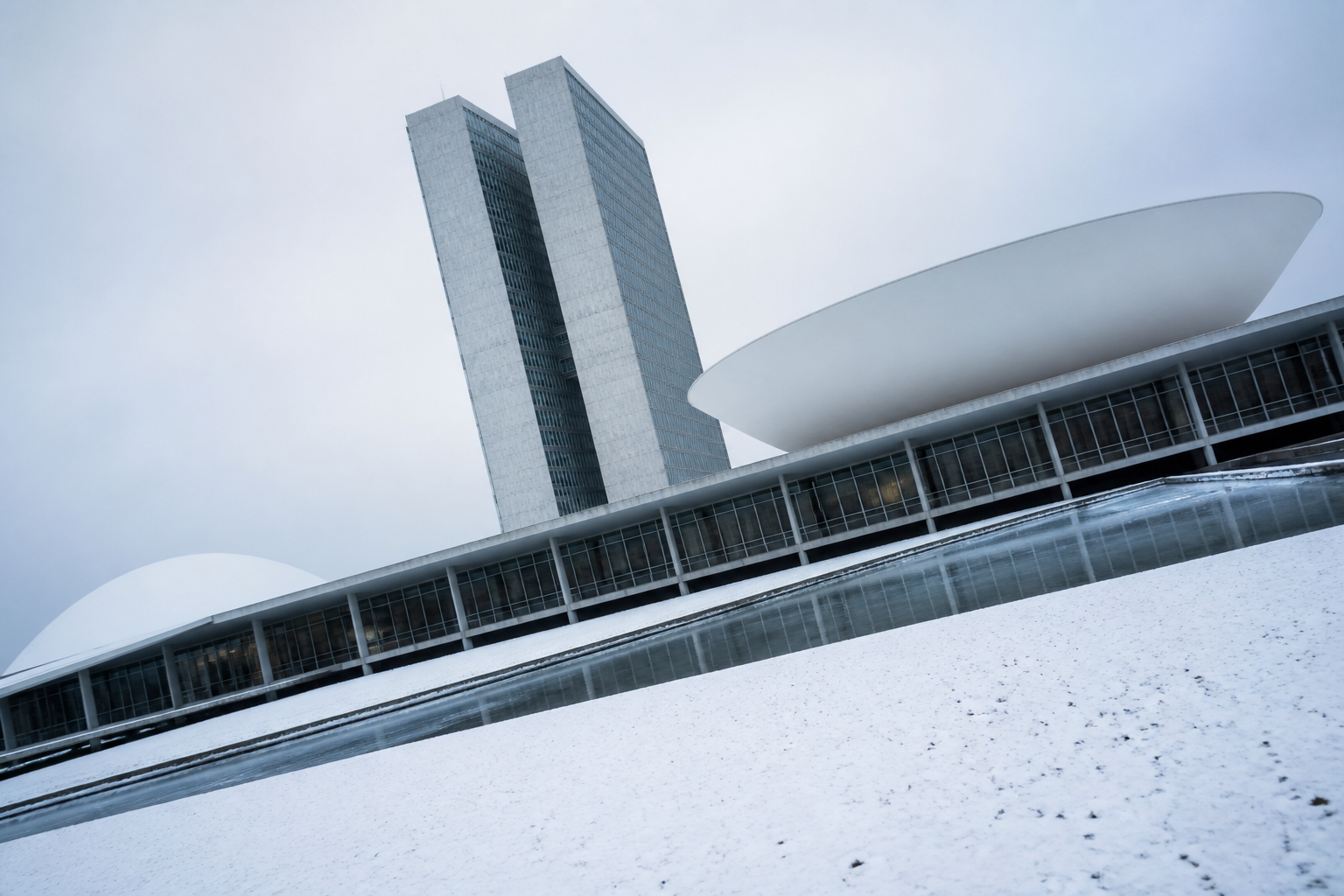
In 2026 election year, the legalization of land-based casinos in Brazil remains a contentious issue. Despite impressive tax revenues of around R$10 billion from the regulated online market, politics delay a decision.
The debate surrounding the legalization of land-based casinos in Brazil is reaching a critical point. Although the country's online gambling market has already shown significant success, the legislative process for physical establishments is stalled. Political and social factors are delaying a decision in the current 2026 election year. Five leading industry experts have shared their assessments of the situation, highlighting the complex reasons for the delay. The parliamentary elections, in particular, significantly influence the senators' willingness to act. A bill that has already been approved by the Chamber of Deputies and the Senate's Justice Committee is now awaiting a vote in the plenary. Nevertheless, uncertainty remains high as to whether a decision will be made this year. Opinions on this matter vary widely. The country banned casinos in 1946, making it an outlier in South America. Almost all neighboring countries have regulated land-based establishments. This situation is intended to change, bringing Brazil in line with international standards.
Numbers and facts
Brazil's regulated online market has proven to be extremely lucrative. In its first full year of operation, it generated approximately R$37 billion in Gross Gaming Revenue (GGR). This significantly exceeded the government's own projections. Approximately 25 million Brazilians participate in online gambling. Nearly R$10 billion was paid to the state as tax revenue. This demonstrates the enormous economic potential of a regulated gambling market, including for land-based casinos. The online betting law was introduced on January 1, 2024. A survey by DataSenado, a research institute linked to the Brazilian Senate, found in April that 60 percent of the adult population in Brazil supports the legalization of land-based gambling. Only 34 percent opposed it. 58 percent of respondents believe that legalization would boost tax collection, and 44 percent expect more jobs. Senator Irajá estimates that legalization could generate more than R$20 billion per year in revenue for the Union, states, and municipalities. This figure is a strong argument that holds true beyond election cycles. Bill PL 2.234/2022 has already been passed by the Chamber of Deputies and the Senate's Justice Committee. However, a rejection of urgency in December 2025 showed that there is still no sufficient majority in the Senate plenary.
Alex W. Pariente, founder of Pariente Advisory, emphasizes the importance of these developments:
"That is not a speculative market; it is a demonstrated one, evidence of how firmly Brazilians have embraced gaming as a form of entertainment." - Alex W. Pariente, founder of Pariente Advisory
Background
Brazil's unusual approach of legalizing digital gambling before land-based casinos has proven instructive. The institutional and regulatory architecture established in the online market could serve as a foundation for a credible framework for integrated resorts. This includes licensing, payments, integrity, anti-money laundering (AML), and consumer protection. Plínio Lemos Jorge, president of the Associação Nacional de Jogos (ANJL), sees 2026 as an atypical year due to the electoral cycle. Ideological assessments have overshadowed technical discussions. After the elections, he expects a more favorable climate for passing the bill. Magnho José, journalist and president of the Instituto Brasileiro Jogo Legal (IJL), views the election campaign months as a major obstacle. A balance between proponents and opponents makes a vote politically sensitive. Conservative and religious blocs, especially evangelical sectors, have historically opposed legalization. The poor reputation of sports betting and online gaming, due to a lack of regulation, also complicates the debate. Magnho José believes that a correction course within the iGaming sector and a less conservative Congress could enable approval within the next two years. Rafael Marchetti Marcondes, president of the Associação Brasileira de Fantasy Sports (ABFS), sees the bill as technically more mature than ever, but politically stalled. In August, the Supreme Federal Court (STF) will rule on whether the 1941 ban on games of chance was adopted by the 1988 Constitution. Decriminalization would put pressure on Congress to create a regulated market. Alessandro Valente, co-founder of Super Afiliados, notes that Brazil is an exception in the Americas, as almost every other country in the region has some form of regulated land-based gaming. He calls for clear rules, effective oversight, and a safe environment that creates jobs, tax revenue, and tourism. President Lula da Silva has repeatedly reiterated his opposition to online gambling as part of his re-election campaign, further complicating the situation. However, the Senate presidency of Davi Alcolumbre, considered a gambling advocate, could influence the situation in favor of legalization. He is described as a very experienced senator who understands the importance of legalizing land-based entertainment.
Why it matters for German players
The developments in Brazil only have indirect implications for German players. Germany has established a clear regulatory framework with the 2021 State Treaty on Gambling (GlüStV 2021). German players should only play at online casinos that hold a license from the Joint Gambling Authority of the Federal States (GGL). Only these providers ensure comprehensive player protection and compliance with strict requirements. These include a deposit limit of 1,000 euros per month and a stake limit of 1 euro per spin on slot machines. The central monitoring system LUGAS ensures compliance with these limits and protects against simultaneous play at multiple providers. Age verification and addiction prevention measures are also standard at GGL-licensed casinos. The debate in Brazil shows how long and controversial the introduction of regulation can be. In Germany, these hurdles have been overcome, offering German players a safe and controlled environment. A comparison with Brazil makes it clear that even in an unregulated online market, the population is very active, but the state cannot benefit from it. This was also the reason why Germany created clear regulations.
What it means for GGL-licensed casinos
For GGL-licensed online casinos, the situation in Brazil primarily means one thing: confirmation that comprehensive regulation is necessary to ensure both player protection and revenue generation for the state. While Brazil is still struggling to establish such structures for land-based casinos, the GGL in Germany has already laid a solid foundation. GGL-licensed casinos operate under clear rules that differ from the Brazilian situation. In this country, illegal offerings are still a problem, but the GlüStV 2021 and the GGL are continuously strengthening the legal market. Experiences from other countries show that functional regulation requires time and political will. GGL-licensed casinos are already a decisive step ahead and offer a safe environment compared to unregulated markets. The challenges in Brazil underscore the achievements of German authorities and providers in creating a controlled gambling market that protects both players and providers. German legal certainty is a major advantage for licensees.
Sources & further reading
- Joint Gambling Authority of the German Federal States (GGL): gluecksspiel-behoerde.de
- Whitelist of permitted online operators: GGL-Whitelist
- BZgA problem-gambling helpline: 0800 1 372 700 (free, anonymous, 24/7)
- Editorial methodology: Editorial guidelines Lustich.de
Gambling can be addictive. Please play responsibly. Help and counselling at 0800 1 372 700 (BZgA, free & anonymous).