Albania Ends Seven-Year Betting Ban: Online Sports Wagering Returns Under Strict Rules
 AI-GENERATED
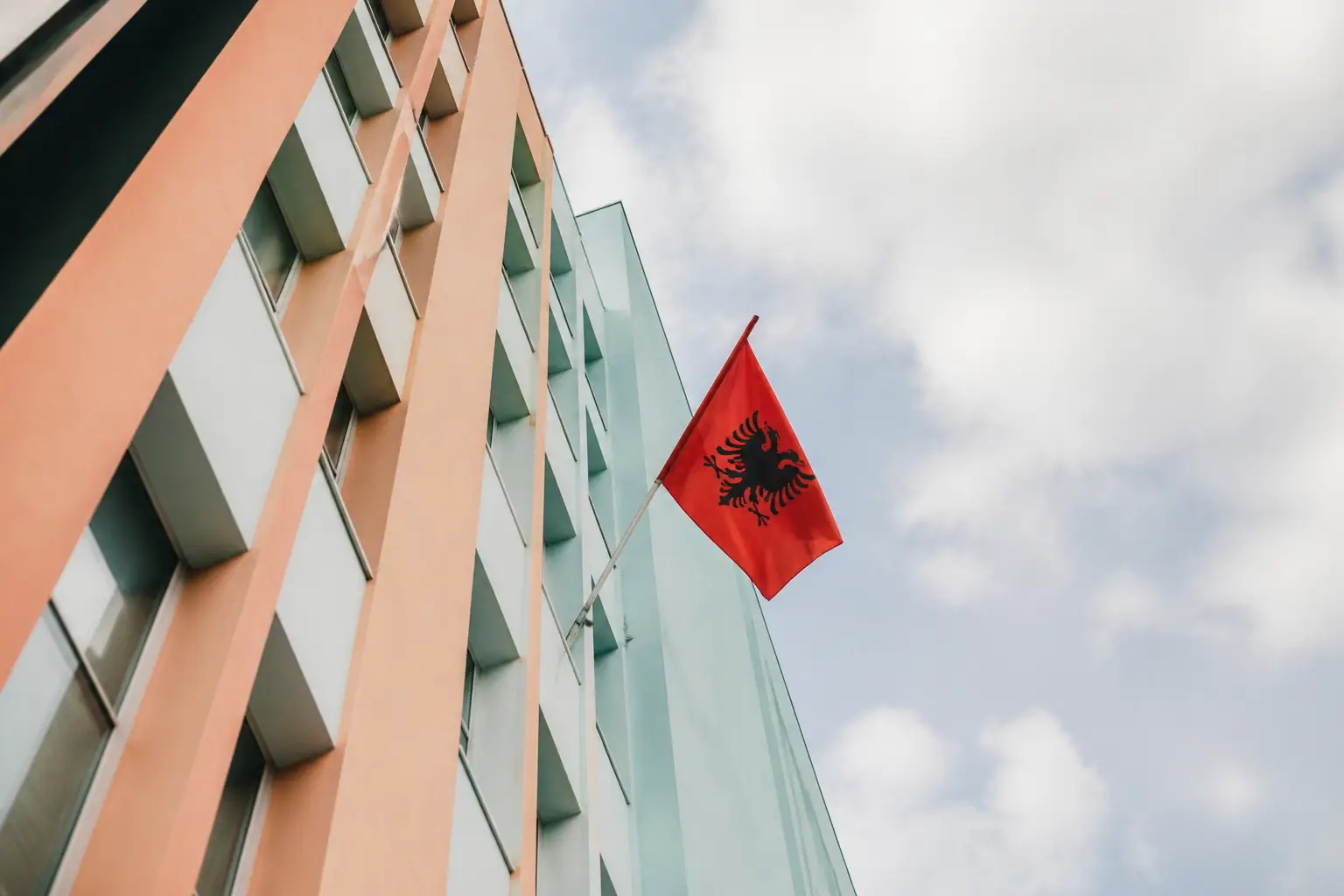
After a failed prohibition, Albania is licensing up to 10 online operators. The government expects €20 million in annual revenue to combat the $126 million black market.
Albania is on the verge of a significant shift in its gambling policy. After seven years of a total ban on sports betting, the government has finalized the legal framework for a controlled reopening of the market. This move comes from the stark realization that the 2019 prohibition did not end betting but merely pushed it into the digital underground. Estimates from Gambling Compliance International highlight the scale of this shadow market: unregulated online sports betting GGR was estimated at $117 million in 2024, with projections reaching $126 million for 2025.
Prime Minister Edi Rama, who once called the ban a "frontal war with evil," acknowledged as early as 2022 that the betting economy continued to flourish online. The new strategy aims to move these activities from the black economy into a taxable and supervised market. However, Albania is not returning to the conditions of 2018, when around 4,000 betting shops dominated the streets. Instead, the retail sector, including slot halls, remains strictly prohibited. The future of Albanian gambling is entirely digital, tied to national ID cards and payments through licensed banks.
Numbers and facts
The barriers to entry for interested companies are substantial and clearly target well-funded international players. Those wishing to secure one of the maximum ten available licenses must pay a license fee of 400 million ALL (approximately €4 million) over a ten-year term. Additionally, applicants must prove they are already active in at least three EU or OECD markets and generated a turnover of at least 2 billion ALL in the previous financial year. Share capital must be at least 40 million ALL.
For the Albanian national budget, the new regulation is a lucrative prospect. The government expects annual public revenues of about 2 billion ALL (approx. €20 million). Of this, 15% of the Gross Gaming Revenue (GGR) will go directly into a special fund for culture, sport, and innovation. Operators also face a 15% corporation tax rate. Despite these economic ambitions, there is a glaring gap in the system: Albania currently has no specialized counseling or rehabilitation center for people with gambling problems, even though new rules require operators to direct customers to such services.
Background
The total ban of 2019 was a reaction to social problems. In 2018, the sector generated around €700 million in turnover, which caused massive concerns regarding household financial stability in a country of 2.8 million people. There were also allegations of links between the betting business and organized crime. The current U-turn is an admission that digital offerings cannot be effectively blocked by national borders.
"We are talking about taking this activity out of the black economy and bringing the profits into the light, because nobody can block it – not even China." - Edi Rama, Prime Minister of Albania
Hendri Hanaj, founder of Hashtag Lawyers, observes that while the appetite for betting may have faded slightly over the years, demand remains substantial. The focus of the new regulation is now on channelization. Through digital payment trails, the Gambling Supervision Authority hopes to maintain control over transactions that were nearly impossible to track in the old era of physical betting shops.
Why it matters for German players
For German players, the market opening in Albania has no direct impact on their daily gaming experience but serves as a cautionary tale regarding the effectiveness of bans. In Germany, the Interstate Treaty on Gambling 2021 (GlüStV 2021) regulates the market. While Albania is just now trying to establish a digital self-exclusion system, Germany is already much further ahead with the OASIS database and the LUGAS monitoring system. German customers should strictly ensure they only play with providers listed on the official whitelist of the GGL.
Albanian licenses, even if now regulated, offer no legal protection for German users. In Germany, strict limits apply, such as the cross-operator deposit limit of 1,000 Euros per month and the 1 Euro per spin limit on virtual slots. Playing with a provider without a GGL license means entering illegal territory, similar to what Albanians did during their seven-year ban, and forfeits all claims to player protection under German standards.
What it means for GGL-licensed casinos
The development in Albania shows GGL-licensed operators that restrictive markets eventually tend toward regulation to avoid losing control entirely. For large international corporations already licensed in Germany, Albania offers a new, albeit small, expansion field. The high entry barriers protect established firms from smaller competitors. However, the challenge of channelization remains: licensed casinos in Germany also fight against competition from Curacao or Malta, just as Albania is now trying to lure its citizens away from the platforms they became accustomed to during the ban.
Frequently asked questions
Why did Albania lift the betting ban?
The 2019 ban failed to stop gambling and instead drove it into the unregulated black market with estimated turnovers exceeding $200 million. The government now wants to generate tax revenue and better control activities through digital licensing.
What types of gambling are now allowed in Albania?
Only online sports betting is allowed for up to ten licensed operators. Physical betting shops and slot halls remain strictly prohibited nationwide, while casinos are restricted to specific five-star hotels.
How high are the fees for an Albanian betting license?
Operators must pay a license fee of 400 million ALL, which is approximately 4 million Euros. This fee is paid over a ten-year term, and operators also face additional taxes on their Gross Gaming Revenue.
Are there player protection measures in Albania?
There is a digital self-exclusion system and a requirement for registration using a national ID card. However, a major concern is that the country currently lacks specialized centers for treating gambling addiction.
Can German players bet with Albanian providers?
No, for residents of Germany, only providers with a GGL license listed on the official whitelist are legal. Albanian licenses do not meet the German requirements of the Interstate Treaty on Gambling 2021.
Share
About the author

Lisa Lustich
Editor-in-chief & casino tester
Lisa Lustich has been testing German-language online casinos since 1997 and runs the Lustich.de newsroom. More than 400 published reviews, certified player-protection advisor (BZgA training, 2019).
All articles by Lisa Lustich →Sources & further reading
Whitelist of permitted online operators
Editorial guidelines Lustich.de
BZgA problem-gambling helpline: 0800 1 372 700
Gambling can be addictive. Please play responsibly. Help and counselling at 0800 1 372 700 (BZgA, free & anonymous).
Related topics
Further Reading
 AI-GENERATED
Las Vegas AML Conference: Global Networks Threaten Gaming Industry Integrity
Industry leaders meet in Las Vegas to tackle $312 billion in suspicious transactions linked to sophisticated international money laundering networks.
 AI-GENERATED
Vivek Ramaswamy Dodges Questions on $650,000 Gambling Industry Donations
Ohio gubernatorial candidate Vivek Ramaswamy remains silent on gambling expansion despite $650,000 in industry funds flowing into his supporting Super PAC.
 AI-GENERATED
Hollywood Casino Joliet: Illinois Gaming Board Extends License Until 2030
The Illinois Gaming Board has extended Hollywood Casino Joliet’s operating license for four years. The facility recently moved to a land-based site in August 2025.