Angola Takes Illegal Gambling Fight to the Markets
 AI-GENERATED
Angola's gambling regulator is launching public awareness campaigns in busy markets to combat unauthorized betting activities with over 89 billion USD at stake in regional comparisons.
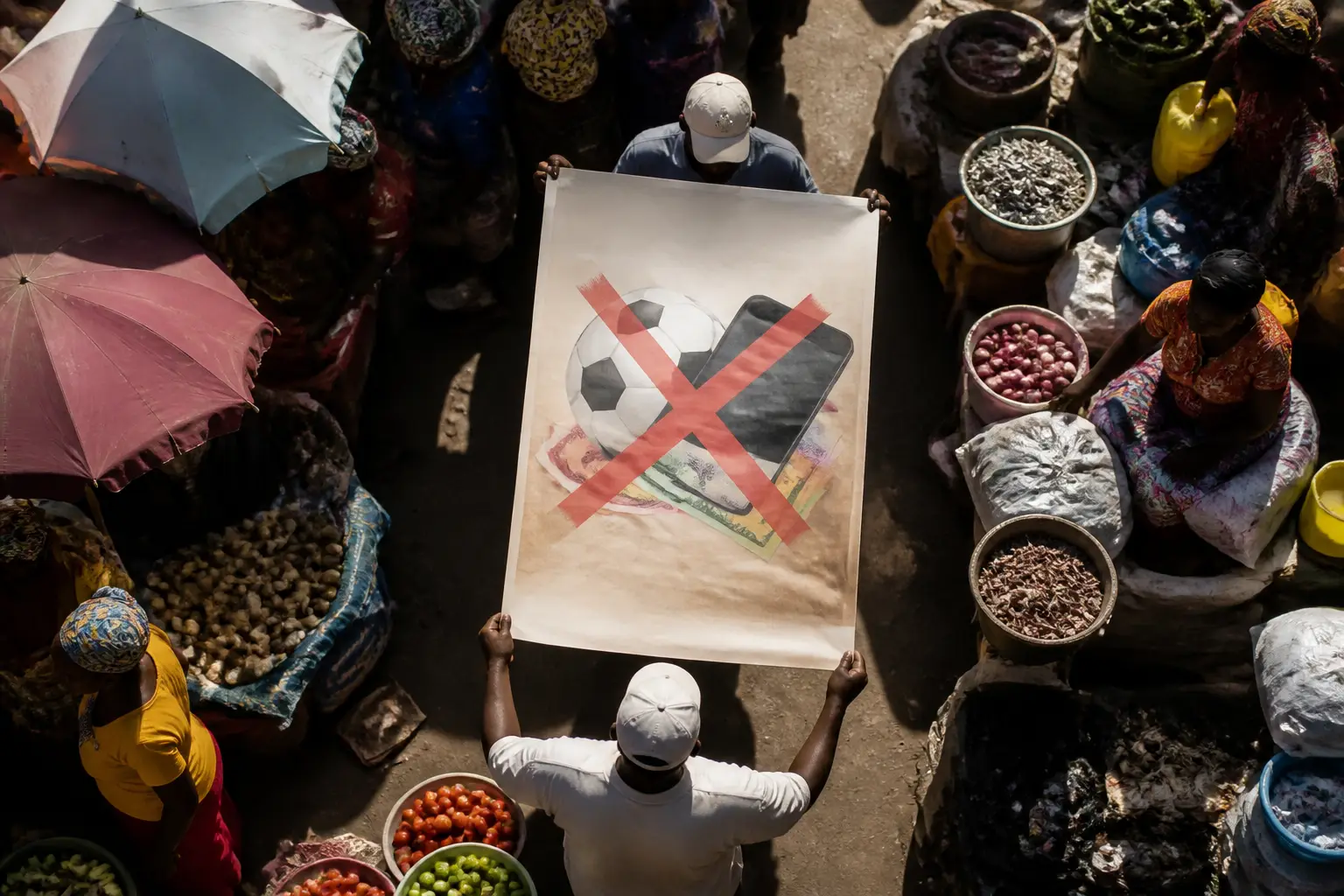
The Angolan gambling regulator, the Instituto de Supervisão de Jogos (ISJ), is taking a new approach in its battle against the black market. Instead of relying solely on inspections and subsequent punitive measures, officials are now going directly to where public life thrives. In the busy markets of Viana and Luanda Sul, traders, vendors, and customers were specifically informed about the dangers of unauthorized betting activities. This strategy of proactive education is intended to raise awareness of the legal framework before violations occur.
ISJ officials focused on direct dialogue during their visits. In conversations, they explained the rules governing gambling in Angola and the obligations arising from national gaming laws. A central goal was to clarify the difference between government-regulated offerings and illegal activities operating outside state oversight. Through this, the ISJ aims to strengthen confidence in the licensed sector and protect particularly vulnerable population groups from the risks of unregulated gambling.
Numbers and Facts
The campaign was led by high-ranking representatives. Cláudio Paulo, the Deputy General Director of the ISJ, and Afonso da Silva, head of the Supervision and Inspection Department, led the delegation. During the missions, flyers, posters, and roll-up banners were distributed, providing information on responsible gaming. The authority plans not to leave these activities as one-off actions but to expand them to other parts of the country. This is necessary as the African market shows immense growth potential, yet enforcement remains complex. While South Africa recorded an impressive ZAR 1.5 trillion (approximately USD 89 billion) in turnover during the financial years of 2024 and 2025, countries like the DR Congo struggle with a massive discrepancy between law and reality. There, estimates suggest only USD 1 million in taxes reach the state treasury, even though the iGaming sector reportedly generates around USD 1.7 billion annually.
"The initiative forms part of broader efforts to reinforce monitoring mechanisms within the gaming sector, with a view to mitigating the risks associated with the illicit practice of gaming activity." - Spokesperson, Institute of Game Supervision (ISJ)
Background
The challenges in Africa are multi-layered. Experts point out that about 45 of the 54 African countries have legalized gambling on paper, but actual oversight is often outdated or fragmented. Angola is now trying to establish tighter monitoring through cooperation with municipal authorities. A meeting in Luanda with municipal financial and budget officials underlined this course. The aim is to strengthen institutional cooperation and align enforcement strategies. For the ISJ, community-level education is a crucial tool to curb the informal market, which often arises where regulated operators are blocked by bureaucratic hurdles or a lack of licenses.
Why it matters for German players
For German players, the situation in Angola is a reminder of how important clear state structures are. In Germany, the State Treaty on Gambling (GlüStV 2021) is the ultimate standard. While Angola is still working on raising awareness in marketplaces, Germany has a central authority with the Joint Gambling Authority of the States (GGL), which maintains a strict whitelist. German players should exclusively play with providers holding a GGL license to benefit from protection mechanisms such as the EUR 1,000 monthly deposit limit and the cross-provider lockout system LUGAS. Illegal offers, as discussed on the street markets in Angola, unfortunately also exist on the internet for Germans. However, only the GGL-licensed environment guarantees player protection and compliance with the EUR 1 stake limit per spin on virtual slot machines.
What it means for GGL-licensed casinos
German casinos with a GGL license face tough competition from the black market, just like legal operators in Angola. The Angola case shows that regulation only works if authorities actively practice prevention. For German licensees, this means they must continue to strictly adhere to advertising guidelines and player protection requirements to stand out from the unregulated market. The integrity of the market is the highest priority. When authorities like the ISJ or the GGL take consistent action against illegal providers, it strengthens the market position of those who follow the law and pay taxes in their respective countries.
Frequently asked questions
Why is the Angolan authority going to public markets?
The ISJ regulator wants to educate traders and customers directly on-site about the risks of illegal gambling. The goal is to raise awareness for legal offers rather than relying only on retrospective inspections.
Who led the awareness campaign in Angola?
The campaign was conducted by Cláudio Paulo, Deputy General Director of the ISJ, along with Afonso da Silva, head of the inspection department.
What are the financial dimensions of the gambling market in Africa?
While South Africa turns over around USD 89 billion annually, countries like the DR Congo lose enormous tax revenues to the black market. Angola is now trying to secure these revenues through better cooperation with municipalities.
How do illegal offers differ from licensed operators?
Licensed operators are subject to state supervision, pay taxes, and must meet player protection standards. Illegal providers operate outside this control, posing high risks for fraud and lack of youth protection.
What should German players consider when choosing an online casino?
Players in Germany should definitely check the GGL whitelist and only play at licensed providers. Only there are the monthly EUR 1,000 limit and protection through the LUGAS system legally guaranteed.
Share
About the author

Lisa Lustich
Editor-in-chief & casino tester
Lisa Lustich has been testing German-language online casinos since 1997 and runs the Lustich.de newsroom. More than 400 published reviews, certified player-protection advisor (BZgA training, 2019).
All articles by Lisa Lustich →Sources & further reading
Whitelist of permitted online operators
Editorial guidelines Lustich.de
BZgA problem-gambling helpline: 0800 1 372 700
Gambling can be addictive. Please play responsibly. Help and counselling at 0800 1 372 700 (BZgA, free & anonymous).
Related topics
Further Reading
 AI-GENERATED
San Antonio Council Member Pushes for Citywide Eight-Liner Ban
Councilwoman Teri Castillo is seeking a total ban on eight-liner machines in San Antonio, citing their role in illegal gambling operations despite state law exceptions.
 AI-GENERATED
Robinhood Pauses Sports Event Contracts in Michigan Amid Legal Battle
Trading platform Robinhood has agreed to withdraw its sports prediction markets in Michigan following a court order and ongoing disputes over gambling classifications.
 AI-GENERATED
Argentina Reports $70.5 Million in Online Betting Tax Revenue
The Argentine revenue agency ARCA has collected over $70.5 million from the online gambling sector in the first eight months of 2026.