California Conflict: DraftKings and Kalshi Launch Prediction Market Offensive
 AI-GENERATED
The battle for California's gaming market intensifies as DraftKings goes live with prediction products. Kalshi spent $1.7 million on federal lobbying to secure its legal status.
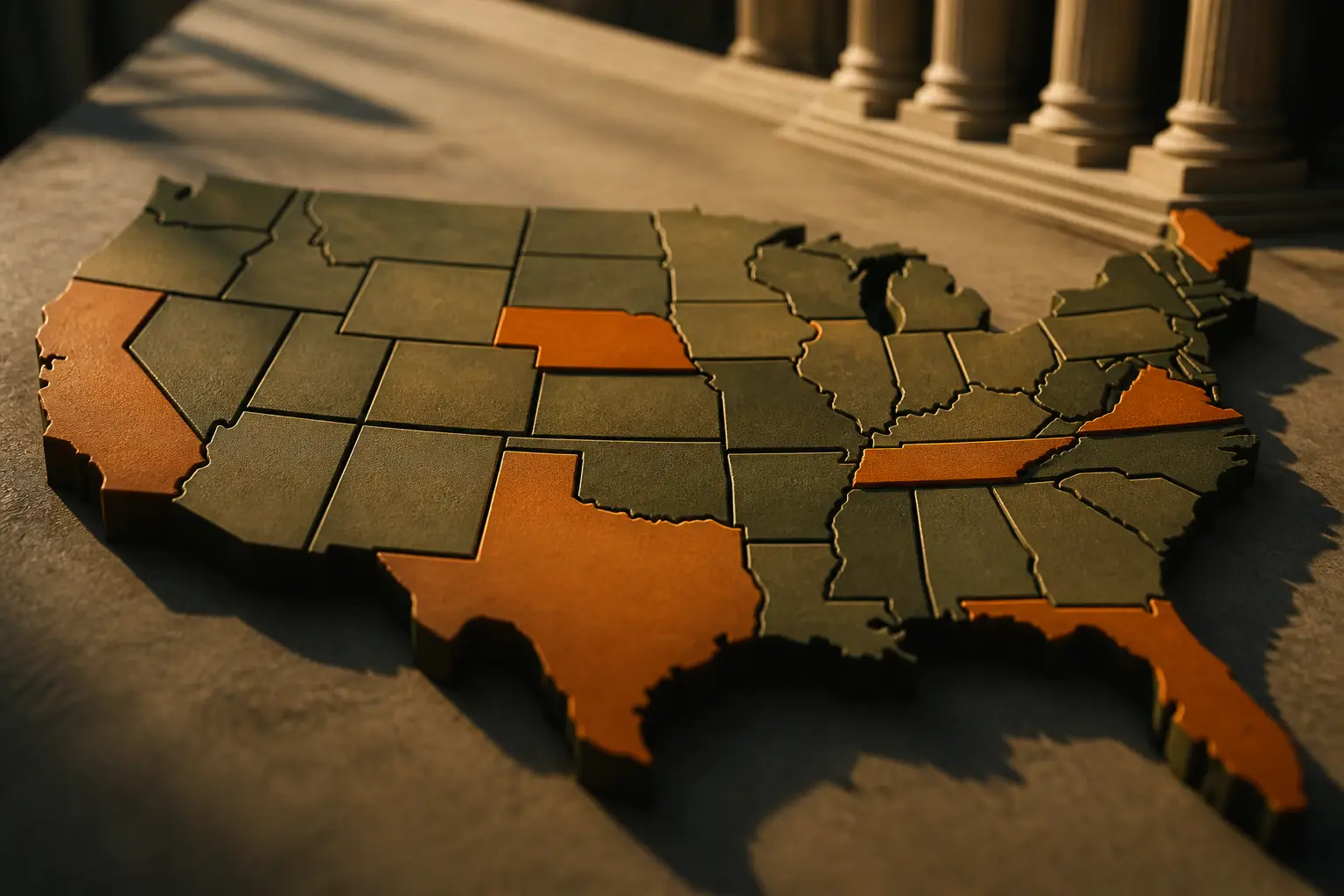
A massive political storm is brewing in California. The most lucrative gaming market in the United States is currently experiencing a turning point, as heavyweights like DraftKings and platforms like Kalshi attempt to undermine the existing ban on online sports betting through so-called prediction markets. While official sports betting remains illegal in the Golden State following the failed 2022 referendum, operators have found a regulatory loophole. They offer contracts on the outcome of sporting events that are legally declared as financial derivatives rather than bets. This push has triggered a wave of lobbying and legal counterattacks that are shaking the power structure between the state, the tribes, and tech giants.
The launch of DraftKings Predictions in June is particularly sensitive. The company, which previously invested millions in unsuccessful legalization campaigns, is now offering event-based wagering directly in California. The accusation from opponents is grave: it is illegal gambling under a new name. Meanwhile, the Coalition for Prediction Markets, which includes Crypto.com, Robinhood, and Coinbase, is trying to shift the political mood. They are relying on insider contacts, such as founder Evan Corder, who formerly served as Chief of Staff to Attorney General Rob Bonta. The goal is clear: to secure the classification of these markets as legitimate trading venues.
Numbers and facts
The financial resources flowing into this battle are significant. Kalshi invested more than $1.7 million in federal lobbying in the first half of this year, supplemented by at least $160,000 specifically for California. The Coalition for Prediction Markets also paid $100,000 to the advisory firm Invariant in the second quarter of 2026 to educate policymakers about event contracts. On the opposing side are the tribes, who are extremely well-connected politically. They donated over $2 million to Governor Gavin Newsom and the California Partners Project, a nonprofit co-founded by his wife. James Siva, chairman of the California Nations Indian Gaming Association, made it clear that California is the golden goose for operators.
„Prediction markets cannot use federal loopholes to bypass state consumer protection, sports gaming, and gambling laws. By joining this brief, we are standing firmly with Ohio and our state partners to ensure that federal commodities laws are not weaponized to evade state laws, fuel gambling addiction, and undermine state revenue.“ - Rob Bonta, Attorney General of California
Background
The conflict centers on the definition provided by regulatory authorities. While traditional sports betting is subject to state regulation, prediction markets theoretically fall under the Commodity Futures Trading Commission (CFTC) at the federal level. This leads to the curious situation where one can bet on a Lakers game in California as long as it is declared as the purchase of an event contract. The indigenous tribes see this as a direct attack on their sovereignty. Victor Rocha of the Indian Gaming Association reacted sharply on the platform X to DraftKings' expansion, promising to use every available resource to choke the oxygen out of these operators. Bonta, in turn, has already supported an alliance of 37 attorneys general acting against Kalshi.
Governor Newsom is in a bind. On one hand, he must protect the interests of the tribes, with whom he recently signed a 25-year compact, such as in the case of the Fort Mojave Indian Tribe. This deal allows the tribe to operate two casinos with up to 1,200 slot machines. On the other hand, he is under pressure from the Silicon Valley lobby, which celebrates prediction markets as technological innovations in the financial world. The case demonstrates how difficult it is to squeeze modern digital products into a legal system that is still based on physical casino licenses and strict territorial rights.
Why it matters for German players
For German players, this development serves as a cautionary tale regarding the importance of clear regulation. In Germany, there is a strict separation thanks to the State Treaty on Gambling 2021 (GlüStV 2021). Sports betting and online casinos require a license from the Gemeinsame Glücksspielbehörde der Länder (GGL). Such gray-market products as the US prediction markets would hardly have a chance in this country, as the GGL closely monitors compliance with the 1-euro limit per spin for slots and the monthly deposit limit of 1,000 euros via the LUGAS system. Anyone wishing to play safely in Germany should exclusively use providers from the official whitelist. US platforms without a German license offer no legal certainty and violate local player protection laws.
What it means for GGL-licensed casinos
Licensed German operators can learn from the Californian chaos that legal certainty is the highest priority. While billions flow into lobbying and court proceedings in the USA, the German market offers a stable framework through GGL regulation. Nevertheless, the trend toward event betting shows that interest in new forms of wagering is growing. However, German bookmakers must remain within the narrow limits of the GlüStV, which, for example, regulates bets on social events or political elections much more strictly than sports betting or bans them entirely. The stability of the whitelist protects operators in this country from the existential legal wars that DraftKings and Kalshi are currently fighting in California.
Frequently asked questions
What are prediction markets and why are they controversial in California?
Prediction markets like Kalshi allow users to trade on the outcome of events, which is legally considered a financial contract. In California, this is controversial because it effectively enables sports betting even though it is technically prohibited in the state.
How much money is Kalshi investing in lobbying?
Kalshi spent over $1.7 million on federal lobbying in the first half of 2026 alone. Additionally, there are high six-figure amounts for efforts directly in California to influence political decision-makers.
What role do the indigenous tribes play in this conflict?
The tribes hold exclusive rights to many forms of gambling in California and see prediction markets as a threat to their revenue. They have donated over $2 million to Governor Newsom and associated organizations and are threatening operators like DraftKings with legal action.
Why is DraftKings going live with a prediction market if sports betting is banned?
DraftKings is using a regulatory loophole by declaring their platform a market for event predictions, which could fall under federal financial law. This allows them to reach users in states where traditional gambling has not yet been legalized.
Can German players bet on platforms like Kalshi or DraftKings Predictions?
No, these platforms do not hold a license from the Gemeinsame Glücksspielbehörde der Länder (GGL) for the German market. German players should stick to the GGL whitelist to benefit from protection mechanisms like the 1,000-euro deposit limit and the LUGAS system.
Share
About the author

Lisa Lustich
Editor-in-chief & casino tester
Lisa Lustich has been testing German-language online casinos since 1997 and runs the Lustich.de newsroom. More than 400 published reviews, certified player-protection advisor (BZgA training, 2019).
All articles by Lisa Lustich →Sources & further reading
Whitelist of permitted online operators
Editorial guidelines Lustich.de
BZgA problem-gambling helpline: 0800 1 372 700
 United States
Gambling can be addictive. Please play responsibly. Help and counselling at 0800 1 372 700 (BZgA, free & anonymous).
Related topics
Further Reading
 AI-GENERATED
Ukraine to Enforce Gambling Ban for Military Personnel via New Software
Ukrainian regulator PlayCity is developing a mandatory blocking module for military members, aiming for full implementation by December 24, 2026.
 AI-GENERATED
Cruzeiro Stays at Mineirão Despite State Ban on Betting Advertisements
A new ban on gambling ads on government property in Minas Gerais will not force Cruzeiro out of their stadium. Decree No. 49,279/2026 caused initial conflict with CBF rules.
 AI-GENERATED
Poland Investigates Bookmakers: AI Deployed to Detect Dark Patterns
The Polish consumer protection office UOKiK is reviewing major operators including STS and Fortuna. Firms face fines of up to 10% of annual turnover for failures.