Digital IDs in Gambling: Less Friction and Enhanced Security for Players?
 AI-GENERATED
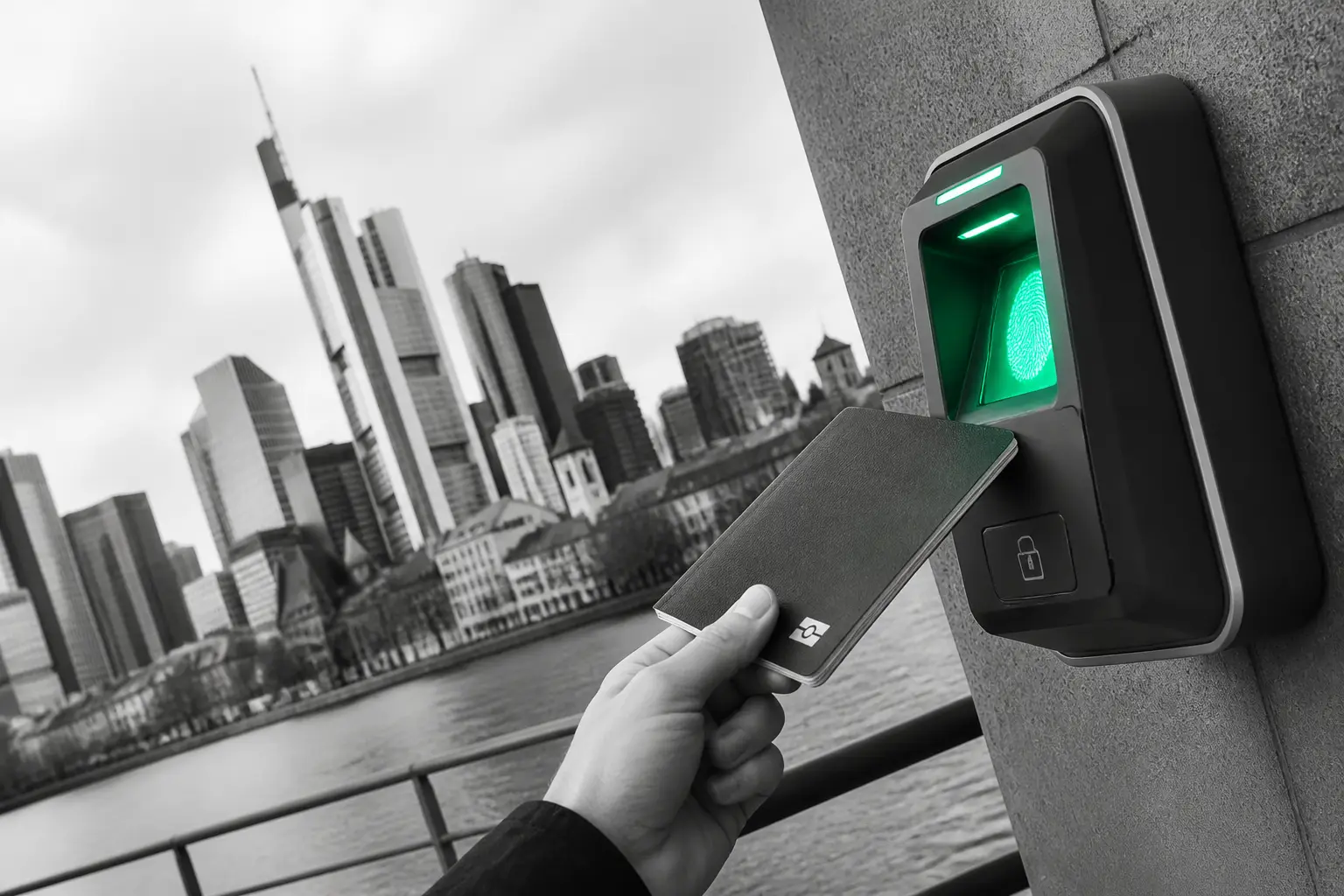
Emerging Digital ID technologies could revolutionize online casino onboarding. Studies show that 81 percent of consumers are concerned about minor protection.
The world of online gambling is changing rapidly, and with it, the demands for security. Today's customers expect high-assurance identity verification that presents as few hurdles as possible. In North America, operators are currently gearing up for their busiest time of year with the NFL season kicking off in September. In this context, Digital ID technology is increasingly moving into focus. It promises to make onboarding new customers smoother without neglecting minor protection. Failures in age verification can be costly, as shown by the example of operator Betty in Ontario, which was fined 120,000 dollars.
A spokesperson for DraftKings emphasized to journalists that the company has a zero-tolerance policy regarding minors. They do not want minors using the platform under any circumstances. Therefore, DraftKings verifies the identity and age of every customer before an account can be created. They use systems that are also employed by banks and government agencies. The challenge lies in finding the right balance between security and privacy, as many users are hesitant to share too much personal data.
Numbers and facts
A recent study by Jumio among 8,003 adult consumers across four countries shows clear trends. An impressive 81 percent of respondents expressed concern that minors could gain access to age-gated content. At the same time, 65 percent of participants wish to verify their age only once and be able to reuse that verification across different platforms. An interesting point is selective disclosure: 67 percent of respondents would feel more comfortable if they only had to provide proof of eligibility rather than sharing their entire personal details. Nevertheless, a third of respondents stated they would avoid a platform entirely if too much private information was required for age verification.
Philipp Pointner, Chief of Digital Identity at Jumio, sees a tension here. According to Pointner, people generally accept identity verification where it is necessary, but they reject giving away their full identity in every conceivable circumstance. Old verification methods, where one had to provide a mother's maiden name or first car model, are dying out. Modern approaches combine data analysis with biometric technologies such as age estimation via photo. These algorithms have become so precise that Pointner reports the system accurately identified his age as 46.
"People are generally understanding of identity verification where there is a need. What that stat says, however, is that people are not okay with giving away their full identity in every circumstance." - Philipp Pointner, Chief of Digital Identity at Jumio
Background
Digital IDs, such as mobile driver's licenses in the US, are electronic representations of personally identifiable information. In Ohio, land-based casinos have been allowed since December 2024 to accept mobile driver's licenses in Apple Wallets for entry. This shows that the physical world and digital identity are increasingly merging. For gambling operators, this is particularly relevant as they must not only check age but also combat fraud, bonus abuse, and money laundering. A technology called "selfie.DONE" by Jumio allows customers to verify themselves once and then only take a selfie for confirmation at other partner companies. This massively reduces friction when switching between different providers.
However, there is also criticism. Civil liberties groups like the American Civil Liberties Union (ACLU) warn of an Orwellian nightmare if digital ID systems allow governments to track every use of the ID. While the EU model avoids technologies that report location back to the issuer, countries like Brazil have systems with QR codes that allow for precise tracking of movements. Pointner points out that in the end, people often choose convenience over privacy, which is likely to promote the acceptance of these systems.
Why it matters for German players
For players in Germany, identity verification is already part of daily life, driven by the State Treaty on Gambling 2021 (GlüStV 2021). German online casinos with a GGL license must comply with strict requirements to ensure minor protection and addiction prevention. The introduction of Digital IDs could bring enormous relief here. Currently, German players often have to identify themselves laboriously via video ident or by uploading documents. A universal Digital ID that is created once and then used across various licensed providers would speed up the process.
Since in Germany the deposit limit of 1,000 euros per month is monitored via the central LUGAS system, clear identification is unavoidable. The stake limit of 1 euro per round for online slots also requires clear assignment to a player profile. Digital IDs could help make data transmission more secure and private by allowing only the absolutely necessary information to flow to the casino or authorities. This would increase acceptance of regulated offers and make the black market less attractive.
What it means for GGL-licensed casinos
German casinos on the whitelist of the Joint Gambling Authority of the States (GGL) could benefit from a standardization of Digital IDs. Less friction during onboarding means higher conversion rates. If a player does not have to stare into a camera for minutes or search for documents, the barrier to registering with a legal provider is lower. This strengthens the channeling toward the legal market, which is one of the GGL's primary goals. Furthermore, automated, AI-supported age verification reduces the risk of human error, which could lead to severe regulatory fines or even the revocation of a license.
Integrating modern KYC (Know Your Customer) procedures is not an option but a duty for licensed operators in Germany. Providers who early adopt user-friendly and data-minimalist technologies will have the edge in competition. While MGA or Curacao casinos often feign laxer checks, the GGL license combined with a secure Digital ID offers the highest protection for the player and legal certainty for the operator.
Frequently asked questions
What is a Digital ID in gambling?
A Digital ID is an electronic version of personal data used for identity verification. It allows players to securely prove their age and identity without having to present physical documents every time.
Why is age verification so important for online casinos?
Operators are legally required to exclude minors from gambling. Violations can result in high fines, as shown by the case of operator Betty in Ontario, which was fined 120,000 dollars.
What are the benefits of Digital IDs for players?
Players benefit from faster registration and more privacy through selective disclosure. According to a Jumio study, 65 percent of users prefer one-time verification over repeated checks.
Are there security concerns regarding digital IDs?
Yes, civil liberties groups warn of potential surveillance by government agencies. However, modern systems, such as those planned in the EU, are intended to use technologies that prevent tracking of movements.
How does the GGL license affect identity verification in Germany?
In Germany, identification is mandatory under the GlüStV 2021 to monitor limits such as the monthly 1,000 euro deposit limit in LUGAS. Digital IDs could significantly simplify and speed up this process for German players.
Share
About the author

Lisa Lustich
Editor-in-chief & casino tester
Lisa Lustich has been testing German-language online casinos since 1997 and runs the Lustich.de newsroom. More than 400 published reviews, certified player-protection advisor (BZgA training, 2019).
All articles by Lisa Lustich →Sources & further reading
Whitelist of permitted online operators
Editorial guidelines Lustich.de
BZgA problem-gambling helpline: 0800 1 372 700
Gambling can be addictive. Please play responsibly. Help and counselling at 0800 1 372 700 (BZgA, free & anonymous).
Read this article in 46 languages
- German
- English
- Portuguese
- French
- Italian
- Spanish
- Japanese
- Polish
- Arabic
- Dutch
- Russian
- Turkish
- Swedish
- Danish
- Norwegian
- Finnish
- Korean
- Hindi
- Indonesian
- Thai
- Vietnamese
- Chinese
- Czech
- Hungarian
- Romanian
- Greek
- Ukrainian
- Croatian
- Bulgarian
- Filipino
- Slovak
- Serbian
- Hebrew
- Persian
- Malay
- Urdu
- Albanian
- Afrikaans
- Lithuanian
- Latvian
- Estonian
- Slovenian
- Uzbek
- Swahili
- Azerbaijani
- Hausa
Related topics
Further Reading
 AI-GENERATED
Kambi Rebrands to Unify Acquired Businesses Under AI-Driven Identity
Sports betting provider Kambi is consolidating its business units, including Tzeract and Abios, under one brand. The firm now processes €17bn in annual turnover.
 AI-GENERATED
Kanggiten CEO Viktor Cherkas warns of growth ceilings caused by rigid casino platforms
Outdated technology is blocking player retention. CEO Viktor Cherkas explains how platform migration boosted customer loyalty by up to 27 percent at VOX Casino.
 AI-GENERATED
Tax Battle Over Skill Games: Georgia's Gambling Sector Under Scrutiny
A Georgia lawmaker is pushing for a massive tax hike on COAM devices from 13 to 30 percent to bolster state education funding.