Heidenheim Raid: 42 Manipulated Slot Machines Confiscated and Destroyed
 AI-GENERATED
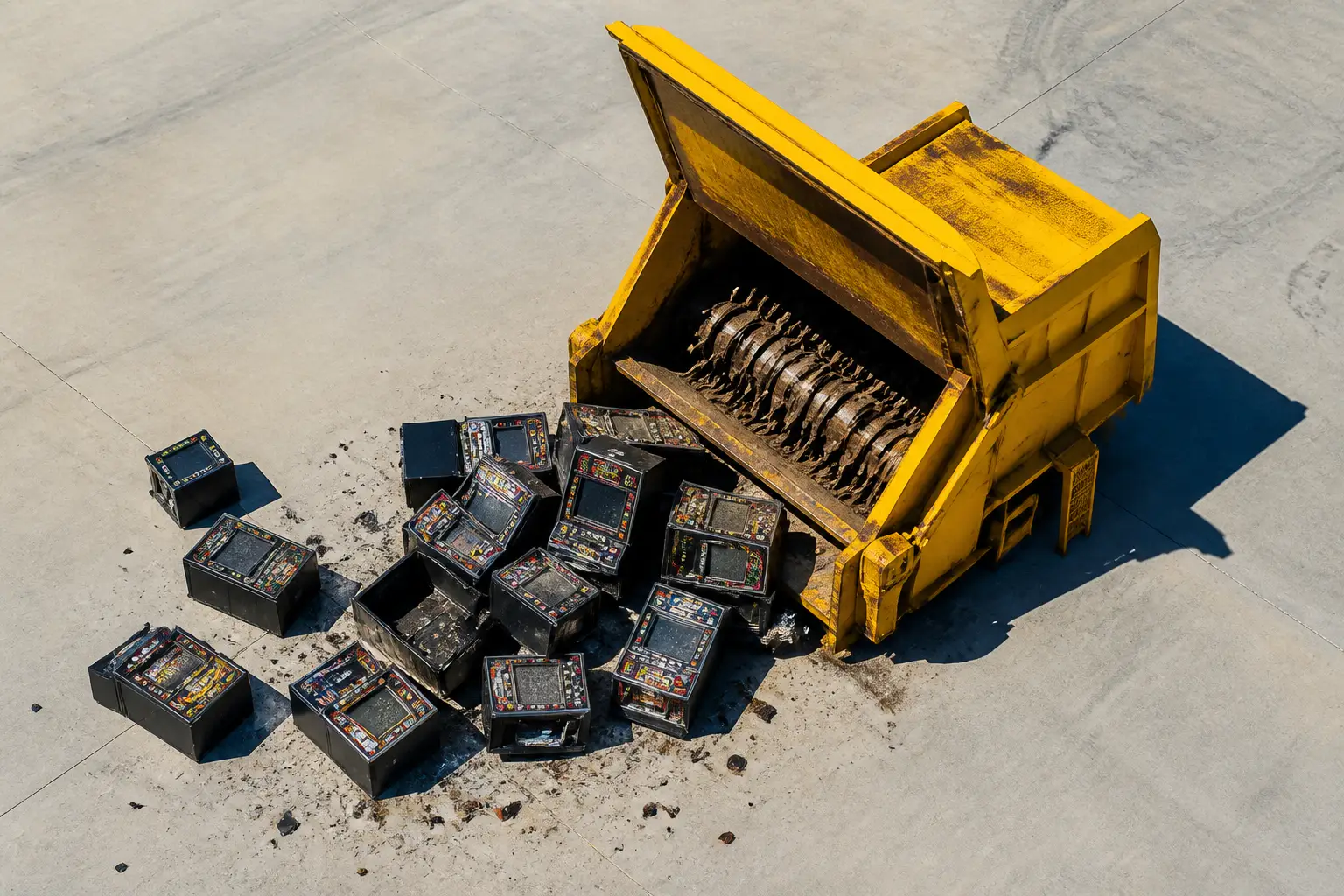
Authorities in Heidenheim seized 42 illegal slot machines lacking player protection. Mayor Michael Salomo personally assisted in the destruction of the devices.
In Heidenheim, the city administration has dealt a significant blow to illegal gambling. During extensive targeted inspections across the city, officials secured a total of 42 slot machines operated without any permits in restaurants and shisha bars. These devices were not located in regular gambling halls where strict regulations apply, but instead lured guests in an uncontrolled environment. The city administration considers this operation a major investigative success, as the manipulated machines posed a substantial threat to the financial existence of players.
The technical manipulation of the seized devices is particularly alarming. While legal gaming machines are subject to strict loss limits, the confiscated items lacked all protective mechanisms. Many of these machines are home-made, possessing neither TÜV certification nor technical seals. They suggest gigantic winning possibilities to users that could never actually be paid out in reality. The fight against this shadow economy is being waged with great determination in Heidenheim, which was also shown symbolically: Mayor Michael Salomo (SPD) personally picked up a hammer to render one of the devices unusable.
Numbers and facts
According to city administration experts, the extent of the manipulation is severe. In legal machines, losses or winnings per hour are strictly limited to a maximum of 400 euros to prevent excessive gambling behavior. In the 42 machines seized in Heidenheim, this protection was completely bypassed. Illegal slots often lure players with win promises of up to 400,000 euros. However, since these devices are not connected to a controlled system, such sums are factually never paid out.
An expert from the Heidenheim administration explained the legal development of recent years:
"Nine years ago, these rules for gambling became even stricter. The scene then increasingly moved into illegality. In the illegal milieu, the protection of gamblers is completely undermined." - Expert of the Heidenheim city administration
Illegal gambling is coming into the focus of prosecutors not only locally but also internationally. Interpol's Operation First Light 2026, which took place between January 15 and April 30, led to 5,811 arrests worldwide. Illegal assets worth 293 million US dollars were secured. A total of 152,808 cases were investigated in 97 countries, with online gambling networks often serving as a basis for money laundering and identity fraud.
Background
The investigations in Heidenheim show that illegal gambling is rarely an isolated offense. According to city information, the checks are closely linked to other crimes such as tax evasion, drug trafficking, or money laundering. Before the 42 machines were destroyed, experts subjected the technology to a precise analysis. Every machine has a serial number or an IP address, through which the device's path can be traced. This made it possible to determine who performed the installation and where the hardware originated. After reading the data, the circuit boards were destroyed to prevent reuse.
Criminals often use perfidious methods to gain people's trust. As part of the Interpol operation, for example, a network was busted in Eswatini that had replicated an entire Brazilian police station, including uniforms and signage. Such social engineering methods aim to manipulate victims and allow funds to flow through illegal channels. In Heidenheim, the problem is local in nature, but the networking with criminal structures remains the same.
Why it matters for German players
For German players, the situation in Heidenheim is an urgent warning against offers outside the regulated market. Those who play at machines in shisha bars or dubious backrooms enjoy no legal protection whatsoever. The State Treaty on Gambling 2021 (GlüStV 2021) stipulates that only providers with a permit from the Joint Gambling Authority of the States (GGL) may operate legally. These providers can be found on the so-called whitelist. Protective measures apply there, such as the cross-provider deposit limit of 1,000 euros per month and the stake limit of one euro per spin for online slots. Additionally, the LUGAS IT system ensures that bans and limits are consistently monitored. Playing on illegal machines not only risks the loss of money without a chance of winning but may also make the player liable for participating in illegal gambling.
What it means for GGL-licensed casinos
For operators with a GGL license, such strikes by the authorities are an important signal for fair competition. Illegal offers can offer mathematically more attractive but fraudulent odds by ignoring taxes and player protection rules, which legal providers cannot match due to regulation. The success in Heidenheim strengthens the position of legal providers as it shows that the rule of law is taking action against the black market. Nevertheless, pressure remains high, as the scene has increasingly moved underground since the tightening of rules nine years ago, according to the Heidenheim expert opinion. Legal casinos must therefore continue to convince through transparency and security to protect players from the dangers of manipulated hardware.
Frequently asked questions
How many illegal machines were seized in Heidenheim?
A total of 42 illegal slot machines were secured during targeted inspections in the city area. These were mainly located in restaurants and shisha bars instead of official gambling halls.
What winning amounts do manipulated gaming devices promise?
Some of the illegal machines suggested winnings of up to 400,000 euros. However, since the devices were manipulated and did not meet legal requirements, these sums could never be paid out.
Why are illegal slot machines dangerous for users?
In these devices, legal player protection is completely bypassed, enabling extremely high losses in a very short time. Furthermore, technical seals like TÜV certification are missing, and winnings are often never paid out.
What happens to the confiscated devices?
The machines are read by experts to trace IP addresses and serial numbers. Afterward, they are physically rendered unusable, and the circuit boards and housings are destroyed.
How do I recognize legal gambling in Germany?
Legal offers must have a license from the GGL and be on the official whitelist. These providers adhere to the State Treaty on Gambling 2021, offer protection systems like LUGAS, and limit stakes and deposits.
Share
About the author

Lisa Lustich
Editor-in-chief & casino tester
Lisa Lustich has been testing German-language online casinos since 1997 and runs the Lustich.de newsroom. More than 400 published reviews, certified player-protection advisor (BZgA training, 2019).
All articles by Lisa Lustich →Sources & further reading
Whitelist of permitted online operators
Editorial guidelines Lustich.de
BZgA problem-gambling helpline: 0800 1 372 700
Gambling can be addictive. Please play responsibly. Help and counselling at 0800 1 372 700 (BZgA, free & anonymous).
Read this article in 57 languages
- German
- English
- Portuguese
- French
- Italian
- Spanish
- Japanese
- Polish
- Arabic
- Dutch
- Russian
- Turkish
- Swedish
- Danish
- Norwegian
- Finnish
- Korean
- Hindi
- Indonesian
- Thai
- Vietnamese
- Chinese
- Czech
- Hungarian
- Romanian
- Greek
- Ukrainian
- Croatian
- Bulgarian
- Filipino
- Slovak
- Serbian
- Hebrew
- Persian
- Malay
- Bangla
- Tamil
- Telugu
- Urdu
- Georgian
- Khmer
- Albanian
- Kazakh
- Afrikaans
- Lithuanian
- Latvian
- Estonian
- Slovenian
- Uzbek
- Swahili
- Azerbaijani
- Amharic
- Tajik
- Kyrgyz
- Sinhala
- Hausa
- Nepali
Related topics
Further Reading
 AI-GENERATED
Tesco and Sports Stars Targeted: Fraudulent Scam With Illegal Casino Ads
Unlicensed casinos are hijacking brands like Tesco and stars like Lewis Hamilton for fake ads on Meta platforms. Tesco has already alerted the police.
 AI-GENERATED
Malaysia Proposes New Regulations for Loot Boxes and In-Game Purchases
The Malaysian CMCF has launched a 45-day public consultation on a new Gaming Sub-Code focusing on loot boxes, Gacha mechanics, and child safety.
 AI-GENERATED
Poker Over 13th Casino License in Austria: New Rules and Criticism of Bundled Tenders
Austria plans to issue a 13th casino concession while lowering the required share capital from 22 million to 10 million euros.