New Zealand Outlaws AI Casino Endorsements to Combat Deepfake Scams
 AI-GENERATED
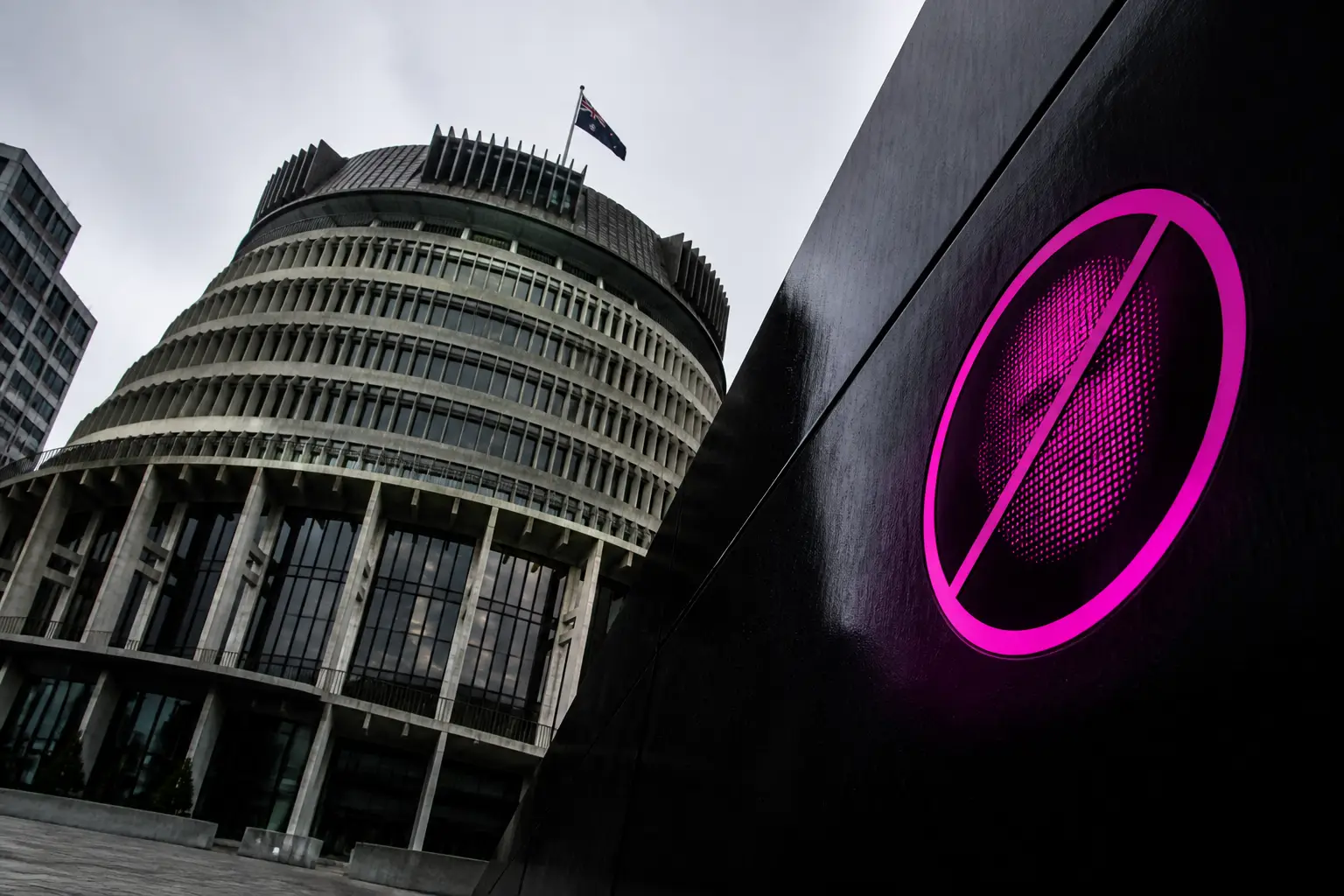
New Zealand officials have introduced a ban on AI-generated faces and voices in gambling ads. Violators face civil penalties of up to €4.3 million.
New Zealand is taking a firm stand against the dark side of artificial intelligence in the gambling sector. The government has implemented a significant tightening of online casino advertising rules, specifically prohibiting the use of deepfakes and synthetic influencers. As the country prepares to open its regulated market with 15 licenses for approved operators, concerns are growing regarding criminal schemes that trap unsuspecting users. The new rules aim to curb the proliferation of fraudulent offers before the official market launch.
The Department of Internal Affairs (DIA) has observed a dangerous trend where celebrity faces and familiar voices are mimicked using AI software. These synthetic representations make dubious gambling offers appear legitimate, enticing consumers to disclose sensitive financial information. Authorities emphasize that these are not minor offenses but targeted frauds designed to obtain personal data or steal funds directly. Consumer protection is the top priority for these measures to ensure trust in the upcoming legal market is not undermined from the start.
Numbers and facts
The scale of the new regulations is highlighted by the threatened penalties. Companies breaching the advertising bans face civil penalties of up to 5 million New Zealand dollars, which is approximately 4.3 million euros. A concrete negative example of AI misuse involved an advertisement for an app called “Māori Game”. It featured TVNZ presenter Jenny-May Clarkson and an AI-generated version of renowned filmmaker Taika Waititi, despite neither individual giving consent or having any involvement in the project.
From December, all operators who have not applied for an online casino license must cease operations in New Zealand entirely. Authorities began implementing the new restrictions in July following advice presented to Minister Brooke van Velden. The regulations state, among other things, that online casino ads are strictly prohibited during live broadcasts and within a 30-minute window before and after such broadcasts. Sports and racing betting, however, remain outside the scope of the Online Casino Gambling Act, ensuring a clear distinction between gaming types.
Background
The decision to ban AI-generated endorsements stems from a legal loophole. Previous advertising regulations assumed that a real person must be paid for an endorsement. Since an AI is not a natural person, clever operators exploited this gap to advertise without actual celebrity contracts. The Department of Internal Affairs sees a massive risk in the manipulation of younger audiences, particularly Gen Z, who respond strongly to social media and influencers. Synthetic influencers can be programmed to project a perfect but false sense of credibility.
“These AI endorsements—including synthetic influencers, deepfakes, and other likeness-based representations—are increasingly used internationally and have already been observed in New Zealand, creating risks of consumer deception and contributing to gambling harm,” - Department of Internal Affairs briefing
Ben Gamboni, deputy director of gambling at the Department of Internal Affairs, warns urgently of the danger of identity theft. He urged the public to document suspicious advertisements.
“It’s just a scam and a way to get your details, either for identity theft or just to take the money out of your wallet,” - Ben Gamboni, Deputy Director of Gambling at the Department of Internal Affairs
Why it matters for German players
In Germany, the situation is already tightly framed by the State Treaty on Gambling 2021 (GlüStV 2021). German players should be aware that advertisements sounding too good to be true are often traps. While New Zealand is only now introducing specific AI bans, the Joint Gambling Authority of the States (GGL) in Germany already monitors the market with strict oversight. Those playing in Germany are only safe at casinos listed on the official GGL whitelist. These sites feature protection mechanisms such as a 1,000 euro monthly deposit limit and a 1 euro per spin limit on slots. Furthermore, the LUGAS system ensures cross-operator monitoring of limits to prevent gambling addiction. Deepfakes of German celebrities for illegal casinos do appear on social media here as well, but they are already illegal under current domestic laws.
What it means for GGL-licensed casinos
For operators with a German GGL license, the global developments in AI primarily mean one thing: vigilance. Reputable operators never rely on shady deepfakes; instead, they focus on transparent communication. In a regulated market like Germany, where advertising is already heavily restricted, the GGL acts as a shield. Operators without a license from MGA or Curacao regions often try to bypass strict German rules and use methods similar to the fraudsters now banned in New Zealand. German players are safest when they ignore offers enticing them with AI-generated promises and instead play exclusively with licensed providers who take German youth and player protection seriously.
Frequently asked questions
Are AI-generated casino celebrities now banned in New Zealand?
Yes, the government has prohibited the use of synthetic voices and faces (deepfakes) for gambling advertisements. This is intended to prevent users from being lured into traps by deceptive fakes of famous people.
What penalties do companies face for violating the new rules?
Operators who breach the advertising ban face civil penalties of up to 5 million New Zealand dollars. This is approximately 4.3 million euros at current rates.
Why is deepfake advertising for gambling dangerous?
Such ads exploit trust in well-known individuals to lure users to fraudulent websites. There is a risk of identity theft and the loss of deposited funds.
How many licenses is New Zealand issuing for its new online market?
The government is preparing to open the market and plans to issue a total of 15 licenses for approved operators. All unlicensed providers must stop operating in the country by December.
What should German players look for in casino ads featuring celebrities?
In Germany, only casinos with a GGL license on the whitelist are allowed to advertise. Players should be skeptical of celebrity ads on social media and check if the casino complies with the strict GlüStV 2021 rules.
Share
About the author

Lisa Lustich
Editor-in-chief & casino tester
Lisa Lustich has been testing German-language online casinos since 1997 and runs the Lustich.de newsroom. More than 400 published reviews, certified player-protection advisor (BZgA training, 2019).
All articles by Lisa Lustich →Sources & further reading
Whitelist of permitted online operators
Editorial guidelines Lustich.de
BZgA problem-gambling helpline: 0800 1 372 700
 New Zealand
Gambling can be addictive. Please play responsibly. Help and counselling at 0800 1 372 700 (BZgA, free & anonymous).
Read this article in 57 languages
- German
- English
- Portuguese
- French
- Italian
- Spanish
- Japanese
- Polish
- Arabic
- Dutch
- Russian
- Turkish
- Swedish
- Danish
- Norwegian
- Finnish
- Korean
- Hindi
- Indonesian
- Thai
- Vietnamese
- Chinese
- Czech
- Hungarian
- Romanian
- Greek
- Ukrainian
- Croatian
- Bulgarian
- Filipino
- Slovak
- Serbian
- Hebrew
- Persian
- Malay
- Bangla
- Tamil
- Telugu
- Urdu
- Georgian
- Khmer
- Albanian
- Kazakh
- Afrikaans
- Lithuanian
- Latvian
- Estonian
- Slovenian
- Uzbek
- Swahili
- Azerbaijani
- Amharic
- Tajik
- Kyrgyz
- Sinhala
- Hausa
- Nepali
Related topics
Further Reading
 AI-GENERATED
Brazil Proposes Radical €30 Monthly Betting Deposit Limit
A new Brazilian bill suggests a default monthly deposit cap of 80 Real (approx. €30) for fixed-odds betting to combat player over-indebtedness.
 AI-GENERATED
Australia Bans Gambling Logos on Jerseys but Allows Transition Until 2032
The Australian government has legislated a ban on gambling logos on sports jerseys, yet a transition period allows them to remain until 2032.
 AI-GENERATED
US Representative Paul Tonko Criticizes FanDuel’s VIP Program Defense
Congressman Paul Tonko slams FanDuel for failing to answer key questions regarding its VIP perks. The lawmaker is now pushing for the SAFE Bet Act to reform the industry.