Pennsylvania Skill Games Face October Shutdown After Landmark Supreme Court Ruling
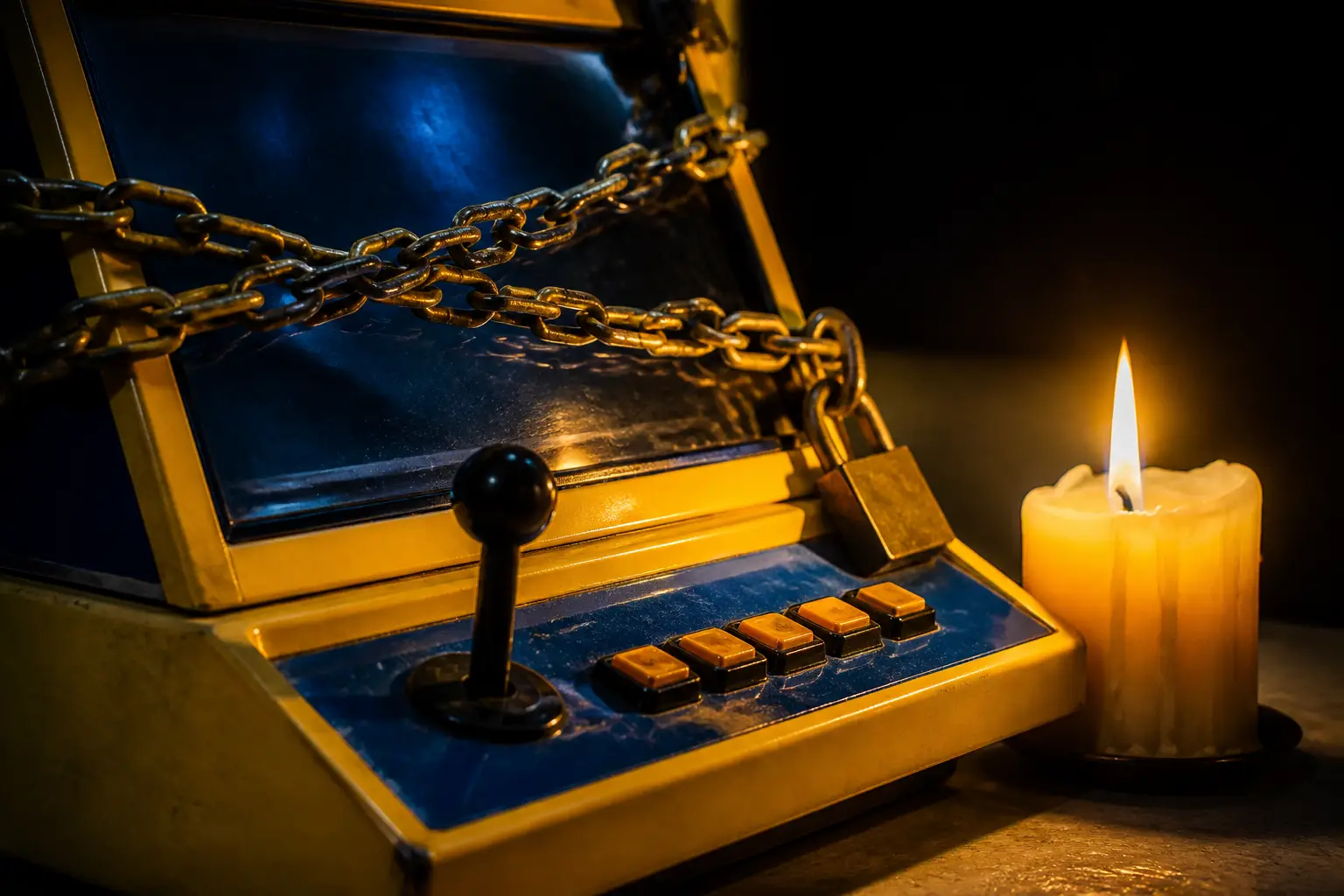 AI-GENERATED
A high court ruling in Pennsylvania reclassifies up to 100,000 'skill' machines as gambling devices. Lawmakers have until October 13 to act.
The quiet town of Millheim, with its 831 residents, has become an unlikely flashpoint in a multi-billion dollar legal battle over the future of gambling in America. For years, residents like David Peck have found themselves drawn to flashing kiosks in gas stations and grocery stores that look and sound like casino slot machines. These devices, featuring titles like Lucky Leprechaun, have occupied a legal gray zone by claiming that winnings are based on mental skill rather than pure luck. However, a landmark decision by the Pennsylvania Supreme Court has now stripped these machines of their immunity, signaling a major shift in the state's gaming landscape.
In June 2026, the court ruled that if a device is even partially used for gambling, it must be classified as a gambling device under state law. This ruling effectively gives the state legislature a deadline: regulate and tax these machines by October 13, 2026, or they will be deemed illegal and subject to confiscation. For individuals like Peck, who reported losing $60,000 over a six-month period, the ubiquity of these machines in everyday locations like the Millheim Food Mart has made recovery from addiction nearly impossible. Unlike regulated casinos, these kiosks have historically lacked connection to self-exclusion registries, leaving vulnerable players with few defenses.
Numbers and facts
The scale of the skill game industry in Pennsylvania is staggering. The state Gaming Control Board estimates that there are between 70,000 and 100,000 of these machines currently in operation. This far exceeds the number of regulated slot machines found in the state's licensed casinos. For small business owners, the financial incentive to keep the machines is high. Jason Tickner, who opened a gardening shop in Millheim in 2024, stated that the kiosks account for 25 to 30 percent of his store's total revenue. The profits are typically split between the shop owner and the machine operators, such as Meile Amusements, after paying fees to the manufacturer, Pace-O-Matic.
However, the social cost is becoming increasingly evident. Josh Ercole, executive director of the Council on Compulsive Gambling of Pennsylvania, noted that his organization receives roughly 100 calls per year from individuals specifically citing skill games as their primary gambling problem. The presence of these machines in mundane locations like laundromats and tobacco shops removes the psychological barriers that usually separate gambling from daily life, a phenomenon that experts like Professor Carolyn E. Hawley say minimizes the perceived harm of the activity.
Background
The legal saga began in 2013 when Pennsylvania state police first confiscated machines produced by Georgia-based Pace-O-Matic. The company sued to reclaim them, arguing that the games were predominantly based on skill, such as remembering patterns to win back points. While lower courts initially sided with the industry in 2014 and 2023, the Supreme Court's latest intervention has finally closed the loophole. The industry has spent millions on lobbyists to prevent regulation, even as public safety concerns mounted. In 2020, the dangers became tragically clear when a convenience store clerk in Hazleton was murdered during a robbery targeting cash from skill game machines.
"I am an addict, plain and simple. They are my way of escaping everything." - David Peck, drywall installer and resident of Millheim
Other states have taken diverse approaches to the issue. Virginia and North Carolina have moved to ban the machines, while Illinois and Georgia have opted to regulate and tax them. In Pennsylvania, the lack of oversight meant that players on the state's voluntary self-exclusion list could still access skill games at their local gas station, even if they were barred from online apps and casinos. Jennifer Gower, a 54-year-old in recovery, described the machines as having the same "dopamine rush" as casino apps, despite their different legal labels.
Why it matters for German players
For players in Germany, the Pennsylvania situation serves as a stark reminder of the benefits of a centralized regulatory system. In Germany, the State Treaty on Gambling 2021 (GlüStV 2021) ensures that no such gray market kiosks can legally operate in convenience stores. All providers must be licensed by the Joint Gambling Authority of the States (GGL). German players are protected by mandatory limits, including a 1 euro per spin stake limit and a 1,000 euro monthly deposit limit across all platforms via the LUGAS system. Furthermore, the OASIS system provides a truly universal self-exclusion mechanism that covers both online and physical gambling venues, something Pennsylvania is only now beginning to address.
What it means for GGL-licensed casinos
Licensed operators under the GGL framework can view the developments in Pennsylvania as a validation of strict player protection standards. The crackdown on "skill-based" machines that mimic gambling suggests that regulatory authorities worldwide are becoming less tolerant of products designed to bypass consumer protection laws. For GGL-licensed casinos, maintaining high standards of transparency and technical compliance—such as the 5-second rule between spins—remains the best defense against the reputational and legal risks seen in unregulated markets. The Pennsylvania ruling suggests that the era of "hidden" gambling in non-traditional spaces is coming to an end.
Frequently asked questions
What are skill games and why are they being banned?
Skill games are electronic machines that resemble slots but claim that winning depends on the player's skill. They are being banned or reclassified because they functioned as unregulated gambling, often lacking age verification and player protections.
When will these machines be removed in Pennsylvania?
Following the Supreme Court ruling in June, the machines must be removed or properly regulated by October 13, 2026, or they will be considered illegal gambling devices.
How many skill game machines exist in Pennsylvania?
Estimates from the Pennsylvania Gaming Control Board suggest there are between 70,000 and 100,000 machines located in bars, gas stations, and other small businesses.
Do self-exclusion lists work for these machines?
Previously, no. Because they were not classified as gambling, people who banned themselves from casinos could still play skill games at local stores, leading to frequent relapses for addicts.
Are similar machines allowed in Germany?
No, Germany has very strict laws under the GlüStV 2021. Gambling is only allowed in licensed venues or online platforms on the GGL whitelist, and machines in gas stations or grocery stores are prohibited.
Share
About the author

Lisa Lustich
Editor-in-chief & casino tester
Lisa Lustich has been testing German-language online casinos since 1997 and runs the Lustich.de newsroom. More than 400 published reviews, certified player-protection advisor (BZgA training, 2019).
All articles by Lisa Lustich →Sources & further reading
Whitelist of permitted online operators
Editorial guidelines Lustich.de
BZgA problem-gambling helpline: 0800 1 372 700
 United States
Gambling can be addictive. Please play responsibly. Help and counselling at 0800 1 372 700 (BZgA, free & anonymous).
Related topics
Further Reading
 AI-GENERATED
US Councilman Admits Role in Mafia-Linked Illegal Gambling Ring
A New Jersey councilman has pleaded guilty to racketeering and money laundering tied to the Lucchese crime family, facing 10 years in prison.
 AI-GENERATED
Court Defeat: Prediction Markets Ruled as Illegal Gambling in the US
A US appeals court confirms Nevada's right to regulate sports betting exchanges like KalshiEX. Judge Ryan Nelson sees little difference from traditional gambling.
 AI-GENERATED
Estonia Considers Reversing Online Casino Tax Relief Due to Budget Gaps
Prime Minister Kristen Michal weighs a reversal of recent gambling tax cuts from 6% to 4% after the policy failed to attract new operators, causing a multi-million-euro deficit.