Deepfake Alert: Manchester United Star Bruno Fernandes Caught in Scam
 AI-GENERATED
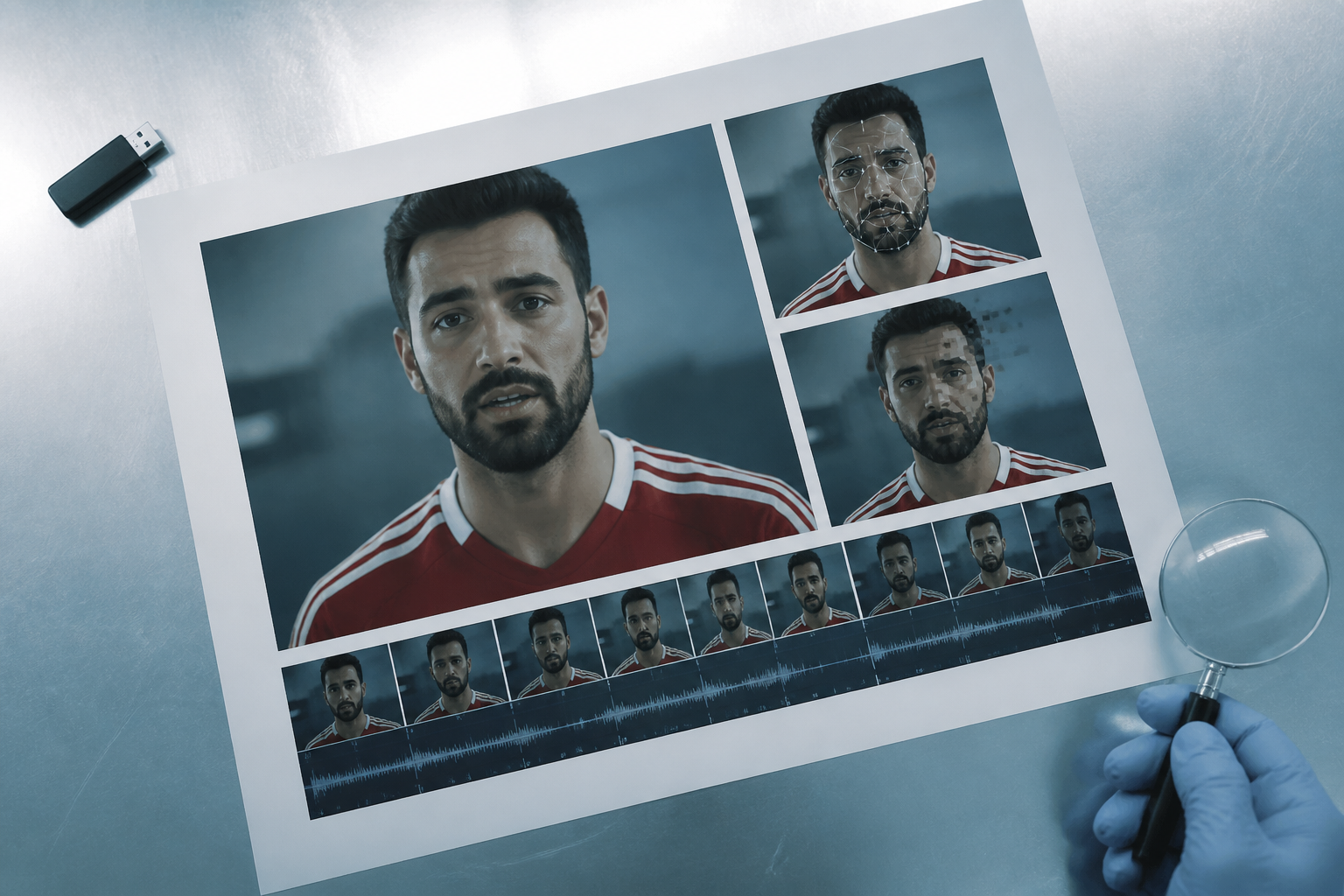
A deepfake video falsely shows Manchester United captain Bruno Fernandes endorsing an illegal bookmaker. Forensic experts warn of the realism of the fake material, which lasts almost one minute.
Artificial intelligence poses enormous risks to the gambling industry. A recent case clearly demonstrates this. An illegal Vietnamese bookmaker named QH88 used an AI-generated deepfake video to falsely depict Manchester United captain Bruno Fernandes as a brand ambassador. The video was displayed on a loop on QH88's homepage. Such incidents drastically change the landscape of brand advertising and player protection. They underscore the need for vigilance and stricter regulations. There are also serious questions regarding the protection of personal rights and athletes.
The fake video, allegedly showing a contract signing at Old Trafford, raises serious questions about the integrity of online advertising and the challenges for regulation. Experts describe the video material as unprecedented in its realism. It is an alarm signal for athletes and the entire gambling industry worldwide.
Numbers and facts
The manipulated video shows Bruno Fernandes supposedly signing an endorsement contract with representatives of the illegal betting provider QH88. The one-minute AI-generated video was played on a loop on the bookmaker's homepage. The forensic analysis, commissioned by the Norwegian outlet Josimar, identified subtle flaws. These included blurred skin textures around the jawline and ears during rapid head movements. There were also minor continuity errors on the Manchester United shirt and in the background. The faces of the supposed QH88 representatives appeared artificial, seemingly generated using lower-grade algorithms. Despite these inconsistencies, analysts concluded that the video would be indistinguishable from authentic footage for most viewers.
The choice of Old Trafford stadium as the backdrop for the staged signing added to its apparent legitimacy. Particularly in Vietnam, Manchester United remains the country's most popular football club. The incident presents significant regulatory risks for the player. Under Article 27 of the FIFA Code of Ethics, active footballers, coaches, and officials are prohibited from promoting betting operators, whether licensed or unlicensed. Had Fernandes entered into such an agreement, he could have faced disciplinary sanctions, including fines or suspension. The fabricated endorsement effectively forces the player to defend himself against a false appearance of regulatory misconduct. This deepfake incident follows a separate cybersecurity incident involving Fernandes. In January 2026, his X account, formerly Twitter, was compromised. Hackers posted fabricated messages targeting Manchester United's ownership group INEOS. They also published other inappropriate content. Cybersecurity specialists increasingly describe elite athletes as high-value digital targets. This is due to the commercial leverage attached to their identities.
Background
Legal remedies against offshore operators such as QH88 remain limited. The company operates in a jurisdictional gray zone, shielding ownership through complex corporate structures and offshore entities. Lawyers representing athletes and clubs often issue cease-and-desist letters. However, enforcement is difficult when beneficial owners are unidentified or unreachable. Fernandes is not alone. England international Jude Bellingham was recently targeted in a separate scheme. This involved the illegal casino Nightwin, operated by Curaçao-registered Flybergom B.V. In that case, fraudsters used social engineering tactics rather than deepfake video. Advertisements on Instagram redirected users to fabricated news articles. These were styled to resemble BBC coverage. The campaign promoted a fictitious betting platform branded “Bellingham Bet.” It was marketed as the “most honest betting app in the United Kingdom.” The app logo incorporated a stylized version of Bellingham’s signature. This was allegedly taken from his Adidas contract. A counterfeit app store page displayed a 4.9 out of 5 rating. It also showed over 1.9 million purported downloads. The advertisements were reported and removed within days. This limited the campaign’s reach.
The reports on Fernandes and Bellingham illustrate an escalation in tactics by illegal operators. These historically relied on retired players as promotional figures. This allowed them to avoid FIFA restrictions. Former professionals such as Sergio Agüero, Eden Hazard, and Iker Casillas have appeared in marketing campaigns for offshore betting brands. These targeted regulated markets. Unlike active players, retired athletes are not subject to Article 27 of the FIFA Code of Ethics.
Why it matters for German players
The Bruno Fernandes case vividly illustrates the unscrupulous methods of illegal providers. For German players, this means a clear warning. Those who engage with such unlicensed platforms like QH88 or Nightwin are exposed to numerous risks. There is no state supervision. This means that deposits, payouts, and player protection are not guaranteed. The Gambling State Treaty 2021 (GlüStV 2021) has created clear rules in Germany. Only casinos licensed by the GGL (Joint Gambling Authority of the Länder) are legal and secure. You can recognize these by the GGL whitelist. Every online casino that is legally allowed to offer gambling in Germany is listed there.
GGL-licensed casinos must meet strict requirements. These include a betting limit of 1 Euro per spin on slot machines and a monthly deposit limit of 1,000 Euro. They are also connected to the central blocking system LUGAS. This prevents multiple playing at different providers. This serves to protect players and prevent gambling addiction. Illegal providers actively try to circumvent these protective measures. They use aggressive marketing and, as now seen, even deepfakes. This shows that these providers spare no effort to attract German players. German players should always adhere to the GGL whitelist. Only in this way can one be sure to play in a regulated and supervised environment. All claims or advertisements from unlicensed providers must be critically questioned.
What it means for GGL-licensed casinos
For GGL-licensed casinos, this incident highlights the need to strengthen their own security measures. They must ensure that their brands are not misused. Protecting prominent personalities with whom they cooperate is also important. Licensed operators must clearly distance themselves from such criminal tactics. They must demonstrate that they take player protection and the integrity of their brand seriously. Transparency and compliance with the strict rules of the GGL are crucial here. They differentiate legal providers from illegal ones. It is an ongoing challenge to educate the public about these risks. Only then can players be motivated to play exclusively with safe, licensed providers.
“The incident demonstrates how easily manipulative content can be created today. It is essential that players exclusively stick to official, GGL-licensed providers to protect themselves from fraud and unregulated offers.” - Lisa Lustich, Casino Editor at lustich.de
This development also requires increased vigilance from regulatory authorities. The GGL must examine how such deepfake attacks can be considered in their monitoring mechanisms. The rapid development of AI technologies poses new challenges for the entire industry. This applies whether it is sports betting or online casinos.
"We must improve our ability to quickly identify and remove fake content. Collaboration between technology companies, regulators, and sports associations is crucial to combat such frauds." - Mateusz Mazur, IgamingExpress
The industry must adapt and develop new strategies. Only then can it counter the increasingly sophisticated methods of illegal providers. Player trust in legal offerings must be strengthened.
Frequently asked questions
What happened in the deepfake video involving Bruno Fernandes?
An illegal betting company named QH88 used an AI-generated video to falsely portray Manchester United captain Bruno Fernandes as its advertising face. The video supposedly showed him signing a contract with the bookmaker.
How realistic was the deepfake video?
Forensic analysts described the video as unprecedentedly realistic. Despite subtle flaws like blurry skin textures and minor continuity errors, it was likely indistinguishable from authentic material for most viewers.
What risks does this incident pose for Bruno Fernandes?
As Article 27 of the FIFA Code of Ethics prohibits endorsements for betting companies, Fernandes could have faced disciplinary action for a real contract. Now he must defend himself against the false appearance of misconduct, despite his non-involvement.
How do illegal betting operators like QH88 or Nightwin operate?
Illegal operators employ advanced tactics such as deepfakes or social engineering to attract users. They often bypass existing FIFA regulations and operate in legal gray areas to avoid prosecution.
What does this incident mean for players in Germany and the GGL license?
For German players, this is a clear warning to exclusively use GGL-licensed providers. These casinos are subject to state supervision and ensure player protection, unlike illegal platforms such as QH88 or Nightwin.
Share
About the author

Lisa Lustich
Editor-in-chief & casino tester
Lisa Lustich has been testing German-language online casinos since 1997 and runs the Lustich.de newsroom. More than 400 published reviews, certified player-protection advisor (BZgA training, 2019).
All articles by Lisa Lustich →Sources & further reading
- Joint Gambling Authority of the German Federal States (GGL): gluecksspiel-behoerde.de
- Whitelist of permitted online operators: GGL-Whitelist
- BZgA problem-gambling helpline: 0800 1 372 700 (free, anonymous, 24/7)
- Editorial methodology: Editorial guidelines Lustich.de
 United Kingdom
Gambling can be addictive. Please play responsibly. Help and counselling at 0800 1 372 700 (BZgA, free & anonymous).
Read this article in 56 languages
- German
- English
- Portuguese
- French
- Italian
- Spanish
- Japanese
- Polish
- Arabic
- Dutch
- Russian
- Turkish
- Swedish
- Danish
- Norwegian
- Finnish
- Korean
- Hindi
- Indonesian
- Thai
- Vietnamese
- Chinese
- Czech
- Hungarian
- Romanian
- Greek
- Ukrainian
- Croatian
- Bulgarian
- Filipino
- Slovak
- Hebrew
- Persian
- Malay
- Bangla
- Tamil
- Telugu
- Urdu
- Georgian
- Khmer
- Albanian
- Kazakh
- Afrikaans
- Lithuanian
- Latvian
- Estonian
- Slovenian
- Uzbek
- Swahili
- Azerbaijani
- Amharic
- Tajik
- Kyrgyz
- Sinhala
- Hausa
- Nepali
Related topics
Further Reading
 AI-GENERATED
SBC Awards 2026: ReferOn Shortlisted as Acquisition & Retention Partner
Affiliate management platform ReferOn has been recognized in the SBC Awards 2026 shortlist. The nomination highlights three years of innovation in data automation.
 AI-GENERATED
Aristocrat Gaming Unveils New Reign Cabinet with 52-Inch 4K Display
Aristocrat Gaming launches the Reign cabinet for North American casinos. The hardware features a 52-inch 4K touchscreen and 20% improved energy efficiency.
 AI-GENERATED
Novibet CTO Yiannis Stavroulas Drives Global Growth with AI-Native Platform
Novibet CTO Yiannis Stavroulas is reshaping online gaming by building an AI-native platform to handle complex global regulations and improve player safety.