Gamecheck Uncovers 5,000 Fake Online Casinos in Brazil
 AI-GENERATED
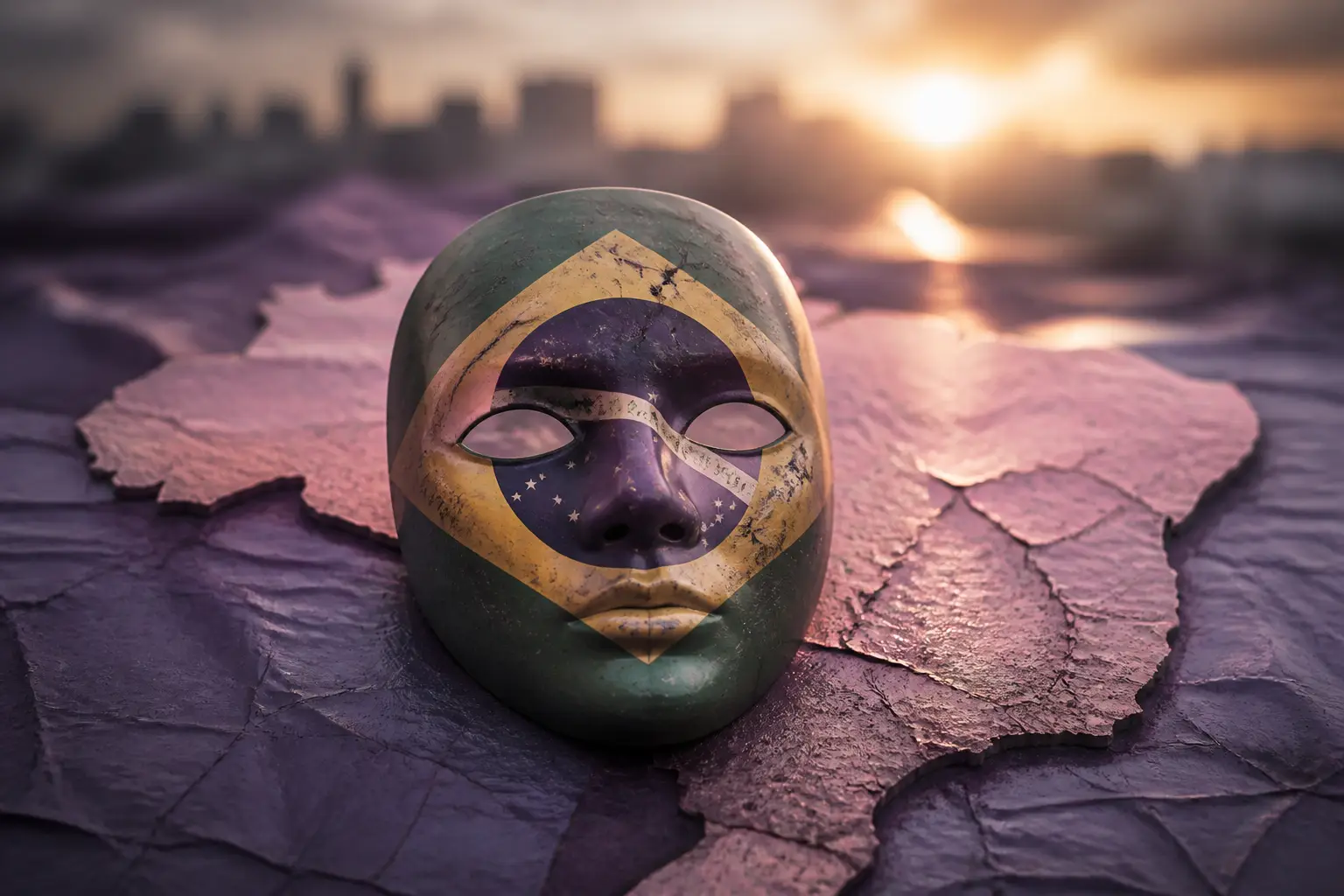
Gamecheck, the online casino verification platform, has confirmed the discovery of over 5,000 fake online casinos in Brazil, offering fraudulent games and run by rogue operators. More than 6,800 fake games were found in Brazil alone.
A revealing report from Gamecheck, an online casino verification platform, sounds the alarm: over 5,000 fake online casino sites have been discovered in Brazil alone. These platforms lure players with counterfeit games and are operated by unscrupulous actors. The problem is massive and highlights the critical importance of strict regulations and controls in online gambling. Gamecheck's discoveries are part of a ten-part weekly exposé series conducted in the first half of 2026.
Since its inception, Gamecheck has identified more than 8,000 fake games worldwide. The majority, 6,800 of them, were located in Brazil. An alarming detail is that 3,800 of these fake casinos were identified in a single month. Brazil thus accounts for the largest share of fraud cases Gamecheck has recorded globally to date.
Numbers and facts
Brazil has rapidly emerged as one of the fastest-growing online casino markets globally, a circumstance that fraudulent actors are ruthlessly exploiting. In 2025, betting sites in Brazil generated approximately $7 billion in Gross Gaming Revenue (GGR), according to the Brazilian Secretariat of Prizes and Bets. This is projected to increase to nearly $10 billion by 2029, according to H2 Gambling Capital. Within a year of the market opening, Brazil became the world's fifth-largest betting market, as reported by BBC News Brasil. In January 2026 alone, authorized platforms generated an estimated $290 million in tax revenue, according to the Brazilian Federal Revenue Service. Additionally, an estimated 15,000 high-income jobs were created, according to the Instituto Brasileiro de Jogo Responsável.
“Brazil has become one of the fastest-growing online casino gaming markets in the world, and rogue operators have moved just as quickly to take advantage of it. Publishing our findings weekly means Brazilian players get a steady, checkable record they can act on as it happens, not a headline that vanishes from view.” - James Elliott, Founder of Gamecheck
The rapid growth of the market, coupled with a large, engaged player base and widespread smartphone adoption, created ideal conditions for the proliferation of illegal offerings. Many of these players are new to online gambling and have limited experience distinguishing legitimate platforms from fakes. Fred Azevedo, Gamecheck’s Brand Ambassador for Latin America, emphasizes the importance of authenticity in this context:
“The conversation around player protection has to begin with authenticity. Before discussing RTP, volatility, or responsible gambling, players deserve to know that the game they are playing is real. If the software cannot be trusted, nothing else about the experience can be trusted either. Independent verification is one of the most important tools the industry has to protect players and strengthen confidence in markets.”
Background
The Brazilian gambling law, which opened the regulated online casino market at the beginning of 2025, was intended to provide greater security. However, the rapid development and sheer size of the market have also created a downside. Fraudsters often use short, numeral-heavy domain names and uniform branding templates to appear trustworthy. Gamecheck identifies these sites by testing game samples and contacting original game providers to confirm authenticity. If games are found to be fake, the site is added to the Gamecheck database and monitored. A free search function, app, and Chrome extension allow players to check the status of a casino at any time. For legitimate operators, Gamecheck offers the “Gamecheck SEAL,” a blockchain-authenticated logo that verifies the authenticity of games, thereby building trust. This seal is domain-linked and QR-verifiable via the Gamecheck app.
Why it matters for German players
The situation in Brazil is a clear example of the risks that can lurk in inadequately regulated or rapidly growing markets. For German players, this means they must be particularly cautious. Since the State Treaty on Gambling 2021 (GlüStV 2021), online gambling in Germany has been subject to state regulation. The Joint Gambling Authority of the Federal States (GGL) is responsible for issuing licenses to reputable providers. Only casinos on the so-called GGL whitelist are legal and safe. These providers are subject to strict player protection requirements, such as the monthly deposit limit of 1,000 euros and the stake limit of 1 euro per game round. Compliance with these limits is monitored via the central self-exclusion system LUGAS. Players who rely on the GGL whitelist are protected from fraud and fake games.
What it means for GGL-licensed casinos
The revelations from Brazil underscore the need for robust and enforceable regulation. For GGL-licensed casinos in Germany, this strengthens their image. They can clearly differentiate themselves from rogue operators and assure their players that they are playing on a safe and legal platform where games are regularly audited. Player trust is the highest asset here. There is still much to do to consistently implement and communicate GGL requirements. It is important to continuously point out official offers and emphasize the advantages of legal and controlled gaming.
Frequently asked questions
How many fake online casinos has Gamecheck uncovered in Brazil?
The verification platform Gamecheck has identified over 5,000 fake online casino sites in Brazil alone. Of these, 3,800 were discovered in just one single month.
How many fake games were found in Brazil?
A total of over 6,800 fake games were localized in Brazil. Worldwide, Gamecheck has tracked down more than 8,000 fake games since its inception.
How has the Brazilian online casino market developed?
Brazil has become one of the fastest-growing online casino markets, rising to become the fifth-largest betting market globally within a year of market opening. Gross Gaming Revenue was projected at around 7 billion US dollars for 2025.
Why are new players in Brazil particularly at risk?
Many players in Brazil are new to online gambling and have little experience distinguishing genuine platforms from fakes. The rapid market development creates ideal conditions for the spread of illegal offers.
How does regulation in Germany protect players from fake casinos?
Since the Interstate Treaty on Gambling 2021, the Joint Gambling Authority of the Länder (GGL) regulates the market and issues licenses to reputable providers. Only casinos on the GGL whitelist are legal and safe, subject to strict player protection measures.
Share
About the author

Lisa Lustich
Editor-in-chief & casino tester
Lisa Lustich has been testing German-language online casinos since 1997 and runs the Lustich.de newsroom. More than 400 published reviews, certified player-protection advisor (BZgA training, 2019).
All articles by Lisa Lustich →Sources & further reading
- Joint Gambling Authority of the German Federal States (GGL): gluecksspiel-behoerde.de
- Whitelist of permitted online operators: GGL-Whitelist
- BZgA problem-gambling helpline: 0800 1 372 700 (free, anonymous, 24/7)
- Editorial methodology: Editorial guidelines Lustich.de
 Brazil
Gambling can be addictive. Please play responsibly. Help and counselling at 0800 1 372 700 (BZgA, free & anonymous).
Read this article in 56 languages
- German
- English
- Portuguese
- French
- Italian
- Spanish
- Japanese
- Polish
- Arabic
- Dutch
- Russian
- Turkish
- Swedish
- Danish
- Norwegian
- Finnish
- Korean
- Hindi
- Indonesian
- Thai
- Vietnamese
- Chinese
- Czech
- Hungarian
- Romanian
- Greek
- Ukrainian
- Croatian
- Bulgarian
- Filipino
- Slovak
- Hebrew
- Persian
- Malay
- Bangla
- Tamil
- Telugu
- Urdu
- Georgian
- Khmer
- Albanian
- Kazakh
- Afrikaans
- Lithuanian
- Latvian
- Estonian
- Slovenian
- Uzbek
- Swahili
- Azerbaijani
- Amharic
- Tajik
- Kyrgyz
- Sinhala
- Hausa
- Nepali
Related topics
Further Reading
 AI-GENERATED
US Study: Regulation Determines Help-Seeking Behavior in Gambling Addiction
A search trend analysis of 200 US metros shows that players in regulated markets seek help before a crisis, while unregulated markets see a surge in addiction-related queries.
 AI-GENERATED
TitanPlay achieves RG Check accreditation for Ontario market
Sports betting operator TitanPlay has secured the prestigious RG Check accreditation in Ontario, achieving a score of over 80 percent.
 AI-GENERATED
Glasgow Awarded Millions in Grants to Combat Gambling Harms
Glasgow City Council secured over £3.44 million from the new statutory levy to address local gambling harms costing the city £15 million annually.