US Regulator Warns of Prediction Market Fragmentation by Individual States
 AI-GENERATED
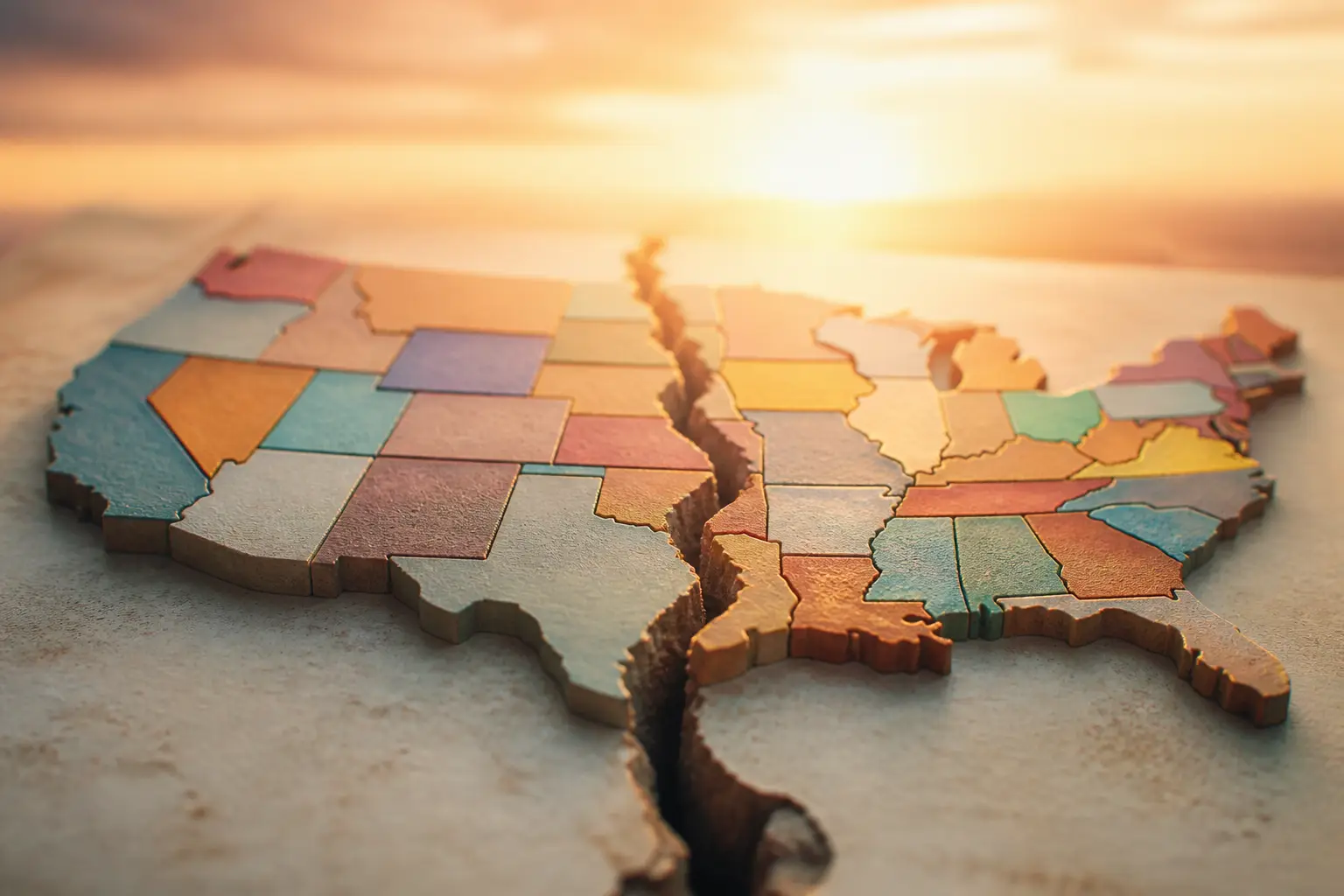
CFTC Chairman Michael Selig criticizes state-level regulation attempts like New York’s $36 billion lawsuit against Kalshi, calling it a threat to the national market.
A significant legal battle is brewing in the United States over the future of prediction markets, extending far beyond the financial sector. Michael Selig, Chairman of the Commodity Futures Trading Commission (CFTC), took a firm stance against state-level regulatory efforts during the Flyover Fintech conference in Lincoln, Nebraska. He warned that the integrity of US federal markets is being undermined as states impose their own rules on prediction market operators. This trend could effectively nullify federal oversight and create legal chaos for innovators.
The catalyst for this heightened rhetoric includes a federal judge's ruling in Utah, which allows the state to apply its own gambling laws to the Kalshi platform. Kalshi is also under immense pressure in New York, where officials are reportedly moving to sue the company for $36 billion. The state is demanding details on sports-related contract transactions involving residents under the age of 21. Selig views this as the start of a dangerous market fragmentation that could force operators to choose jurisdictions based on the least legal resistance rather than national standards.
Numbers and facts
The scale of the dispute is highlighted by the $36 billion figure sought by New York against Kalshi. A core argument for the CFTC is the distinction between gambling and so-called event contracts. Selig emphasizes that prediction markets utilize order books to match bids and offers and employ clearinghouses between buyers and sellers. These features are entirely absent in traditional casinos and bookmakers. Despite this, a group of Senators has introduced a bill aimed at cutting off federal funds for the CFTC’s lawsuits against states.
In Minnesota, the government passed an outright ban via bill SF 4760, signed by Governor Tim Walz on May 18. This legislation makes operating prediction markets a felony. The CFTC responded with its own lawsuit, asserting exclusive jurisdiction over swaps and event contracts. Selig argues that these markets are essential for agricultural producers to hedge against weather damage or crop failure, providing significant utility beyond mere entertainment.
"If states can impose certain additional requirements or certain criminal penalties on exchanges, then we don’t have a federal, national market system here in the United States. It’s really important that we fight these attempts by the states to nullify federal law." - Michael Selig, Chairman of the CFTC
Background
The conflict centers on regulatory authority. While the federal CFTC views prediction markets as novel derivatives for risk management, many states classify them as illegal gambling, especially regarding sports events. Critics on social media platforms like X suggest that excluding sports betting from prediction markets could lead to a consensus. However, for Selig, it is a matter of principle: national oversight by the CFTC must ensure that innovations like crypto assets and event contracts can grow under uniform conditions within the US.
The CFTC is pursuing a strategy of "clean facts." Selig explained that the commission typically avoids joining third-party litigation, preferring to bring its own cases against states. This approach aims to set clear precedents focused on narrow jurisdictional issues. This occurs against the backdrop of a sweeping cryptocurrency market structure bill currently stalled in the US Senate, which has faced opposition from lobbying groups like the American Gaming Association, fearing an evasion of gambling laws.
Why it matters for German players
For German players, these US legal battles provide a significant indirect signal. In Germany, the Interstate Treaty on Gambling 2021 (GlüStV 2021) is the governing authority. Prediction markets, which might be seen as derivatives in the US, would often fall under the strict scrutiny of the Gemeinsame Glücksspielbehörde der Länder (GGL) if classified as betting on events. German players are protected by a monthly deposit limit of 1,000 euros and a 1-euro-per-spin limit on online slots. However, these rules only apply to operators on the GGL whitelist.
When international platforms try to exploit regulatory gaps, the German LUGAS system (cross-state gambling supervision system) acts as a barrier against uncontrolled gambling behavior. The US debate shows how vital a clear distinction between financial products and gambling is. German users should ensure they only play with providers holding a German license to maintain legal security and avoid gray zones currently subject to multibillion-dollar lawsuits in the US.
What it means for GGL-licensed casinos
Casinos with a GGL license benefit from the legal certainty that is currently lacking in the US. While US operators are caught between state and federal law, German providers have clear guidelines. Stringent player protection requirements and GGL monitoring prevent the "race to the bottom" that Selig fears for the US. A GGL-licensed casino offers the advantage that winnings are legally enforceable and game mechanics are fairly audited. Unlike MGA or Curacao licenses, which often operate in regulatory gray areas, the German license ensures providers pay taxes and strictly adhere to national limits.
Frequently asked questions
Why is New York suing the Kalshi platform for $36 billion?
The lawsuit concerns alleged violations regarding sports-related contract transactions. Specifically, Kalshi is accused of conducting business with residents under 21 years of age, which is illegal under New York state law.
What is the main difference between prediction markets and casinos?
According to CFTC Chairman Selig, prediction markets use order books for matching bids and clearinghouses for settlement. Unlike pure gambling, these contracts serve risk management purposes and have specific settlement terms.
What is the goal of bill SF 4760 in Minnesota?
Signed by Governor Tim Walz, bill SF 4760 almost entirely bans prediction markets in Minnesota. It classifies operating such markets for events like sports, elections, or weather as a felony.
What does the term Race to the Bottom mean in this context?
Michael Selig warns that operators might choose locations based solely on where they face the lowest regulatory costs and no prison time. This would lead to states competing for the weakest oversight, destroying the national market.
Can players in Germany legally use US prediction markets?
In Germany, participating in gambling and betting is only permitted with providers listed on the official GGL whitelist. Since US prediction markets often lack a German license and their legal classification is complex, German users risk legal uncertainty and a lack of player protection.
Share
About the author

Lisa Lustich
Editor-in-chief & casino tester
Lisa Lustich has been testing German-language online casinos since 1997 and runs the Lustich.de newsroom. More than 400 published reviews, certified player-protection advisor (BZgA training, 2019).
All articles by Lisa Lustich →Sources & further reading
Whitelist of permitted online operators
Editorial guidelines Lustich.de
BZgA problem-gambling helpline: 0800 1 372 700
 United States
Gambling can be addictive. Please play responsibly. Help and counselling at 0800 1 372 700 (BZgA, free & anonymous).
Read this article in 57 languages
- German
- English
- Portuguese
- French
- Italian
- Spanish
- Japanese
- Polish
- Arabic
- Dutch
- Russian
- Turkish
- Swedish
- Danish
- Norwegian
- Finnish
- Korean
- Hindi
- Indonesian
- Thai
- Vietnamese
- Chinese
- Czech
- Hungarian
- Romanian
- Greek
- Ukrainian
- Croatian
- Bulgarian
- Filipino
- Slovak
- Serbian
- Hebrew
- Persian
- Malay
- Bangla
- Tamil
- Telugu
- Urdu
- Georgian
- Khmer
- Albanian
- Kazakh
- Afrikaans
- Lithuanian
- Latvian
- Estonian
- Slovenian
- Uzbek
- Swahili
- Azerbaijani
- Amharic
- Tajik
- Kyrgyz
- Sinhala
- Hausa
- Nepali
Related topics
Further Reading
 AI-GENERATED
Tucumán Gambling Ban: Lawmaker Proposes Radical Shutdown of Online Casinos
A new bill in Tucumán, Argentina, seeks to ban all online gambling and sports betting within 90 days. The move aims to combat a 'pandemic' of addiction.
 AI-GENERATED
US Councilman Admits Role in Mafia-Linked Illegal Gambling Ring
A New Jersey councilman has pleaded guilty to racketeering and money laundering tied to the Lucchese crime family, facing 10 years in prison.
 AI-GENERATED
Estonia Considers Reversing Online Casino Tax Relief Due to Budget Gaps
Prime Minister Kristen Michal weighs a reversal of recent gambling tax cuts from 6% to 4% after the policy failed to attract new operators, causing a multi-million-euro deficit.