Singapore High Court Blocks Venetian Macau From Collecting Gambling Debts
 AI-GENERATED
Singapore's High Court ruled that foreign gambling debts, including a HK$19.3 million claim by Venetian Macau, are unenforceable under national public policy.
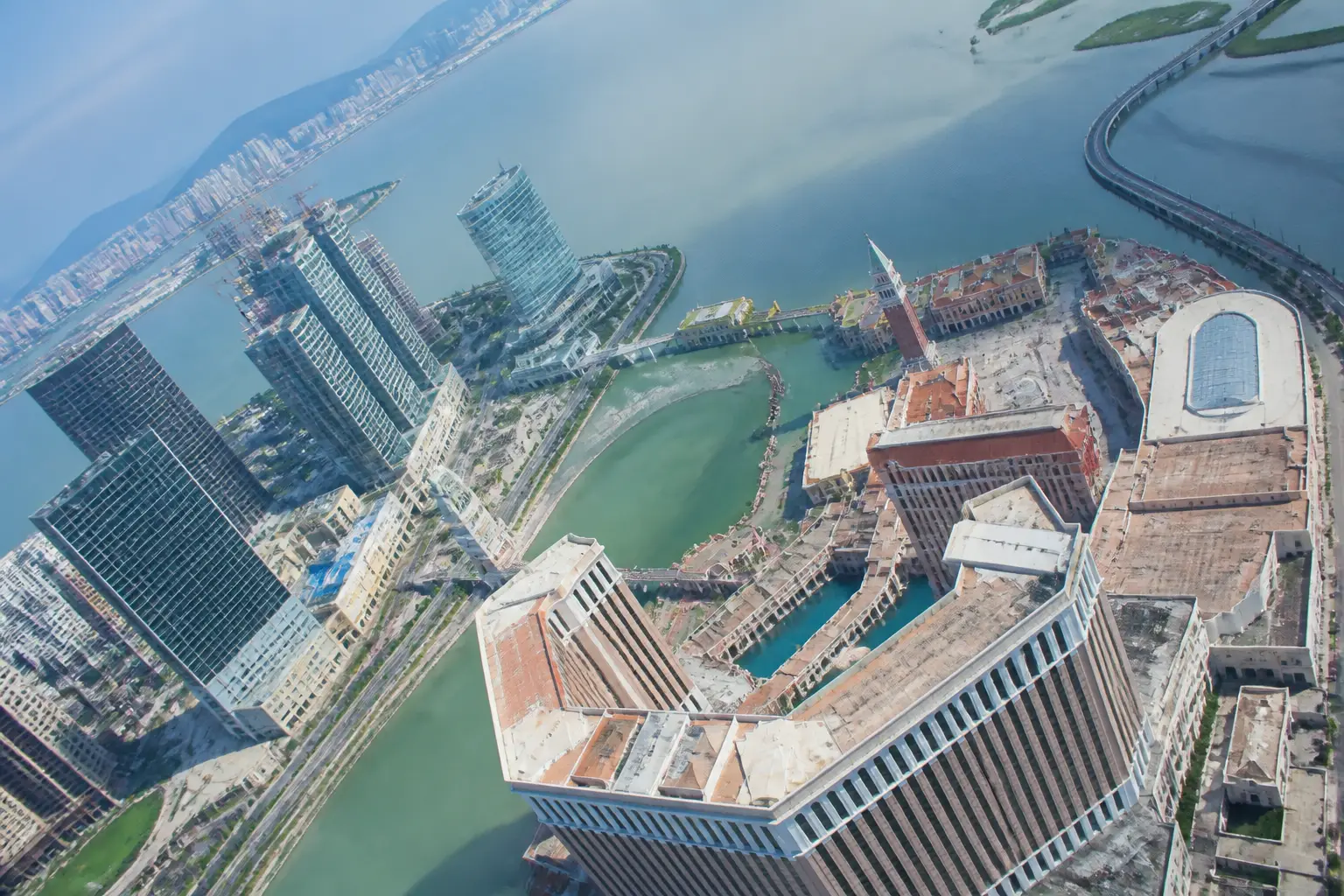
A significant legal ruling in the Asia Pacific gaming sector has established that international casinos cannot use Singapore's court system to collect gambling debts from its citizens. The High Court of the Republic of Singapore determined that foreign judgments regarding credit extended for gambling are unenforceable locally. This decision protects a Singaporean businesswoman from the collection efforts of Sands China, a subsidiary of Las Vegas Sands, which operates The Venetian Macau.
The dispute centered on Hu Yangning, a VIP patron at The Venetian Macau between 2011 and 2024. During her tenure as a high-stakes player, she was granted a credit line of 15 million HK$, approximately 1.91 million US dollars. After she stopped playing, the debt remained unpaid and grew to 19.3 million HK$ including interest and costs. Although a Hong Kong court issued a default judgment in March 2025 ordering her to pay, the Singaporean courts refused to register and enforce this order when Sands China sought to seize her local property.
Numbers and facts
The scale of the operations involved is massive. Sands China opened The Venetian Macau in August 2007, and by December 31, 2025, the resort featured 659 table games and 1,137 slot machines across 500,000 square feet of gaming space. Macau saw over 40 million visitors in 2025, with Singaporean arrivals accounting for 117,165 of those, a 1.7 percent decrease from the previous year. International travelers generally represent only about 7 percent of Macau's total visitor traffic, which is dominated by mainland Chinese tourists.
Justice Philip Jeyaretnam was explicit in his ruling, pointing to the Civil Law Act (CLA) as the primary legal obstacle for the casino operator.
"In my view, given the continued existence of the [Singapore] Civil Law Act (CLA), no action can be brought or maintained to enforce claims based on gambling debts. Since this public policy against enforcement of gambling debts is embodied in statute, it must prevail in any contest with 'higher international public policy' at common law." - Philip Jeyaretnam, Justice at the High Court of Singapore
Background
The case is particularly noteworthy because Las Vegas Sands holds half of the casino duopoly in Singapore through its Marina Bay Sands property. Despite this deep economic connection to the country, the judiciary prioritized national statute over the interests of the international casino group. Hu Yangning claimed she only discovered the proceedings in July 2025 while checking mail at her Singapore residence. While the court dismissed her arguments concerning fraud and jurisdiction, it upheld the public policy defense, effectively setting aside the registration of the Hong Kong judgment.
Why it matters for German players
For players in Germany, the legal framework regarding gambling debts is similarly restrictive but governed by the State Treaty on Gambling 2021 (GlüStV 2021). Under German law, gambling debts are considered "unvollkommene Verbindlichkeiten" (imperfect obligations). This means that if a person incurs debts at an illegal online casino, those debts are generally not legally enforceable. Conversely, German courts have frequently ruled that players can reclaim losses from operators that lack a valid German license.
German residents should only use casinos licensed by the Gemeinsame Glücksspielbehörde der Länder (GGL). These operators are subject to strict player protection rules, including a 1,000 euro monthly deposit limit monitored via the LUGAS database and a 1 euro stake limit per spin on virtual slots. The GGL whitelist is the only legal basis for safe gambling in Germany. Debts claimed by MGA or Curacao-licensed casinos are often unenforceable in Germany because these operators usually lack the necessary local authorization.
What it means for GGL-licensed casinos
GGL-licensed providers in Germany must adhere to rigorous standards to maintain their permits. The Singapore case highlights the importance of a clear statutory basis for gaming regulations. In Germany, the GGL ensures that providers do not offer risky credit to players, aiming to prevent over-indebtedness from the outset. While international VIP hubs like Macau might have to rethink their credit policies for certain nationalities, the German market remains stable and secure due to the ban on player credit and strict regulatory oversight. Licensed operators benefit from legal certainty, provided they meet the high standards for player safety and IT security.
Frequently asked questions
Why can't Venetian Macau collect debts in Singapore?
The High Court of Singapore ruled that enforcing foreign gambling debts violates the country's public policy. The Civil Law Act prevents the judiciary from being used to collect such claims, regardless of foreign court orders.
How much was the outstanding debt in this case?
The total claim amounted to 19.3 million HK$ including interest and costs. The original credit line extended to the VIP player, Hu Yangning, was 15 million HK$.
Does this ruling affect credit lending in Macau?
Yes, experts believe casinos in Macau will become more selective when granting credit to Singaporean residents. Since the debts cannot be legally enforced in the player's home country, the financial risk for the operators increases significantly.
What is the difference between a legal GGL casino and foreign providers?
GGL-licensed casinos follow the German State Treaty on Gambling, which includes strict limits and player protections. Providers without this license, such as those from Curacao, operate illegally in Germany, making their debt claims difficult or impossible to enforce.
Share
About the author

Lisa Lustich
Editor-in-chief & casino tester
Lisa Lustich has been testing German-language online casinos since 1997 and runs the Lustich.de newsroom. More than 400 published reviews, certified player-protection advisor (BZgA training, 2019).
All articles by Lisa Lustich →Sources & further reading
Whitelist of permitted online operators
Editorial guidelines Lustich.de
BZgA problem-gambling helpline: 0800 1 372 700
Gambling can be addictive. Please play responsibly. Help and counselling at 0800 1 372 700 (BZgA, free & anonymous).
Read this article in 46 languages
- German
- English
- Portuguese
- French
- Italian
- Spanish
- Japanese
- Polish
- Arabic
- Dutch
- Russian
- Turkish
- Swedish
- Danish
- Norwegian
- Finnish
- Korean
- Hindi
- Indonesian
- Thai
- Vietnamese
- Chinese
- Czech
- Hungarian
- Romanian
- Greek
- Ukrainian
- Croatian
- Bulgarian
- Filipino
- Slovak
- Serbian
- Hebrew
- Persian
- Malay
- Urdu
- Albanian
- Afrikaans
- Lithuanian
- Latvian
- Estonian
- Slovenian
- Uzbek
- Swahili
- Azerbaijani
- Hausa
Related topics
Further Reading
 AI-GENERATED
Primero Games Acquires Win Systems Gaming Division: Expansion in Roulette Sector
US-based Primero Games acquires Win Systems' gaming division, taking over 3,000 gaming positions and the renowned Gold Club electronic roulette business.
 AI-GENERATED
Canadian Poker Records: Negreanu and Mizrachi Surge in WSOP Super Circuit Main Event
The WSOP Super Circuit Canada Main Event crushed its 10 million CAD guarantee, creating a prize pool exceeding 13 million CAD with 2,844 entries.
 AI-GENERATED
Matthias Beyer triumphs at Michels Donkey Race during Meetup Poker Festival
Matthias Beyer secured victory at the Meetup Poker Festival finale in Grand Casino Aš, taking home a total of 1,115 Euro in prize money and bounties.