Ohio Lawmakers Seek Online Sports Betting Ban, Citing "Predatory" Practices
 AI-GENERATED
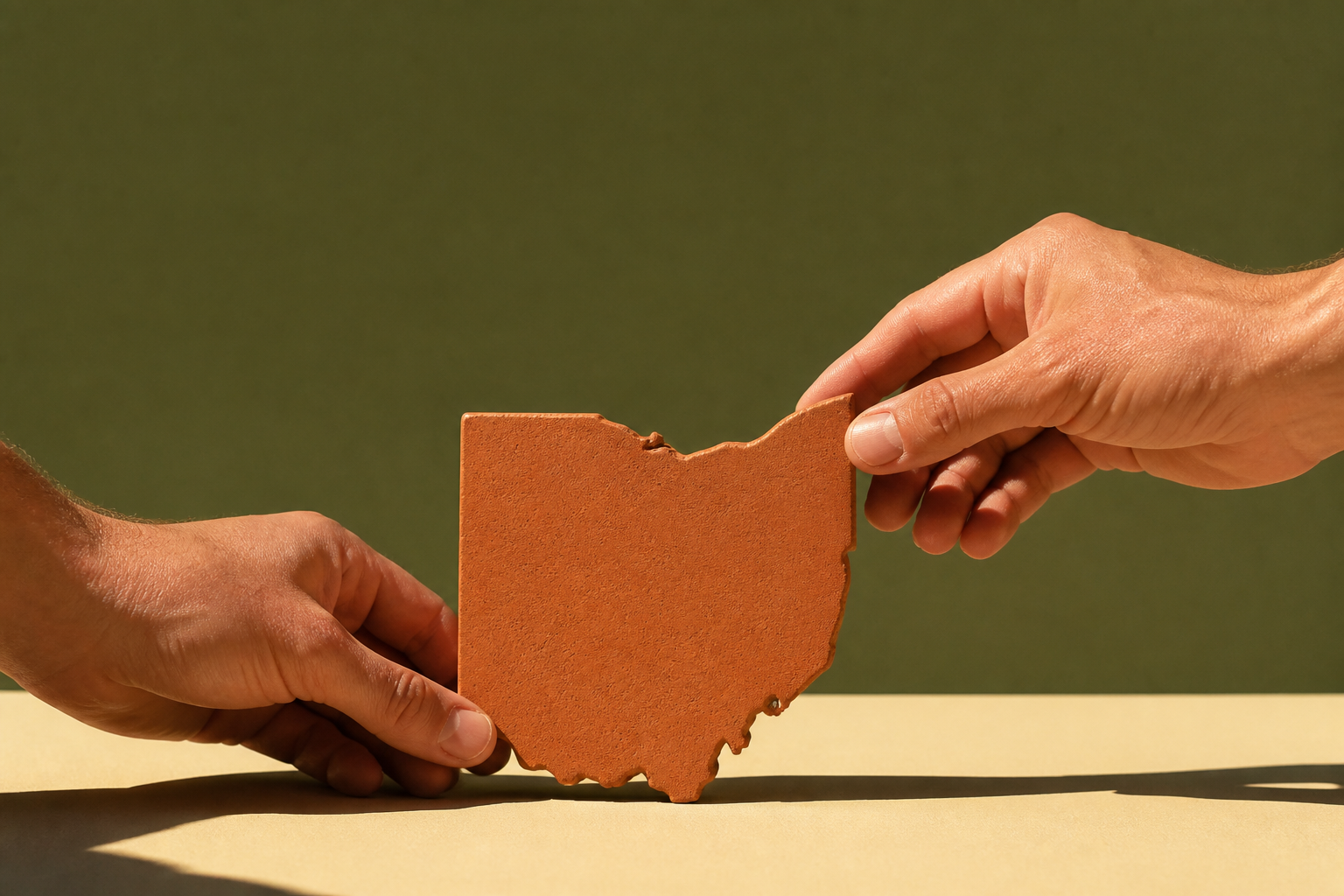
Ohio representatives introduce the "Save Ohio Sports Act." This bill would eliminate online sports betting and could cost the state over $200 million in tax revenue.
A storm is brewing in Ohio. On July 8, 2026, State Representatives Johnathan Newman (R-Troy) and Beth Lear (R-Galena) introduced the "Save Ohio Sports Act." This proposed legislation suggests a drastic reform of sports betting: online betting would be banned, while retail sportsbooks would only be allowed under strict conditions. The initiative aims to prohibit "manipulative betting formats" and all wagers on collegiate sports.
Representative Newman sharply criticized that the legalization of online sports betting in Ohio leads to the "monetization of addiction." He emphasized that schools or the public good do not benefit, but rather "the trillion-dollar big gambling companies." His colleague Lear added that gambling is "the number one addiction that leads to suicide." She condemned aggressive campaigns by online gambling companies. These, she stated, are trying to increase "their profits on the backs of Ohioans." Her conclusion is clear: the physical and mental well-being of Ohio's children is not for sale.
Numbers and facts
This comprehensive bill includes nine measures. Five focus on consumer protection. Four other measures address sports integrity. The package includes new betting limits of $100, as well as new rules for advertising and payment methods. Online sports betting, parlays, prop bets, and live wagering would be completely banned.
The cost of such a step would be substantial. A ban could cost the state more than $200 million in tax revenue. This money currently funds education and problem gambling services. However, representatives such as Riordan McClain (R-Upper Sandusky), Gary Click (R-Vickery), and Johnathan Newman view the societal costs and questions of sports integrity as more pressing issues. McClain commented on sports integrity:
“As a fan, I want to watch highly talented individuals and teams compete at the highest levels. I want to know that the outcome is determined on the field of play, not by the gambling markets.” - Riordan McClain, State Representative (R-Upper Sandusky)
The Center for Christian Virtue, a faith-based public policy organization, has strongly supported this legislation. Aaron Baer, the president of the CCV, compared the addictiveness of sports betting to narcotics. He viewed bonus offers from sports betting providers as "free samples" from drug dealers.
Background
The discussion in Ohio shows a remarkable shift in political sentiment. Online sports betting was legalized in the state just over three years ago. Now, some lawmakers are advocating for a 180-degree turn. Governor Mike DeWine had already expressed regret about the legalization last year. The proposed bill suggests that sports bets could still be placed at the state's four land-based casinos. However, strict limits would apply there.
Representative Gary Click emphasized that they understand the public's desire for some form of legalized gambling. "We're not removing that," he said. But people also want consumer protections. They want to be protected from "predatory advertisements and predatory gambling." The saying "the house always wins" illustrates this.
Another current topic in Ohio is "prediction markets." According to Senator Bill DeMora (D-Columbus), these should be regulated and taxed like sports betting. He filed Senate Bill 430. This would force such markets to acquire a state license and pay taxes if the U.S. Supreme Court rules in favor of the operators. DeMora called the major U.S. provider Kalshi "a sham." He believes they are "taking wagers on sporting events" and therefore need to be regulated like other sports betting providers. The Ohio Casino Control Commission has already issued a $5 million fine against New York-based operators who offered sports bets in the state without a license.
Why it matters for German players
The developments in Ohio illustrate how swiftly political attitudes toward online gambling can change. In Germany, since the State Treaty on Gambling 2021 (GlüStV 2021), we have a comparatively strict regulatory framework. The Joint Gambling Authority of the Federal States (GGL) is responsible for licensing and supervision. Only casinos on the GGL's White List are legal in Germany.
For German players, this means security through regulation. There are clear rules regarding player protection. These include a deposit limit of 1,000 euros per month and a stake limit of 1 euro per spin for slot games. The central self-exclusion system LUGAS is another important tool for protecting against gambling addiction. These measures are stricter than in many other countries. A comprehensive ban on online gambling, as seen in Ohio, is not expected in Germany. Nevertheless, it is crucial to play only with licensed providers. This protects against illegal offers and their risks.
What it means for GGL-licensed casinos
For casinos with a GGL license in Germany, the news from Ohio has no direct impact. They already operate under a strict regulatory framework. The focus here is on player protection and combating illegal gambling. Deposit and stake limits are firmly established. German licensing requirements are among the highest worldwide. However, the Ohio example could serve as an argument for even stricter measures in other countries in the future. This would increase pressure on online gambling providers globally. German providers must continue to adhere to strict guidelines to maintain their licenses. This protects the market and players.
Frequently asked questions
What is the 'Save Ohio Sports Act' and what are its objectives?
The 'Save Ohio Sports Act' is a legislative proposal in Ohio aiming to ban online sports betting and prohibit bets on college sports. The goal is to combat manipulative betting formats and the monetization of addiction.
What justifications are provided by the proponents of the bill?
Proponents argue that online sports betting leads to addiction and that gambling companies profit from citizens' addiction. They emphasize that children's health is not for sale and that the integrity of sports is threatened by gambling markets.
What specific restrictions would the 'Save Ohio Sports Act' introduce?
The bill proposes a ban on online sports betting, parlays, prop bets, and live betting. Additionally, betting limits of $100 and new rules for advertising and payment methods would be introduced.
What financial impact could a ban on online sports betting have for Ohio?
A ban on online sports betting could cost Ohio over $200 million in tax revenue. This money currently funds education and gambling addiction services.
How does the situation in Ohio differ from the legal situation for German players and casinos?
In Germany, the Interstate Treaty on Gambling 2021 regulates sports betting and online gambling through the Joint Gambling Authority of the Länder (GGL). German players are protected by limits and the LUGAS system, and a comprehensive ban like in Ohio is unlikely. GGL-licensed casinos already operate under strict regulations.
Share
About the author

Lisa Lustich
Editor-in-chief & casino tester
Lisa Lustich has been testing German-language online casinos since 1997 and runs the Lustich.de newsroom. More than 400 published reviews, certified player-protection advisor (BZgA training, 2019).
All articles by Lisa Lustich →Sources & further reading
Whitelist of permitted online operators
Editorial guidelines Lustich.de
BZgA problem-gambling helpline: 0800 1 372 700
 United States
Gambling can be addictive. Please play responsibly. Help and counselling at 0800 1 372 700 (BZgA, free & anonymous).
Read this article in 55 languages
- German
- English
- Portuguese
- French
- Italian
- Spanish
- Japanese
- Polish
- Arabic
- Dutch
- Russian
- Turkish
- Swedish
- Danish
- Norwegian
- Finnish
- Korean
- Hindi
- Indonesian
- Thai
- Vietnamese
- Czech
- Hungarian
- Romanian
- Greek
- Ukrainian
- Croatian
- Bulgarian
- Filipino
- Slovak
- Hebrew
- Persian
- Malay
- Bangla
- Tamil
- Telugu
- Urdu
- Georgian
- Khmer
- Albanian
- Kazakh
- Afrikaans
- Lithuanian
- Latvian
- Estonian
- Slovenian
- Uzbek
- Swahili
- Azerbaijani
- Amharic
- Tajik
- Kyrgyz
- Sinhala
- Hausa
- Nepali
Related topics
Further Reading
 AI-GENERATED
Canada's Gambling Dilemma: Why the Offshore Market Booms Despite Ontario
While Ontario celebrates a 91 percent channelization rate, offshore operators dominate other provinces like Saskatchewan with up to 93 percent leakage.
 AI-GENERATED
Insider Trading Risks: US Military Secrets Exposed on Prediction Markets
A new report warns of national security threats as crypto traders allegedly use insider info. Suspected accounts won $8 million by predicting classified military actions.
 AI-GENERATED
Kenya Appoints Consultants for Historic National Lottery Launch
The Kenyan government has selected a consortium led by RSM Eastern Africa to prepare the launch of its first National Lottery under the 2023 National Lottery Act.