EU Proposed Online Gambling Tax: Billion-Euro Dispute and Black Market Risks
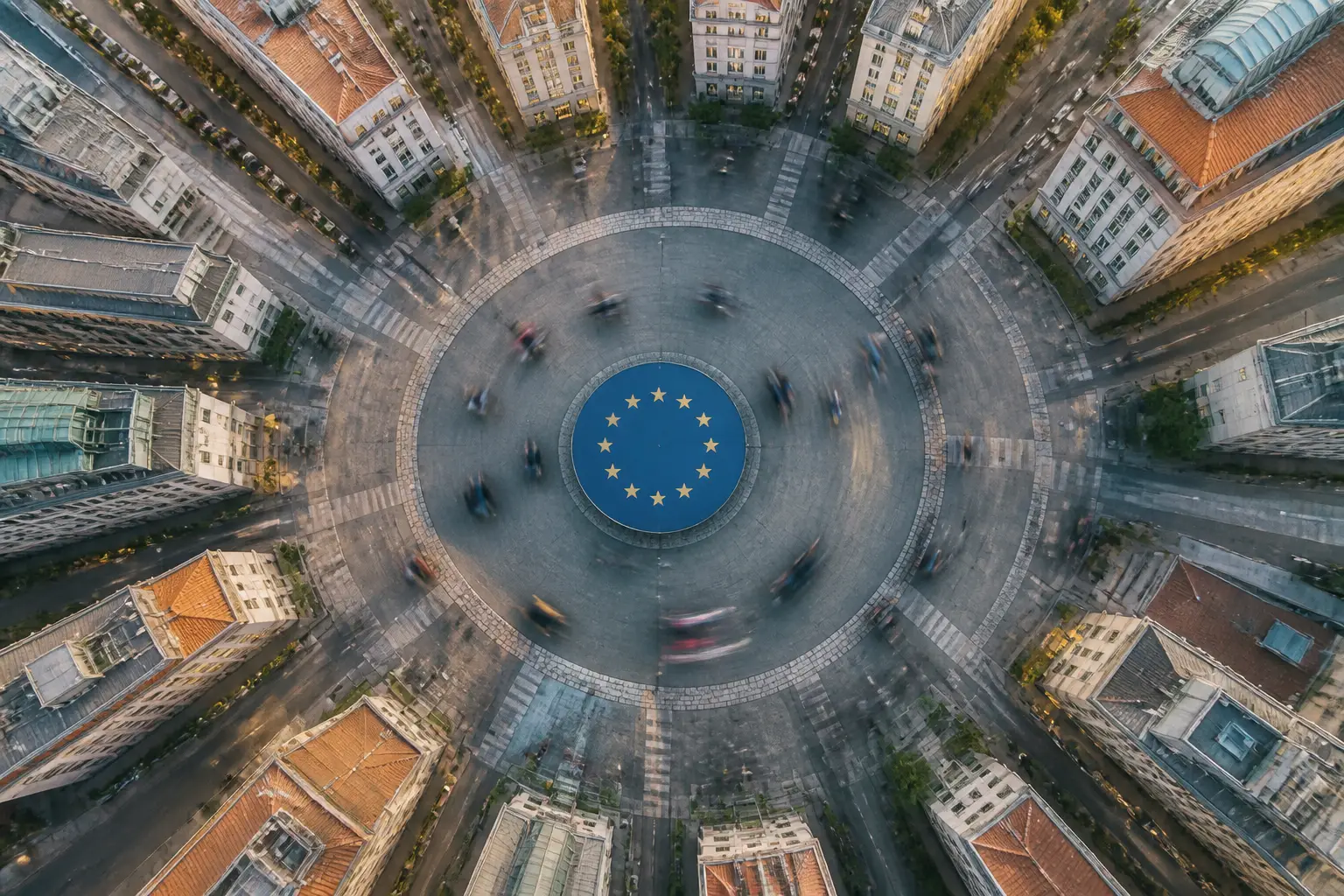 AI-GENERATED
The EU Commission is considering a 3% tax on online gambling turnover, potentially generating 1.9 billion euros annually for the bloc's budget.
A storm is brewing in the corridors of Brussels that could fundamentally reshape the European gambling landscape. The European Commission is discussing a new source of own resources for the EU budget: a bloc-wide tax on online gambling turnover. While some view this as a logical step to fill budget gaps and combat gambling addiction, others are mounting fierce resistance. The divide runs across the continent, pitting economic dependencies against varying regulatory philosophies.
The situation is particularly sensitive for countries where the digital gambling sector serves as a cornerstone of the national economy. While Western nations like France are pushing the initiative, a bloc of opposition is forming in the south. Discussions are in early stages, but the political tension is already palpable. Ireland, currently holding the EU Council presidency, aims to facilitate an agreement by the end of the year, which seems like a Herculean task given the requirement for unanimity.
Numbers and facts
The economic scale of this proposal is significant. According to European Commission estimates, a 3% tax on the net turnover of the online gaming sector could generate approximately 1.9 billion euros annually. Calculated across a full EU budget cycle, this amount totals over 13 billion euros. These funds are intended to help finance the bloc's spending without excessively increasing direct member state contributions.
Italy occupies an interesting position in this debate. Although the country has voiced reservations, Commission estimates suggest its contribution would represent only about 7% of the total tax revenue, a relatively small share compared to its market size. On the opposing side are experts like economist Nicola Matteucci from the Polytechnic University of Marche. He notes that while price increases eventually reduce demand, the process is not as immediate as the industry often claims. The tax also finds support from high-profile figures: former England goalkeeper Peter Shilton views the levy as an opportunity to curb operators' advertising budgets and reduce exposure for vulnerable consumers.
Background
The strongest opposition originates from Malta. In this small EU state, the gambling sector accounts for roughly 12% of the national GDP. An additional EU tax is perceived as an existential threat there. The Maltese government warns that increased taxation risks penalizing regulated operators, which could drive companies out of the EU or push players toward the unregulated black market. Maltese Prime Minister Robert Abela took a firm stance on the issue:
"Malta will not accept the introduction of EU-wide taxes designed to support the bloc’s spending." - Robert Abela, Prime Minister of Malta
Malta is not alone in its stance. Along with Italy, Portugal, and Spain, the country forms a front against the proposal, which was originally championed by Socialist MEP Victor Negrescu. Since tax matters in the EU require the principle of unanimity, every single one of the 27 member states can block the proposal with a veto. As long as Valletta maintains its rejection, the tax remains a theoretical construct.
Why it matters for German players
For German players, the EU-level debate is highly relevant because Germany already operates one of the world's strictest tax systems. Since the 2021 Interstate Treaty on Gambling (GlüStV 2021), providers of online slots and poker pay a 5.3% tax on every single stake. An additional EU tax of 3% on net turnover would be added to an already heavy burden. This could further reduce the attractiveness of legal offerings licensed by the Joint Gambling Authority of the States (GGL).
Germany also enforces strict player protection rules, such as the 1,000 euro monthly deposit limit monitored via the central LUGAS system, and a 1 euro per spin limit for virtual slots. If an additional EU tax were to further lower return-to-player (RTP) rates at legal operators, the risk increases that players will migrate toward illegal providers without a GGL license who pay no taxes and enforce no limits. The primary goal of GlüStV 2021—channeling players into the legal market—would thus be put to the test.
What it means for GGL-licensed casinos
Casinos with a GGL license are already under significant economic pressure. Compliance with strict German regulations incurs high operating costs. An EU-wide tax would further erode their competitive advantage against providers from third countries or formerly popular jurisdictions like Malta (MGA) or Curacao, provided those entities can evade the tax. German operators would likely have to pass the extra costs to customers by further reducing payout rates. Since the GGL whitelist ensures transparency, it would be clear to every customer who is bearing the tax burden and who is not.
Frequently asked questions
Why is the EU planning a tax on online gambling?
The EU Commission is seeking new own resources to fund the Union's future budget. Estimates suggest that a 3% tax on net turnover could bring in approximately 1.9 billion euros annually.
Which countries oppose the new gambling tax?
Malta is particularly resistant, as the sector accounts for 12% of its GDP. Italy, Spain, and Portugal have also expressed doubts or direct opposition according to diplomatic sources.
Can the tax be introduced without the consent of all countries?
No, tax matters in the European Union require unanimity. Any of the 27 member states can stop the proposal with a veto, making implementation currently very unlikely.
What do critics like the Maltese Prime Minister fear?
Robert Abela warns that such a tax penalizes regulated providers and encourages the black market. Furthermore, companies could be pushed to relocate their headquarters outside the European Union entirely.
How does this affect players in Germany?
Since Germany already has high taxes and limits under GlüStV 2021, an additional tax could make legal GGL offers more expensive. This threatens market channeling, as players might move to unregulated black market providers without 1-euro limits.
Share
About the author

Lisa Lustich
Editor-in-chief & casino tester
Lisa Lustich has been testing German-language online casinos since 1997 and runs the Lustich.de newsroom. More than 400 published reviews, certified player-protection advisor (BZgA training, 2019).
All articles by Lisa Lustich →Sources & further reading
- Joint Gambling Authority of the German Federal States (GGL): gluecksspiel-behoerde.de
- Whitelist of permitted online operators: GGL-Whitelist
- BZgA problem-gambling helpline: 0800 1 372 700 (free, anonymous, 24/7)
- Editorial methodology: Editorial guidelines Lustich.de
 India
IndiaGambling can be addictive. Please play responsibly. Help and counselling at 0800 1 372 700 (BZgA, free & anonymous).
Related topics
Further Reading
 AI-GENERATED
KYC and AML in iGaming: New EU Rules Tighten Player Verification by July 2027
The EU is introducing a unified AML rulebook on July 10, 2027, setting a 2,000 euro threshold for casino audits and fundamentally changing identity checks.
 AI-GENERATED
Mexico's 1947 Gambling Law: Major Reforms and Tax Hikes Proposed
Mexico aims to overhaul its outdated 1947 gambling framework. Proposed measures include stricter ID checks for 400 venues and classifying gambling harm as a public health issue.
 AI-GENERATED
Lawsuit Targets Mobile Betting in Wisconsin: Constitutional Clash Over New Sports Law
The Wisconsin Institute for Law & Liberty is suing to block Act 247. A Marquette poll shows that 64 percent of residents oppose online sports betting.