
Africa's Path to Gaming Unity: Hurdles for Pan-African Regulation
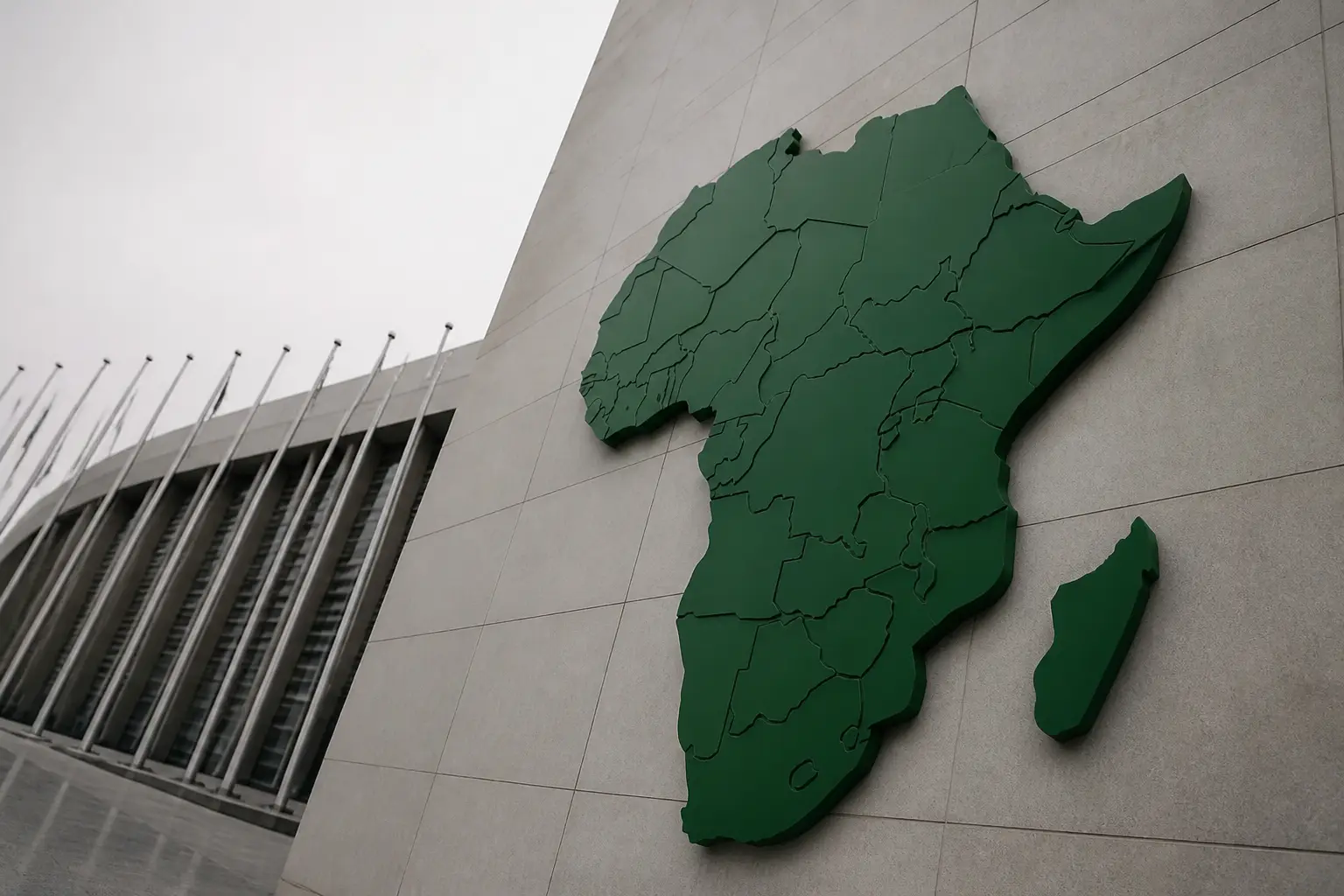 AI-GENERATED
Industry leaders discuss a unified gambling framework for Africa. Experts like Arinze Arum advocate for shared standards instead of identical laws.
The debate over Pan-African regulatory harmonization in gambling is gaining momentum, yet the path from theoretical discussions to actual implementation remains arduous. Experts from various regions emphasize that borderless online gambling and illegal operators are putting increasing pressure on national authorities. A unified framework is intended to help improve consumer protection and combat money laundering more effectively. Nevertheless, national sovereignty and deep-rooted legal traditions often stand in the way of a swift agreement.
In a recent panel, leading figures such as Arinze Arum, executive secretary/CEO of the Enugu State Gaming and Lotto Commission, and Wendy Rosenberg of Werksmans Attorneys discussed the necessary steps. A clear picture emerges: a copy of European models is hardly possible due to the lack of a supranational architecture in Africa. Rather, it is about finding a common denominator that respects the diversity of the 54 African states while synchronizing protection mechanisms.
Numbers and facts
Market fragmentation is one of the biggest obstacles. In South Africa, there is a national board plus nine provincial regulatory authorities, often working with outdated legislation dating back to the late 1990s. These internal tensions mean that provincial regulators permit online betting, while the National Gambling Board regards certain offerings as unlawful. Moss Gondwe, a board member of the African Lotteries and Gaming Association (ALGA), warns that without cooperation, revenue losses to illegal operators could spiral out of control.
A look at other sectors such as healthcare shows that harmonization is possible. The African Medicines Regulatory Harmonization (AMRH) project, launched on March 30, 2012, often serves as a benchmark. In the East African Community (EAC), joint assessment procedures for medicines were able to shorten approval times to just seven months. The industry hopes for similar efficiency gains in the licensing process for the gambling sector.
Background
For Arinze Arum, the problem lies in the different governance models. Nigeria and South Africa use decentralized systems, while other countries act centrally. He suggests managing cooperation through multilateral treaties focused on core areas. According to Arum, these include responsible gaming, information sharing, and anti-money laundering measures. However, he rejects a "one-size-fits-all" model, as each country has its own economic realities.
Olabimpe Akingba of pawaTech does not see the solution in identical laws, but in common goals. She emphasizes that cultural nuances and different levels of market maturity must be respected. Harmonization does not mean giving up independence, but creating a fair competitive environment.
"Harmonisation is not about removing the independence of each African country; rather, it is about creating an environment where compliant operators can compete fairly, players are better protected and regulators can work together." - Olabimpe Akingba, Head of Responsible Gaming at pawaTech
Moruntshi Kemorwale, CEO of the Gambling Authority of Botswana, adds that a principles-based regulation is the key. She calls for minimum standards for cybersecurity, data governance, and ESG reporting (Environmental, Social, Governance). In her view, regional bodies could act as pilot projects before a continent-wide rollout occurs.
Why it matters for German players
For players in Germany, the development in Africa is an interesting comparison for the challenges of regulation. While Africa seeks a minimum level of uniformity, Germany has already created a very strict national framework with the State Treaty on Gambling 2021 (GlüStV 2021). German customers enjoy a high level of protection through the Joint Gambling Authority of the States (GGL), which many African states still need to build.
In Germany, rules such as the monthly deposit limit of 1,000 euros via the LUGAS system and the maximum stake of 1 euro per spin for slots are firmly established. These strict requirements serve to prevent gambling addiction. When African markets discuss minimum standards for player protection, they often look at established systems in Europe. German players should ensure they play exclusively at operators on the GGL whitelist, as only there do the strict German legal norms apply. Offers from Africa or other regions without a German license are illegal in this country and offer no legal certainty.
What it means for GGL-licensed casinos
For operators with a German license from the GGL, the African debate highlights the importance of international standards. Companies operating globally must adapt to a variety of different regulations. Harmonization in Africa could lead in the long term to reputable European providers having easier access to these growth markets, provided they meet the local minimum standards.
Currently, the German market remains a protected space through the GGL license. Providers must connect to technical interfaces such as LUGAS and OASIS. Cooperation between regulators worldwide, as called for by the African experts, could improve the exchange regarding illegal black market providers in the future, which ultimately benefits the legal German market as well.
Frequently asked questions
Why is a unified regulation in Africa difficult?
The hurdles lie in the significant differences between the legal systems, languages, and political structures of the 54 African states. Furthermore, there is no supranational authority with binding power, like in the European Union.
What are the main goals of harmonization?
The focus is on combating the illegal black market, protecting minors, and introducing uniform anti-money laundering standards. Experts also call for better data exchange between national authorities.
Are there already successful models for this cooperation?
Yes, the African Medicines Regulatory Harmonization (AMRH) in the health sector has already shown how regional cooperation can accelerate approval processes. The East African Community (EAC) serves as a successful pilot project.
What role does South Africa play in this discussion?
South Africa is an example of internal fragmentation, as national and provincial authorities often hold opposing positions on online betting. These internal tensions make a leading role in continental unification difficult.
Are German players allowed to play in African online casinos?
No, for players in Germany, it is only legal to participate in offers that are on the GGL whitelist. African licenses are not valid in Germany and offer no protection under the GlüStV 2021.
Share
About the author

Lisa Lustich
Editor-in-chief & casino tester
Lisa Lustich has been testing German-language online casinos since 1997 and runs the Lustich.de newsroom. More than 400 published reviews, certified player-protection advisor (BZgA training, 2019).
All articles by Lisa Lustich →Sources & further reading
Whitelist of permitted online operators
Editorial guidelines Lustich.de
BZgA problem-gambling helpline: 0800 1 372 700
 India
IndiaGambling can be addictive. Please play responsibly. Help and counselling at 0800 1 372 700 (BZgA, free & anonymous).
Read this article in 57 languages
- German
- English
- Portuguese
- French
- Italian
- Spanish
- Japanese
- Polish
- Arabic
- Dutch
- Russian
- Turkish
- Swedish
- Danish
- Norwegian
- Finnish
- Korean
- Hindi
- Indonesian
- Thai
- Vietnamese
- Chinese
- Czech
- Hungarian
- Romanian
- Greek
- Ukrainian
- Croatian
- Bulgarian
- Filipino
- Slovak
- Serbian
- Hebrew
- Persian
- Malay
- Bangla
- Tamil
- Telugu
- Urdu
- Georgian
- Khmer
- Albanian
- Kazakh
- Afrikaans
- Lithuanian
- Latvian
- Estonian
- Slovenian
- Uzbek
- Swahili
- Azerbaijani
- Amharic
- Tajik
- Kyrgyz
- Sinhala
- Hausa
- Nepali
Related topics
Further Reading
 AI-GENERATED
Boston Red Sox Promote Kalshi Despite Massachusetts Ban on Sports Markets
The Boston Red Sox are promoting the Kalshi platform despite a court order in Massachusetts blocking its sports markets. Kalshi is currently facing legal battles in over 20 states.
 AI-GENERATED
Shake-up at Romania's Gambling Office: President Soare Abruptly Dismissed
After just over a year in office, Vlad-Cristian Soare has been removed as ONJN President. The agency faces corruption probes and a €1 billion tax deficit.
 AI-GENERATED
GGL warns against illegal social betting and risky prediction markets
The German gambling authority GGL is warning of criminal risks regarding bets on elections or the economy. Social betting is not eligible for licensing in Germany.