Denmark's Black Market Battle: New Threats from Influencers in Focus
 AI-GENERATED
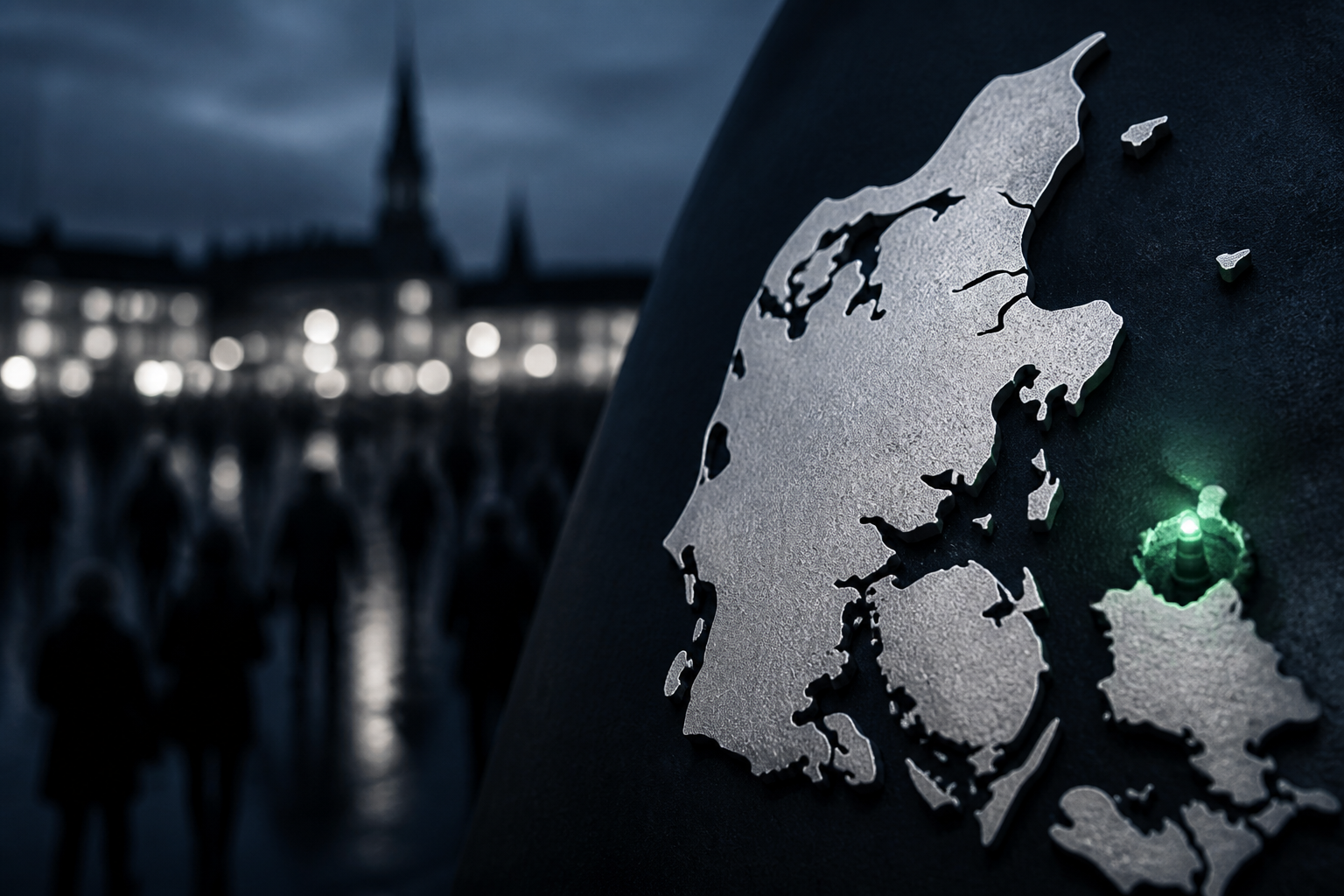
Denmark's gambling authority, Spillemyndigheden, reports new challenges in combating illegal gambling, including promotion by influencers. Despite an 89% decrease in visits to blocked sites, unregulated offerings remain a problem.
Denmark, long hailed as a model for pragmatic gambling regulation, faces new challenges. The national gambling authority, Spillemyndigheden, is intensifying its fight against the black market, discovering new, elusive channels. The use of social media by influencers to promote unlicensed offerings is particularly coming into focus for the authority. This shows that even well-regulated markets constantly need to develop new strategies to counter illegal activities and ensure player protection.
Recent developments underscore the dynamic nature of the online gambling market. Modern communication channels allow black market providers to quickly expand their reach. For regulatory authorities, this means a constant need to adapt their monitoring and enforcement strategies.
Numbers and facts
The Spillemyndigheden has been actively blocking illegal websites for years. By the end of 2022, 227 sites were blocked. Visits to these blocked sites dropped significantly from 15.8 million in 2017 to 1.8 million in 2023. This represents a substantial decrease of 89 percent. However, the authority acknowledges that some users still manage to bypass DNS blocking. Last year, Stake.com was among the prominent operators whose sites were blocked, following a court order against 49 websites deemed to be operating illegally. DNS blocking will continue in 2024, with another case expected to close this year.
A significant new threat identified by Spillemyndigheden involves streamers and influencers using social media to promote unlicensed sites. In 2023, for the first time, the regulator reported a streamer for violating rules on advertising illegal sites after multiple warnings. The police imposed a fine, marking a precedent. Since then, two more cases involving streamers promoting illegal gambling have been reported to the police. Spillemyndigheden is expanding its partnerships with platforms like Facebook, Apple, and Google to remove illegal content and apps.
In the land-based sector, 34 inspections were conducted at pubs in 2023, leading to two police reports concerning illegal games such as lotteries. Additionally, 17 gaming venues operating without permits for poker, gaming machines, or betting terminals were investigated. Since 2019, 126 non-profit associations running bingo or banko games have been monitored, resulting in 38 reports of illegal non-profit lotteries. A study in November found that 15 percent of Danish youth aged 15 to 17 have gambled, despite the legal age being 18.
Background
Denmark has long been praised for its balanced approach to gambling regulation, aiming to protect consumers while maintaining a competitive licensed market. Morten Rønde, director of the Danish trade body Spillebranchen and managing partner at Nordic Legal, expresses concern about recent stringent regulations. These include a whistle-to-whistle ban on betting advertising during live sports, tighter controls on outdoor promotions, and restrictions on free-to-play bonuses. Rønde believes these measures are not evidence-based, stating:
„Ich bin gelinde gesagt schockiert.“ - Morten Rønde, Direktor bei Spillebranchen und Managing Partner bei Nordic Legal
He argues that the previous model, characterized by open dialogue between the regulator and operators, was key to Denmark's success. The Minister for Taxation, Ane Halsboe-Jørgensen, justified the new measures, known as Spilpakken 1, by citing a doubling of gambling problems among Danish adults since 2016, with nearly 500,000 experiencing some extent of gambling problems in 2021. Furthermore, 25,000 Danish children and young people have experienced some degree of gambling harm. Online casinos have become the largest Danish gambling segment, accounting for 38 percent of the market's gross gaming revenue (GGR) in 2025, more than double the figure since 2012.
Why it matters for German players
Was in Dänemark passiert, betrifft deutsche Spieler indirekt, aber merklich. Der Kampf gegen den Schwarzmarkt ist ein Dauerthema in ganz Europa. Auch in Deutschland gibt es eine klare Regulierung durch den Glücksspielstaatsvertrag 2021 (GlüStV 2021) und die Gemeinsame Glücksspielbehörde der Länder (GGL). Das dänische Beispiel zeigt, wie schwer es ist, alle illegalen Angebote zu unterbinden, besonders wenn sie über neue Kanäle wie Social Media verbreitet werden.
Für deutsche Spieler bedeutet das, dass sie besonders vorsichtig sein müssen. Nur Casinos, die auf der Whitelist der GGL stehen, sind legal und bieten ein sicheres Umfeld. Dort gibt es dann auch die bekannten Schutzmaßnahmen: Das Einsatzlimit von 1 Euro pro Spin an Spielautomaten, das Einzahlungslimit von 1.000 Euro pro Monat und die Anbindung an das zentrale Überwachungssystem LUGAS. Diese Maßnahmen sollen der Spielsucht vorbeugen und den Spielerschutz gewährleisten. Anbieter ohne deutsche Lizenz versuchen oft, diese Regeln zu umgehen, was Spieler in Gefahr bringen kann.
What it means for GGL-licensed casinos
Für in Deutschland lizenzierte Casinos, also GGL-Casinos, sind die Entwicklungen in Dänemark eine Bestätigung ihrer eigenen Herausforderungen. Die GGL setzt sich ebenfalls intensiv für die Bekämpfung des illegalen Glücksspiels ein. Maßnahmen wie IP-Blocking und das Vorgehen gegen illegale Zahlungsdienstleister sind Standard. Die Beobachtung, dass Influencer eine neue Bedrohung darstellen, könnte auch für die GGL relevant werden. GGL-Casinos müssen sich an strenge Werberichtlinien halten, die den Schutz von Minderjährigen und gefährdeten Spielern in den Vordergrund stellen.
Eine Zusammenarbeit mit Social-Media-Plattformen und Tech-Giganten, wie Spillemyndigheden sie anstrebt, könnte auch in Deutschland ein wichtiger Schritt sein. So ließen sich illegal beworbene Angebote gezielter aufspüren und unterbinden. Letztlich stärkt jede erfolgreiche Maßnahme gegen den Schwarzmarkt den regulierten Markt und die Spieler, die sich bewusst für lizenzierte und sichere Glücksspielangebote entscheiden.
Frequently asked questions
What new threats in the fight against illegal gambling does the Danish Spillemyndigheden report?
The Danish Gambling Authority Spillemyndigheden reports that influencers are increasingly promoting unlicensed gambling offers. This form of promotion, often subtle and disguised as a personal recommendation, represents a new and elusive challenge.
How effective are Denmark's measures against blocked illegal gambling sites?
Despite a 89 percent decrease in visits to blocked sites, unregulated offers remain a problem. Authorities must address new, indirectly visible channels to curb the black market.
Why is advertising by influencers for illegal gambling providers so perfidious?
Influencers enjoy the trust of their followers, making their promotion of unlicensed offers particularly effective. This type of advertising often disguises itself as a personal recommendation and bypasses traditional advertising controls, increasing the risk for players.
What dangers does the black market pose to players compared to licensed providers?
Black market providers are not subject to strict regulations regarding player protection, addiction prevention, or anti-money laundering. In cases of problems or fraud, players have no legal recourse, and their data and financial assets are often insecure.
How does the Danish situation differ from Germany's regarding influencer gambling advertising?
In Germany, gambling advertising is strictly regulated by the Interstate Treaty on Gambling (GlüStV 2021) and licensing by the Joint Authority of the Länder (GGL). Players should exclusively use offers from licensed providers, as brokering or advertising illegal offers can also have legal consequences in Germany.
Share
About the author

Lisa Lustich
Editor-in-chief & casino tester
Lisa Lustich has been testing German-language online casinos since 1997 and runs the Lustich.de newsroom. More than 400 published reviews, certified player-protection advisor (BZgA training, 2019).
All articles by Lisa Lustich →Sources & further reading
Whitelist of permitted online operators
Editorial guidelines Lustich.de
BZgA problem-gambling helpline: 0800 1 372 700
 Denmark
Gambling can be addictive. Please play responsibly. Help and counselling at 0800 1 372 700 (BZgA, free & anonymous).
Read this article in 56 languages
- German
- English
- Portuguese
- French
- Italian
- Spanish
- Japanese
- Polish
- Arabic
- Dutch
- Russian
- Turkish
- Swedish
- Danish
- Norwegian
- Finnish
- Korean
- Hindi
- Indonesian
- Thai
- Vietnamese
- Chinese
- Czech
- Hungarian
- Romanian
- Greek
- Ukrainian
- Croatian
- Bulgarian
- Filipino
- Slovak
- Hebrew
- Persian
- Malay
- Bangla
- Tamil
- Telugu
- Urdu
- Georgian
- Khmer
- Albanian
- Kazakh
- Afrikaans
- Lithuanian
- Latvian
- Estonian
- Slovenian
- Uzbek
- Swahili
- Azerbaijani
- Amharic
- Tajik
- Kyrgyz
- Sinhala
- Hausa
- Nepali
Related topics
Further Reading
 AI-GENERATED
Burundi Crackdown: License Suspension and Heavy Penalties for Gambling Operators
Burundi's government enforces strict 2026/2027 rules, including a 50% late fee penalty and mandatory real-time monitoring for all gambling activities.
 AI-GENERATED
UK National Lottery Under Fire: New Boss Phil Walker Faces Scrutiny
The appointment of Phil Walker as interim CEO of the UK National Lottery is causing a political stir due to his controversial past at William Hill and Game Nation.
 AI-GENERATED
Timișoara Bans Gambling: Total Shutdown for Slot Halls by 2027
Timișoara's local council has unanimously voted to stop authorizing new gambling halls. All 173 existing venues are expected to close by 2027.