
US Senators Demand Stricter Regulation for Prediction Markets to Shield Tribes
 AI-GENERATED
Twelve Democratic senators propose amendments to digital asset bills to prevent unregulated prediction platforms from infringing on tribal gaming rights and state laws.
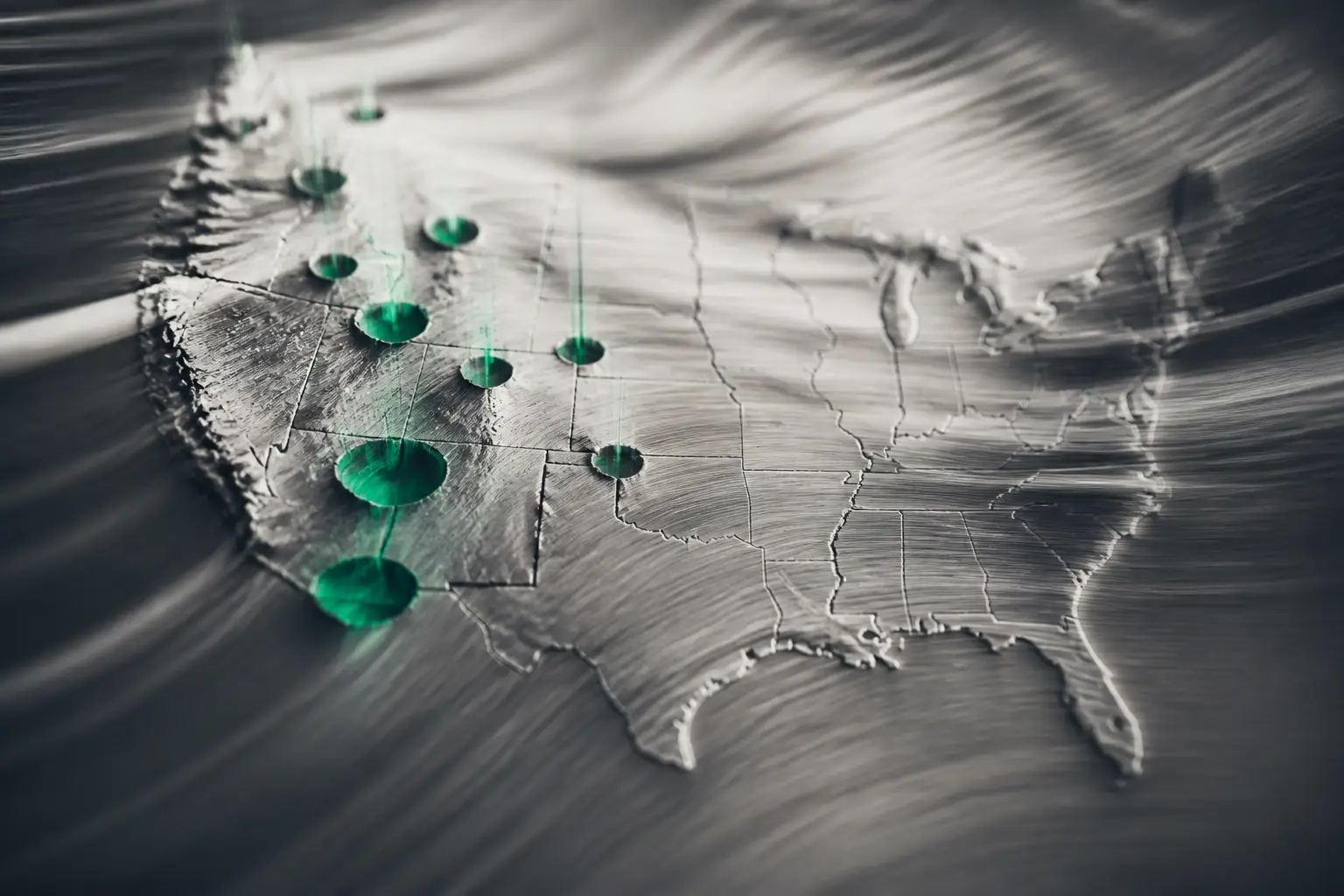
A significant regulatory push is currently unfolding in the United States, targeting the intersection of digital assets and event forecasting. Twelve Democratic senators have come forward to demand amendments to pending legislation, specifically the Digital Asset Market Clarity Act (CLARITY Act) and the Digital Commodity Intermediaries Act (DCIA). Led by Senator Martin Heinrich, the group expressed deep concerns that these bills, in their current form, would provide a backdoor for unregulated betting platforms to operate under the guise of financial innovation. The move is a direct response to the rise of decentralized finance (DeFi) protocols that offer sports wagering and casino-style games without traditional oversight.
The primary focus of this political intervention is the protection of tribal sovereignty. For decades, the Indian Gaming Regulatory Act of 1988 has served as a cornerstone for the economic independence of indigenous communities. Revenue from tribal gaming operations is not just profit; it funds essential social services, healthcare, public safety, and education. By allowing prediction markets to function as derivatives regulated by the Commodity Futures Trading Commission (CFTC) rather than as gambling entities, the new legislation could inadvertently strip tribes of their exclusive gaming rights. The senators argue and emphasize that this is not merely a technical disagreement but a threat to the welfare of sovereign nations.
Numbers and facts
The coalition of senators is geographically and politically significant. The group includes Martin Heinrich of New Mexico, Tina Smith of Minnesota, Maria Cantwell and Patty Murray of Washington, Richard Blumenthal of Connecticut, Mark Kelly of Arizona, Tammy Baldwin of Wisconsin, Alex Padilla and Adam Schiff of California, Jacky Rosen of Nevada, Brian Schatz of Hawaii, and Gary Peters of Michigan. Their letter has received strong backing from major organizations, including the National Congress of American Indians and the Indian Gaming Association. Furthermore, 17 tribal governments in New Mexico alone have endorsed the call for regulation. These include the Mescalero Apache Tribe and the pueblos of Santa Ana, Sandia, Isleta, Laguna, Acoma, Taos, and Pojoaque. The senators are particularly worried about how sports and event contracts are currently classified as financial derivatives, a status that bypassed state-level police powers and existing tribal-state compacts.
“The Digital Asset Market Clarity Act (CLARITY Act) and Digital Commodity Intermediaries Act (DCIA), as currently drafted, will only serve to exacerbate these issues by further removing regulatory accountability for decentralized finance (DeFi) betting protocols that deploy unvetted prediction and wagering markets, directly infringing on instances of Tribal gaming exclusivity and state police powers.” - Martin Heinrich, US Senator
Background
At the heart of the debate is the two-pronged amendment proposed by the senators. First, they request a savings clause designed to safeguard tribal power under existing tribal-state gaming contracts and the federal Indian Gaming Regulatory Act of 1988. Second, they propose that organizations registered with the CFTC should be prohibited from listing contracts that mimic sports wagers or casino games, with very few exceptions for specific decentralized platforms. This policy aim centers on preventing what the senators call unregulated betting markets that circumvent state laws. In jurisdictions where tribal gaming provides the primary funding for social infrastructure, these decentralized platforms present a predatory alternative that does not contribute to the community or follow age-verification and anti-money laundering standards. The push reflects a broader global trend of regulators catching up with blockchain-based gambling products that attempt to bypass the definition of gambling.
Why it matters for German players
For players in Germany, the situation in the US serves as a cautionary tale regarding the importance of playing on regulated platforms. Germany has established a very rigid framework through the State Treaty on Gambling 2021 (GlüStV 2021). While the US is currently debating how to handle DeFi betting, Germany has already implemented systems like LUGAS to monitor deposit limits and OASIS for player exclusion. German law is very clear: if it looks like a bet and acts like a bet, it is regulated as gambling, regardless of the underlying technology. For German customers, using unregulated prediction markets or Krypto-casinos that claim to be financial products is risky. These sites do not adhere to the 1,000 Euro monthly deposit limit or the 1 Euro stake limit for slots, leaving players without any legal protection if a dispute arises. The GGL whitelist remains the only safe harbor for German residents who wish to participate in legal online gaming.
What it means for GGL-licensed casinos
Licensed operators under the GGL (Joint Gambling Authority of the States) umbrella should see this US initiative as a positive sign. Every time a major jurisdiction like the US moves to close loopholes for offshore or decentralized operators, it strengthens the global standing of regulated markets. For GGL-licensed casinos, the competition from unvetted DeFi platforms is a major concern. These platforms often offer bonuses and stakes that legal operators cannot match due to strict German regulations. However, if the US succeeds in defining these markets as gambling, it sets a legal precedent that European regulators are likely to follow. This would lead to a more level playing field where all companies offering betting services must comply with the same high standards of player protection and taxation, ultimately benefiting the integrity of the industry.
Frequently asked questions
Why are US senators fighting crypto bills?
Twelve democratic senators fear that the CLARITY Act and DCIA bills could legitimize illegal gambling through the back door. They warn that decentralized finance protocols exploit loopholes to offer bets without necessary licenses, infringing on the rights of indigenous tribes.
What are the implications for indigenous tribes in the US?
The proposed legislation threatens the gambling rights of indigenous tribes, who have held exclusive licenses for casinos and betting establishments since 1988. The revenue generated is often the sole financial source for essential social services in their reservations. Unregulated platforms could undermine this livelihood by circumventing laws.
How do the senators aim to resolve the issue?
The senators are calling for clear amendments to the bills. They propose a safeguard clause to protect tribal rights and seek to prohibit CFTC-registered entities from offering contracts that mimic sports betting or casino games.
What is the core problem with prediction markets and crypto?
Prediction markets based on blockchain technology often evade national regulatory oversight. Senators criticize the treatment of sports and event contracts as financial derivatives, which enables the circumvention of state gambling laws. They demand that bets be regulated as bets, regardless of the currency used.
What does this US conflict mean for German players?
The US conflict highlights the importance of clear gambling regulation in Germany. Players should avoid DeFi platforms as they offer neither legal certainty nor player protection. In Germany, only offerings on the GGL whitelist are legal and subject to strict limits, such as a monthly deposit limit of 1,000 euros.
Share
About the author

Lisa Lustich
Editor-in-chief & casino tester
Lisa Lustich has been testing German-language online casinos since 1997 and runs the Lustich.de newsroom. More than 400 published reviews, certified player-protection advisor (BZgA training, 2019).
All articles by Lisa Lustich →Sources & further reading
Whitelist of permitted online operators
Editorial guidelines Lustich.de
BZgA problem-gambling helpline: 0800 1 372 700
Gambling can be addictive. Please play responsibly. Help and counselling at 0800 1 372 700 (BZgA, free & anonymous).
Read this article in 57 languages
- German
- English
- Portuguese
- French
- Italian
- Spanish
- Japanese
- Polish
- Arabic
- Dutch
- Russian
- Turkish
- Swedish
- Danish
- Norwegian
- Finnish
- Korean
- Hindi
- Indonesian
- Thai
- Vietnamese
- Chinese
- Czech
- Hungarian
- Romanian
- Greek
- Ukrainian
- Croatian
- Bulgarian
- Filipino
- Slovak
- Serbian
- Hebrew
- Persian
- Malay
- Bangla
- Tamil
- Telugu
- Urdu
- Georgian
- Khmer
- Albanian
- Kazakh
- Afrikaans
- Lithuanian
- Latvian
- Estonian
- Slovenian
- Uzbek
- Swahili
- Azerbaijani
- Amharic
- Tajik
- Kyrgyz
- Sinhala
- Hausa
- Nepali
Related topics
Further Reading
 AI-GENERATED
India Drops Google Antitrust Probe Following Nationwide Online Betting Ban
India's CCI has closed a long-running antitrust case against Google as the new 2026 gaming law renders the real-money gaming market illegal.
 AI-GENERATED
UK Insider Scandal: Former Tory Campaign Chief Pleads Guilty to Election Betting
Anthony Lee, former Conservative campaign director, admits to cheating at gambling using inside information on the 2024 election date. He faces up to two years in prison.
 AI-GENERATED
Nigeria Gambling Ban: Authorities Block Stake Across 24 States
Nigerian regulators have enforced an immediate ban on the operator Stake across 24 states due to missing licenses and unpaid gaming taxes.